11 Best Digital Pianos Under $500 for Beginners in 2026
Your child deserves a quality instrument that builds proper technique from day one [41]. The good news? Today’s digital pianos deliver authentic touch and sound at prices that make sense for families [41]. You can find excellent weighted-key instruments with realistic piano feel in the sub-$500 range [41] [41].
Whether you’re choosing your first family piano or replacing an older keyboard, understanding your options removes the guesswork. Real weighted keys matter more than fancy features. Authentic piano sound beats hundreds of digital effects. Simple operation works better than complex menu systems.
These 11 models earned their spots through real-world testing with families like yours. Each piano offers genuine value, proper weighted action, and sound quality that supports serious learning. You’ll find your perfect match among these proven options.
Roland FP-10 – Best Overall Digital Piano Under $500
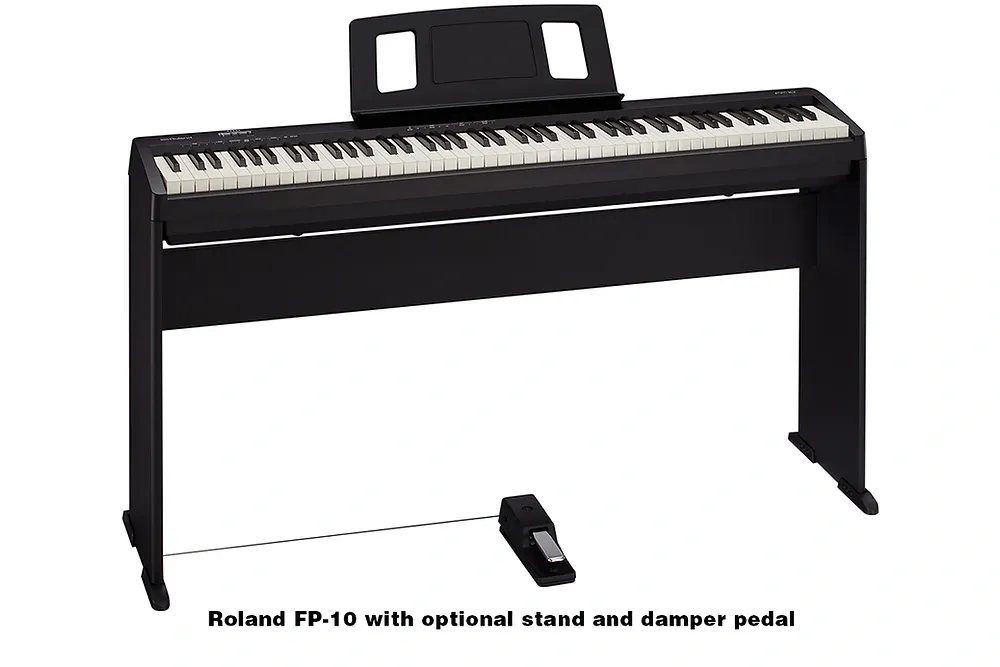
Image Source: Piano Buyer
The Roland FP-10 brings professional piano feel to your Dubai home without the premium price tag. At approximately $500 [41], this digital piano keyboard contains the same keyboard technology found in Roland’s expensive stage pianos.
Key Features & Specifications
|
Specification |
Details |
|
Keys |
88 fully weighted, PHA-4 Standard with escapement [41] |
|
Polyphony |
96 notes [41] |
|
Sound Engine |
SuperNATURAL Piano [41] |
|
Voices |
15 onboard (expandable to 35 via app) [41] |
|
Speakers |
2 x 6W, downward-firing [41] |
|
Connectivity |
Bluetooth MIDI, USB-A, USB-B, 3.5mm headphone jack [41] |
|
Dimensions |
1,284 x 258 x 140 mm [41] |
|
Weight |
12.3 kg (27 lbs) [41] |
Twin Piano mode splits the keyboard into two identical sections, perfect for parent-child practice sessions. The built-in metronome handles complex rhythms like 5/4 and 7/4 [41] that appear in advanced classical pieces.
Sound Quality & Tone
When you press a key, Roland’s SuperNATURAL engine calculates how that specific note should sound in real-time rather than simply playing back a recording [41]. This creates the rich, warm tones that respond to your child’s developing touch [41].
Each piano voice includes sympathetic string resonance – when you play a note, unstruck strings vibrate naturally, creating the fuller sound you hear in acoustic grand pianos [41]. Two electric pianos, organs, strings, and harpsichord provide variety without overwhelming young players [41].
The downward-firing speakers work fine for bedroom practice [41], though they can sound muffled when placed on hard surfaces [41]. Headphones reveal the true sound quality, while the 3.5mm output connects to larger speakers for family gatherings [41].
Key Action & Feel
The PHA-4 keyboard makes this piano special. When your child presses a low bass key, they feel heavy resistance just like an acoustic piano. As their hands move toward the higher notes, the keys become progressively lighter [41]. This trains proper finger strength from the beginning.
Roland’s three-sensor system detects exactly how fast and deep each key moves [41]. The escapement mechanism lets advanced students play rapid repeated notes smoothly [41]. Ivory Feel coating on white keys absorbs moisture, preventing slippery fingers during longer practice sessions [41].
Pros & Cons
Pros:
-
Authentic PHA-4 keyboard action with escapement
-
SuperNATURAL sound engine with string resonance
-
Bluetooth MIDI connectivity
-
Compact design at 12.3 kg [41]
-
Twin Piano mode for lessons
Cons:
-
Basic sustain pedal requires upgrading [41]
-
No dedicated line outputs [41]
-
Downward-firing speakers lack power [41]
-
Limited to 15 onboard sounds
Best For
This piano suits families in Dubai wanting authentic acoustic piano feel in their children’s first instrument [41]. The realistic key action builds proper technique, while the 12.3kg weight allows easy room-to-room movement in UAE apartments [41].
Yamaha P-145 – Best for Reliability & Brand Trust

Image Source: B&H Photo
Yamaha pianos have accompanied families through generations of music making. When you see “Yamaha” on an instrument, you know it comes from the Japanese factory where quality comes first [41]. The P-145 continues this heritage in their respected P Series, replacing the beloved P-45 with thoughtful improvements that matter to serious learners.
Key Features & Specifications
|
Specification |
Details |
|
Keys |
88 fully weighted, GHC (Graded Hammer Compact) |
|
Polyphony |
64 notes [41] |
|
Sound Engine |
CFIIIS Concert Grand sampling |
|
Voices |
10 onboard sounds [41] |
|
Speakers |
2 x 7W (12cm x 8cm oval) [41] |
|
Connectivity |
USB audio/MIDI, headphone output, sustain pedal input |
|
Dimensions |
1,326 x 268 x 129 mm [41] |
|
Weight |
11.1 kg (24.5 lbs) [41] |
Smart Pianist app integration gives you control without complex menus, while Sound Boost cuts through household noise during practice [41]. USB recording captures your child’s progress directly to computer [41].
Sound Quality & Touch Response
The heart of this instrument samples Yamaha’s CFIIIS concert grand – the piano that preceded their world-renowned CFX [41]. When your child presses a key, they hear bright, clear tones with singing treble notes and solid bass foundation [41]. The damper pedal creates rich harmonic layers that fill the room [41] – something rare in entry-level digitals.
Ten voices include two acoustic pianos, two electric pianos, pipe organs, harpsichord, accordion, strings, and traditional Chinese Di Zi flute [41]. The 7-watt speakers position sound like an acoustic grand piano’s soundboard reflection [41][42], delivering balanced clarity whether placed against walls or in room centers.
The Playing Experience
GHC action feels identical to Yamaha’s previous keyboards but plays whisper-quiet during soft passages [43][44]. Bass keys require more finger pressure, gradually lightening as you move toward treble – exactly like acoustic pianos [41]. Rapid scales and repeated notes respond smoothly and silently [45], perfect for evening practice sessions.
What Works & What Doesn’t
Strengths:
-
Yamaha’s proven reliability across decades
-
Silent practice with improved GHC action [44]
-
CFIIIS concert grand sound quality
-
Direct computer recording through USB [41]
-
Portable 11.1 kg design [43]
-
Smart Pianist app simplifies operation
Limitations:
-
64-note polyphony drops notes in complex pieces [45]
-
Speakers handle practice but lack concert hall power [41]
-
Basic sustain pedal needs upgrading for serious study
-
Plastic key surfaces feel smooth rather than textured
Perfect For Your Family If
You want proven Japanese quality that lasts years without problems [46]. Music teachers moving between locations appreciate the 11.1 kg portability [41]. Students developing proper technique benefit from authentic GHC action that prepares them for acoustic pianos.
Casio CDP-S160 – Most Portable & Compact
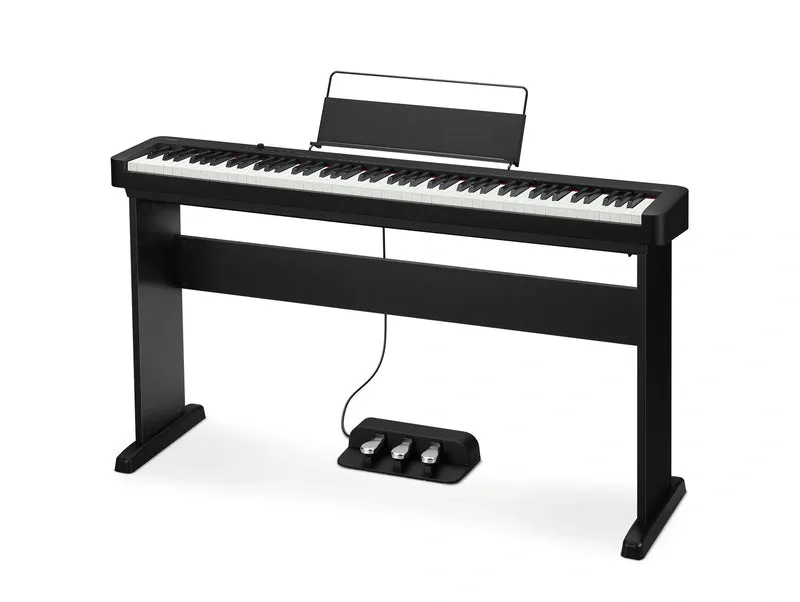
Image Source: Casio Music Singapore
Space matters when you live in a small apartment or need to move your piano frequently. The Casio CDP-S160 weighs just 10.5 kg (23.1 lbs) [47] and measures only 232mm deep [48] – thinner than most coffee table books. You can slide it under a bed, carry it upstairs, or pack it for weekend trips to grandparents’ houses.
Key Features & Specifications
|
Specification |
Details |
|
Keys |
88 fully weighted, Scaled Hammer Action II [47] |
|
Polyphony |
64 notes [47] |
|
Sound Engine |
Dynamic Stereo Sound Engine [47] |
|
Voices |
10 onboard tones [47] |
|
Speakers |
2 x 8W (12 x 6 cm oval) [47] |
|
Connectivity |
USB Type B, 3.5mm headphone, 3.5mm audio in, damper pedal, pedal unit jack [47] |
|
Dimensions |
1,322 x 232 x 99 mm [47] |
|
Weight |
10.5 kg (23.1 lbs) [47] |
|
Battery Life |
Six AA batteries power 13 hours of practice [49] – perfect for outdoor performances or rooms without convenient power outlets. The 1-track MIDI recorder [47] captures your playing for review, while Duet Mode splits the keyboard for teacher-student sessions [47]. Black and red color options [48] let you match your home décor.
Sound Quality & Tone
Ten built-in sounds cover essential playing styles: three grand pianos, three electric pianos, plus harpsichord, strings, pipe organ, and electric jazz organ [47]. The stage piano setting works well across different music styles [47], while the bright grand piano brings energy to rock and blues pieces [50].
When you want that honky-tonk saloon sound, layer chorus effects on the bright piano voice [50]. Four reverb types and four chorus options [47] add depth without cluttering the simple control panel. The twin 8W speakers [47] fill small practice rooms adequately, though headphones reveal fuller sound detail.
Key Action & Feel
Engineers squeezed full hammer action into that ultra-thin 232mm frame [47] through clever mechanical design. Keys feel properly weighted – heavier in the bass, lighter in the treble [47] – with textured surfaces that grip your fingers [47].
However, the black keys feel slightly lighter than the white ones [47], and fast repeated notes don’t respond as quickly as higher-end models [47]. These compromises enable the compact size that makes this piano uniquely portable.
Pros & Cons
Pros:
-
Fits anywhere at just 232mm deep [48]
-
Battery power means true portability [49]
-
Textured keys prevent finger slipping [47]
-
Records your practice sessions [51]
-
Works with optional triple pedal [47]
Cons:
-
Polyphony drops to 32 notes on main piano sound [47]
-
Key response varies between notes [47]
-
Only 10 sounds versus competitors’ larger libraries [47]
-
Basic connection options [47]
Best For
Choose this piano when space and portability matter most. Students moving between practice locations [49] appreciate the battery operation, while small apartment dwellers [49] love how it disappears when not in use. The slim profile makes it ideal for temporary setups on dining tables or kitchen counters.
Korg B2 – Best Sound Quality for the Price
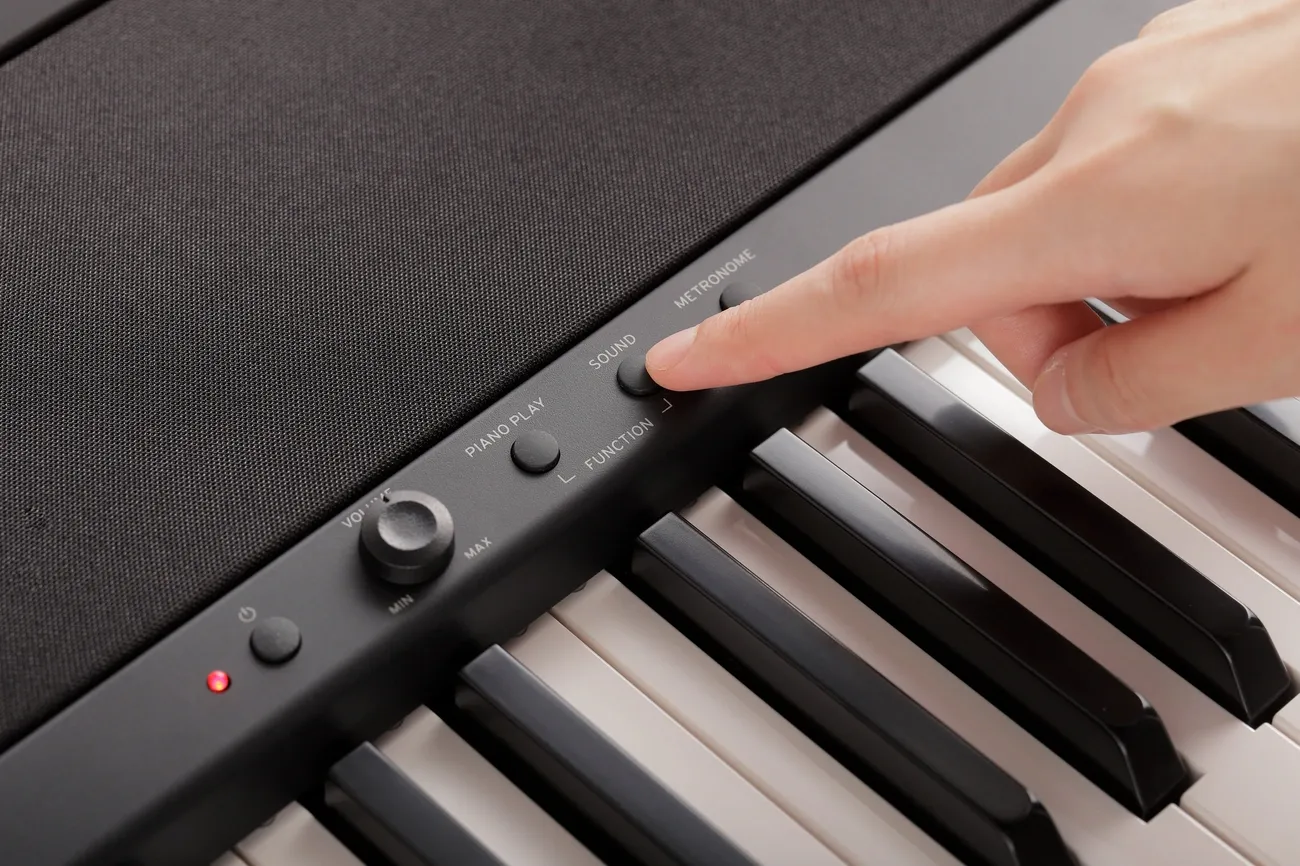
Image Source: KORG USA Official Store
Sound matters most when you’re learning piano. The Korg B2 borrows audio technology straight from premium acoustic tones rarely heard below $500 [52] professional stage instruments, creating rich piano tones that cost twice as much elsewhere. At $500 (or $650 with stand and triple pedal in the B2SP configuration) [21], this instrument puts authentic sound first.
Key Features & Specifications
|
Specification |
Details |
|
Keys |
88 fully weighted, NH (Natural Weighted Hammer Action) [5] |
|
Polyphony |
120 notes [67][21] |
|
Sound Engine |
Technology from SV2/Grandstage pro pianos [52] |
|
Voices |
12 total (5 piano sounds) [5] |
|
Speakers |
2 x 15W (30W total) [22] |
|
Connectivity |
USB MIDI/Audio, Audio In, headphone output [5] |
|
Dimensions |
1,312 x 336 x 117 mm [53] |
|
Weight |
11.4 kg (25.1 lbs) [21][66] |
Three months of Skoove piano lessons come included [54]. Partner mode splits the keyboard for student-teacher practice [54]. Available in black or white finishes [21].
Sound Quality & Tone
When you press a key, you hear samples from legendary concert grands: Steinway, Bösendorfer, Yamaha, and Fazioli [21]. The German Concert Piano creates majestic tone with crystal-clear highs and rich bass [5]. Ballad Piano warms softer passages [54]. Italian Concert Piano delivers bright character, though some ears find it sharp [54]. Jazz Piano and Classic Piano complete the five acoustic voices [5].
The 30W speaker system uses a built-in sound chamber to project deep bass and crisp treble [52]. Press the sustain pedal and hear string resonances bloom naturally [52]. Electric piano sounds capture real touch response and key release effects [5]. Organ, harpsichord, and strings add musical variety [5].
Key Action & Feel
NH keyboard action mirrors acoustic piano mechanics perfectly. Bass keys feel heavy, treble keys lighter [5]. Silent operation allows midnight practice [52]. Sensitive response rewards gentle touch and dynamic expression [5].
Pros & Cons
Pros:
-
Professional sound technology at budget price [52]
-
USB audio streaming through speakers [52]
-
Audio input for playing along with external devices [54]
-
Portable 11.4 kg weight [21]
-
Partner mode for lessons [54]
Cons:
-
No sound layering or keyboard split modes [54]
-
Just 12 voices compared to feature-heavy alternatives [54]
-
Special pedal connection limits upgrade options [53]
-
Small audio jacks need adapters for professional use [53]
Best For
Choose this piano when sound quality trumps flashy features [52]. Beginning students benefit from hearing authentic piano tones from day one. The B2SP bundle with stand and triple pedal suits advancing players who need proper pedaling technique [5].
Alesis Prestige Artist – Best Value Bundle
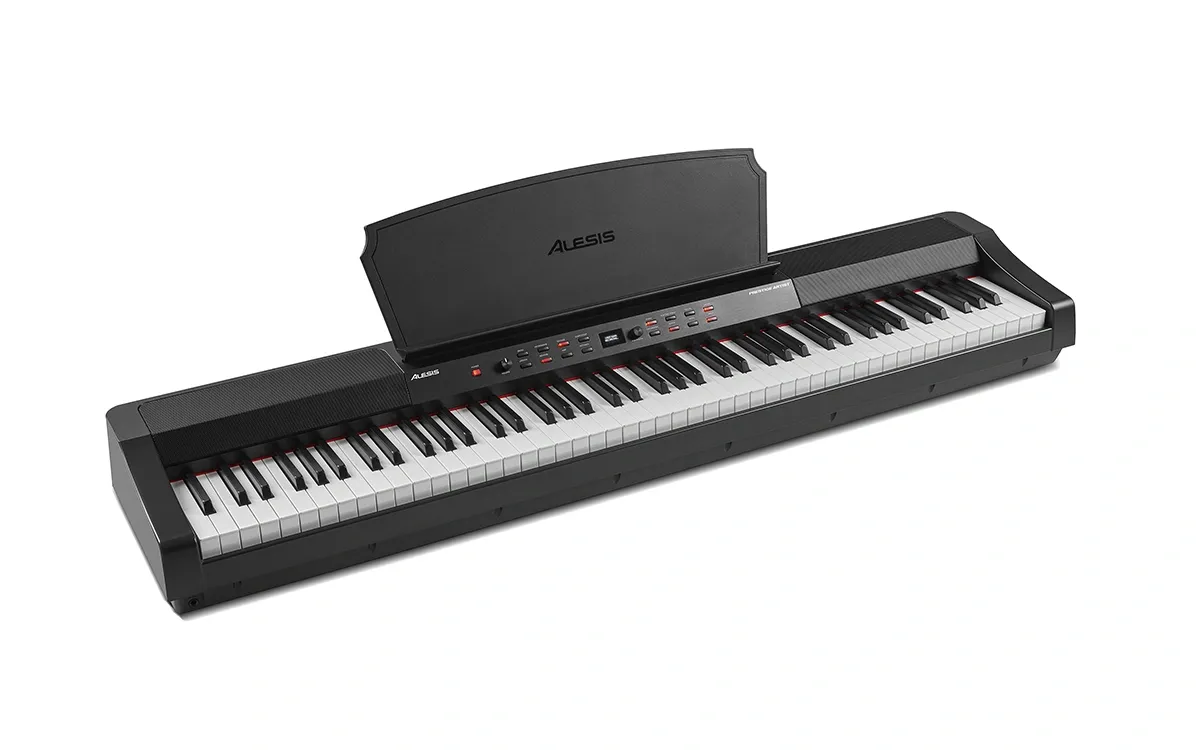
Image Source: Alesis
Sometimes you get more than you pay for. The Alesis Prestige Artist proves this point with educational software worth hundreds of dollars included at no extra cost. Priced around $500, this package delivers 60 Melodics lessons, 3 months of Skoove Premium, and 2 months of TakeLessons Live video classes [55]. Families with multiple children learning piano will find genuine value here. Optional furniture-style bundles add wooden stands, triple pedals, and benches for complete home piano setups [56].
Key Features & Specifications
|
Specification |
Details |
|
Keys |
88 fully weighted, graded hammer action with adjustable touch response [57] |
|
Polyphony |
256 notes [57] |
|
Voices |
30 premium multi-sampled sounds [57] |
|
Speakers |
50W (2x25W) micro-array system [57] |
|
Display |
OLED screen [57] |
|
Connectivity |
Stereo 1/4″ outputs, dual headphone jacks (1/4″ and 1/8″), USB-MIDI, aux input [57] |
|
Dimensions |
1,330 x 292 x 140 mm (52.4″ x 11.5″ x 5.5″) [58] |
|
Weight |
12.7 kg (28 lbs) [58] |
Lesson mode splits the keyboard into identical zones for teacher-student practice. Record mode captures your child’s playing for review later. The vertical control panel design positions all buttons within easy reach [57]. Think of it as a thoughtful layout that puts function before flashy appearance [55].
Sound Quality & Tone
Thirty multi-sampled voices cover the basics: 5 acoustic pianos, 5 electric pianos, 5 organs, plus orchestral and synthesizer sounds [55]. The main Grand Piano works well for classical pieces, while Grand Piano 2 suits ballads and jazz [55]. Sound quality rates as solid but not exceptional – clear tones with some digital character [59].
The 50W speaker system pushes serious volume through 8 individual speakers [60][55]. Professional stereo outputs connect directly to PA systems without adapters [59].
Key Action & Feel
Graded hammer action creates the right resistance pattern – heavier in bass, lighter in treble [60]. Four velocity curves let you adjust touch sensitivity to match your child’s playing style [55]. Some keys return slowly during fast playing, which advanced students may notice [59].
Pros & Cons
Pros:
-
Exceptional 256-note polyphony [57]
-
Comprehensive educational software bundles [55]
-
Professional stereo outputs [59]
-
Powerful 50W speaker system [60]
-
Metal sustain pedal included [55]
-
OLED display [57]
Cons:
-
Key return can feel sluggish [59]
-
Sound lacks inspirational quality [59]
-
No pitch or modulation wheels [60]
Best For
Teachers will appreciate lesson mode for side-by-side instruction [59]. Families with multiple children get excellent value from the included educational software [59]. Musicians who occasionally perform benefit from professional outputs [59]. The software bundles make this particularly smart for beginners building foundational skills [55].
Donner DDP-100 – Best Furniture-Style Digital Piano
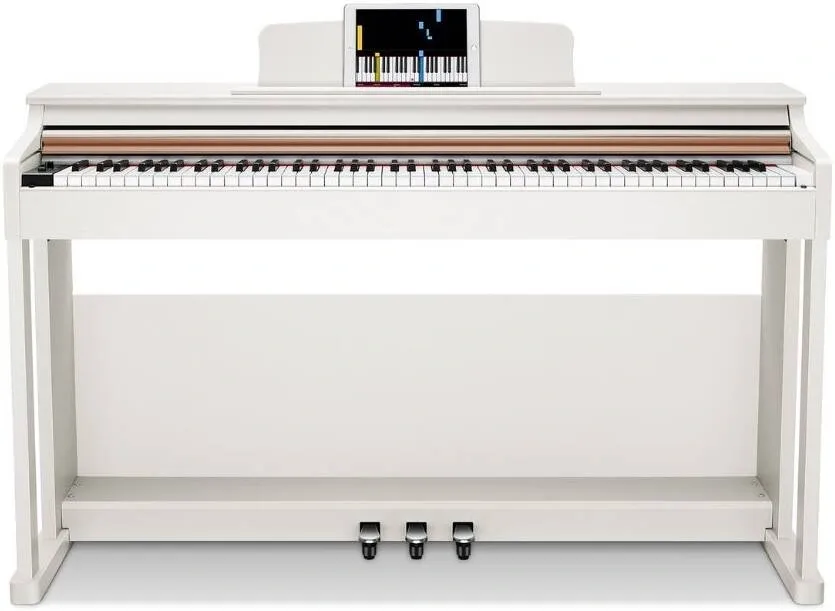
Image Source: Microless
When you want a piano that becomes part of your living space rather than something you move around, furniture-style cabinets change everything. The Donner DDP-100 creates that traditional piano presence with its MDF cabinet, sliding key cover, and built-in triple pedal system at £479.99 [61]. At 40.6kg (89.5 lbs) [61], this stays put once you position it in your music room.
Key Features & Specifications
|
Specification |
Details |
|
Keys |
88 fully weighted, graded hammer action [62] |
|
Polyphony |
128 notes [62] |
|
Sound Engine |
AWM sampling technology [63] |
|
Voices |
1 pure acoustic grand piano tone [64] |
|
Speakers |
50W total (2x25W) [65] |
|
Connectivity |
USB-MIDI, dual headphone jacks (6.35mm), audio in/out, MP3 playback [62] |
|
Dimensions |
53.89 x 15.66 x 32.99 inches [63] |
|
Weight |
40.6 kg (89.5 lbs) [61] |
|
Cabinet |
MDF with sliding key cover [65] |
Three metal pedals (sustain, soft, sostenuto) mount directly into the cabinet [65]. The sliding key cover protects the keys when not in use, just like a traditional piano.
Sound Quality & Tone
The single piano voice samples acoustic grand recordings at multiple touch levels [65]. Sound travels downward through the cabinet, creating room-filling resonance that you feel through the floor [66]. This cabinet design projects warmth throughout the space rather than directing sound at your ears.
The focused approach eliminates distractions – one quality piano sound rather than dozens of mediocre alternatives. Some find the tone less natural than acoustic instruments [67], with occasional variation between individual keys [67].
Key Action & Feel
Bass keys require more finger pressure, while treble keys respond lighter [66] – exactly how acoustic pianos behave. Keys provide solid resistance when pressed fully down [66], giving substantial feedback under your fingers [66]. The weighted action builds proper finger strength through daily practice [62].
Practical Considerations
Advantages:
-
Cabinet design creates permanent piano presence [62]
-
Metal pedals withstand years of practice [65]
-
50W speakers fill medium-sized rooms [65]
-
Single piano focus prevents sound exploration distractions [67]
-
USB and MP3 connections for lesson playback [62]
Limitations:
-
40.6kg weight requires permanent placement [65]
-
Basic pedal functions without half-pedaling [67]
-
Digital sound character remains noticeable [67]
-
No additional instrument voices for variety [67]
Who This Serves
Families with dedicated music rooms benefit from the permanent furniture approach [62]. The cabinet becomes part of your room’s character, encouraging regular practice through visual presence [66]. Students building serious technique appreciate the traditional three-pedal setup and substantial feel.
Yamaha P-45 – Best Budget-Friendly Option
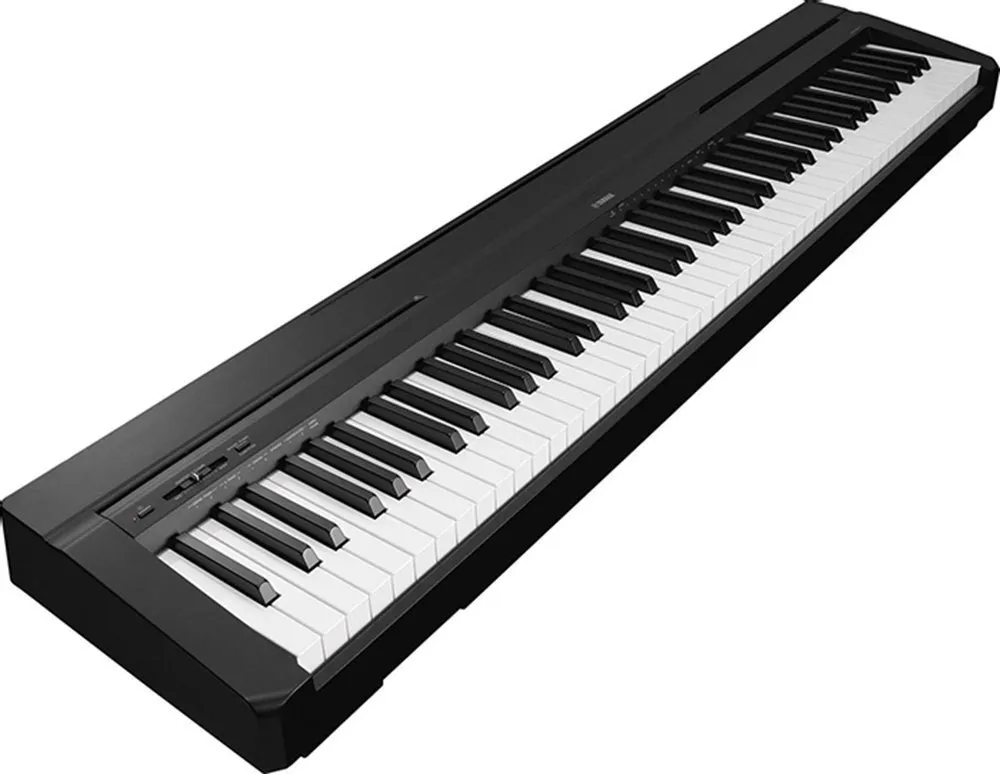
Image Source: Amazon.ae
The P-45 represents Yamaha’s most affordable entry into fully weighted digital pianos [68]. Though discontinued and replaced by the P-145, this model remains available at discounted prices [13], creating an opportunity for budget-conscious families who want Yamaha reliability without paying full retail.
Key Features & Specifications
|
Specification |
Details |
|
Keys |
88 fully weighted, Graded Hammer Standard (GHS) [68] |
|
Polyphony |
64 notes [68] |
|
Sound Engine |
AWM Stereo Sampling [68] |
|
Voices |
10 (2 pianos, 2 electric pianos, organs, strings, harpsichord, vibraphone) [69] |
|
Speakers |
2 x 6W (12cm x 2) [68] |
|
Connectivity |
USB to Host, headphone jack, sustain pedal jack [68] |
|
Dimensions |
1,326 x 295 x 154 mm [68] |
|
Weight |
11.5 kg (25 lbs, 4 oz) [68] |
Touch sensitivity adjusts across four settings: Hard, Medium, Soft, and Fixed [68]. Duo mode splits the keyboard at E3 for side-by-side instruction [70].
Sound Quality & Tone
AWM technology samples concert grand recordings at multiple velocity levels [71]. When you press a key, you hear authentic piano tone captured from real acoustic instruments. Four reverb types (Room, Hall 1, Hall 2, Stage) add acoustic ambience [71], with adjustable depth from 0 to 10 [72]. The 6W speakers handle small room practice adequately [71], though headphones reveal better sound detail.
Key Action & Feel
GHS action creates heavier bass resistance and lighter treble weight [69], matching how real pianos feel under your fingers. Black keys feature matte finish preventing slippage [15], while white keys maintain non-slippery surfaces despite glossy appearance [15]. Keys feel smoother and more consistent than similarly priced alternatives [71], building proper finger strength and technique.
Pros & Cons
Pros:
-
Most affordable Yamaha with weighted keys [16]
-
Simple single-button operation [17]
-
Compact 11.5 kg portability [68]
-
Duo mode for lessons [72]
-
Three months free Flowkey app access [18]
Cons:
-
Limited 64-note polyphony [72]
-
No MIDI or line outputs [68]
-
Basic feature set [72]
-
Weak speaker projection [15]
Best For
This piano price point suits absolute beginners prioritizing Yamaha reliability over advanced features [18]. Students benefit from stripped-down simplicity that emphasizes playing fundamentals [18]. The discontinued status means limited availability, but the savings make it worth considering for families starting their piano journey.
Casio CDP-S360 – Best for Advanced Features
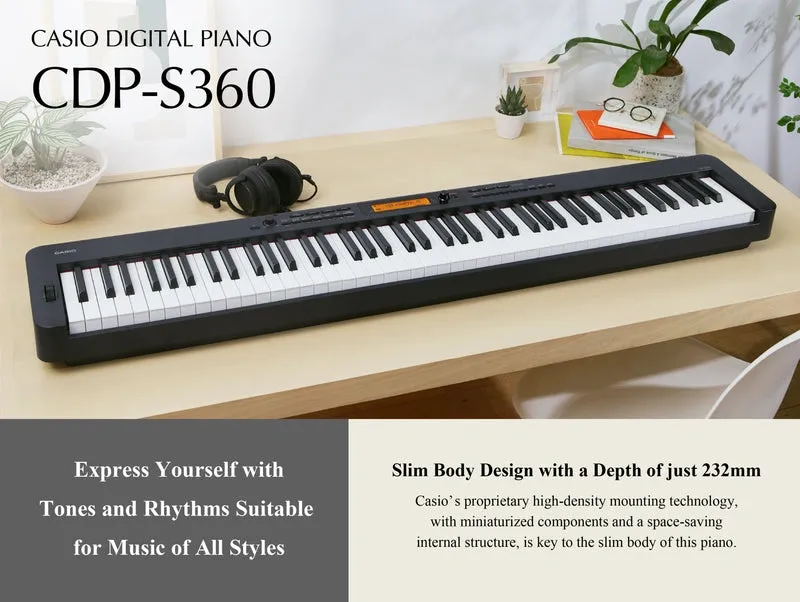
Image Source: Casio Music Singapore
Some families want one instrument that does everything. The Casio CDP-S360 delivers 700 tones [9] and 200 rhythms [1] in a package under $500. This piano throws the “keep it simple” rule out the window and asks: what if your child wants to explore every musical style imaginable?
Key Features & Specifications
|
Specification |
Details |
|
Keys |
88 fully weighted, Scaled Hammer Action Keyboard II [9] |
|
Polyphony |
128 notes [1] |
|
Voices |
700 tones [9] |
|
Rhythms |
200 built-in styles [1] |
|
Speakers |
2 x 8W [1] |
|
Display |
Backlit LCD screen [9] |
|
Connectivity |
USB Type A/B, headphone, audio in, pedal jacks [9] |
|
Dimensions |
1,322 x 232 x 99 mm [1] |
|
Weight |
10.9 kg [1] |
|
Battery Life |
13 hours on 6 AA batteries [1] |
The pitch bend wheel adds expressive control [9] for synthesizer sounds, while layer, split, and duo modes stack different instruments together [1]. A 6-track MIDI recorder lets you review practice sessions [19] or build simple arrangements.
Sound Quality & Tone
Those 700 voices include grand pianos, church organs, harpsichords, string sections, brass instruments, and drum kits [9]. The stage piano preset works well across different music styles [20], but with this many sounds, quality varies significantly [20]. Some voices sound convincing. Others sound like 1980s keyboard presets. Reverb and chorus effects help mask the weaker sounds [1].
Key Action & Feel
Scaled Hammer Action Keyboard II creates realistic piano resistance [9] with textured key surfaces that prevent finger slipping [9]. The mechanism uses two sensors instead of three, which means fast repeated notes sometimes feel sluggish [8]. For basic piano practice, it works fine. For advanced classical pieces with rapid passages, you’ll notice the limitation.
Pros & Cons
Pros:
-
700 tones and 200 rhythms for musical exploration [9]
-
128-note polyphony handles complex pieces [1]
-
Pitch bend wheel for expressive playing [9]
-
Battery power for outdoor practice [1]
-
Layer/split/duo modes for creative combinations [1]
Cons:
-
Key action feels less responsive than focused piano models [20]
-
No Bluetooth connectivity [8]
-
Sound quality inconsistent across the vast voice library [20]
Best For
This digital piano keyboard serves young musicians who want to experiment with different instruments and styles [8]. Church musicians appreciate the organ voices and rhythm accompaniments, while band players enjoy the variety of instrumental sounds [8]. If your child sticks mainly to piano practice, simpler models offer better piano-focused value.
Korg B2SP – Best Console-Style Piano Keyboard

Image Source: AV LAND
Complete console packages save you the headache of hunting down compatible stands and pedals. The Korg B2SP bundles the proven B2 digital piano with a matching wooden stand and three-pedal unit at approximately $650 [21], creating a ready-to-play furniture piece for your home [22].
Key Features & Specifications
|
Specification |
Details |
|
Keys |
88 fully weighted, NH (Natural Weighted Hammer Action) [2] |
|
Polyphony |
120 notes [23] |
|
Voices |
12 sounds [5] |
|
Speakers |
2 x 15W (30W total) [23] |
|
Pedals |
Damper, Soft, Sostenuto (half-pedaling supported) [2] |
|
Dimensions |
1,312 x 336 x 750 mm (with stand) [2] |
|
Weight |
21 kg / 46.3 lbs (with stand) [2] |
|
Colors |
Black, White [2] |
Sound Quality & Tone
The sound technology matches the standalone B2, capturing recordings from German and Italian concert grands [24]. You hear rich string vibrations and natural damper resonance across five acoustic piano voices [5].
Key Action & Feel
The NH keyboard feels solid and stable on its dedicated stand, eliminating any wobble or flex during energetic playing [22]. Keys respond with proper graded weight – heavier in the bass, lighter in the treble [10].
Pros & Cons
The three-pedal system teaches proper acoustic piano technique from day one [24]. The trade-off? You miss modern features like Bluetooth connectivity and recording functions [10]. The matte key surface feels comfortable even during long practice sessions [10].
Best For
This console setup works perfectly for families wanting a permanent piano that looks like real furniture [10]. The finished appearance suits living rooms and music rooms where the piano becomes part of your home’s character [22].
Alesis Recital Pro – Best for Battery-Powered Portability
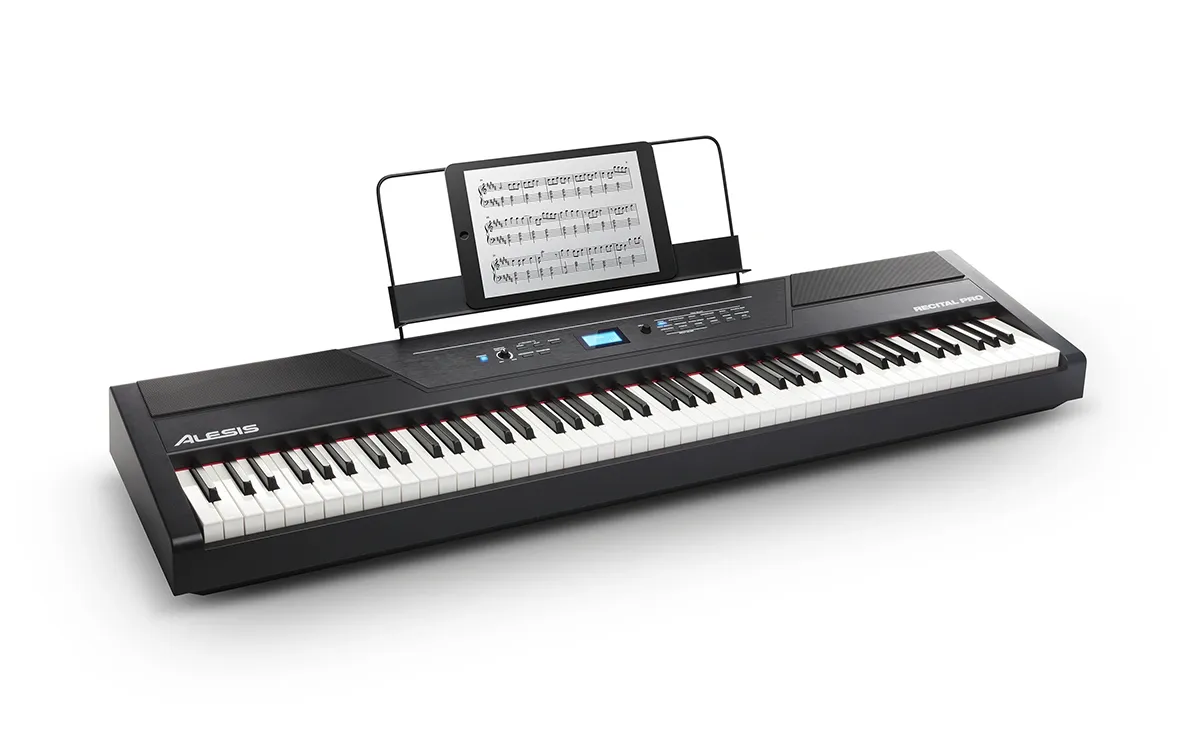
Image Source: Alesis
Most digital pianos chain you to wall outlets. The Alesis Recital Pro breaks free with 6 D-cell battery operation [25], letting your child practice anywhere – different rooms, outdoor spaces, even while traveling [3].
Key Features & Specifications
|
Specification |
Details |
|
Keys |
88 fully weighted, hammer action with adjustable touch response [12] |
|
Polyphony |
128 notes [12] |
|
Voices |
12 built-in sounds [12] |
|
Speakers |
20W total (dual 10W woofers + dual 20W tweeters) [11] |
|
Effects |
Modulation, reverb, chorus, EQ, pedal resonance [12] |
|
Connectivity |
Stereo 1/4″ outputs, headphone jack, USB-MIDI [12] |
|
Dimensions |
51.6″ x 13.8″ x 5.5″ [12] |
|
Weight |
26 lbs [12] |
Layer and split modes let you combine two sounds at once while controlling each volume separately [3]. Lesson mode splits the keyboard down the middle, creating two identical practice zones for student and teacher [25].
Sound Quality & Tone
The 12 voices cover the basics: acoustic piano, electric piano, organ, harpsichord, and synthesizer sounds [12]. The piano and electric piano voices sound better than you’d expect at this price [3], though some sounds feel muddy or inconsistent [12]. The 20W speaker system works fine for bedroom practice [12]. You get 16 reverb and chorus effects plus modulation that add richness to the basic sounds [3].
Key Action & Feel
The weighted keys respond when you play soft or loud [12], but the action feels the same weight across all keys [12]. Keys have a springy, button-like feel rather than smooth piano action [12]. Black keys weigh less than white keys, which feels backward [12]. Four touch settings (Off, 1, 2, 3) let you adjust how hard you need to press [12].
Pros & Cons
Pros:
-
True portability with battery power [25]
-
Professional 1/4″ outputs for gigs [3]
-
Layer and split modes with volume control [3]
-
Color-coded LED buttons make navigation simple [3]
-
Light at 26 lbs [12]
Cons:
-
Action feels basic and uneven [12]
-
No graded weighting like real pianos [12]
-
Sustain pedal sold separately [12]
-
Sound quality varies between different keys [11]
Best For
This piano works for beginners who need to practice in multiple locations [12]. Small venue performers appreciate the battery power and professional outputs [3]. Teachers find the lesson mode useful for side-by-side instruction [26].
Roland GO:Piano88 – Best Ultra-Lightweight Option
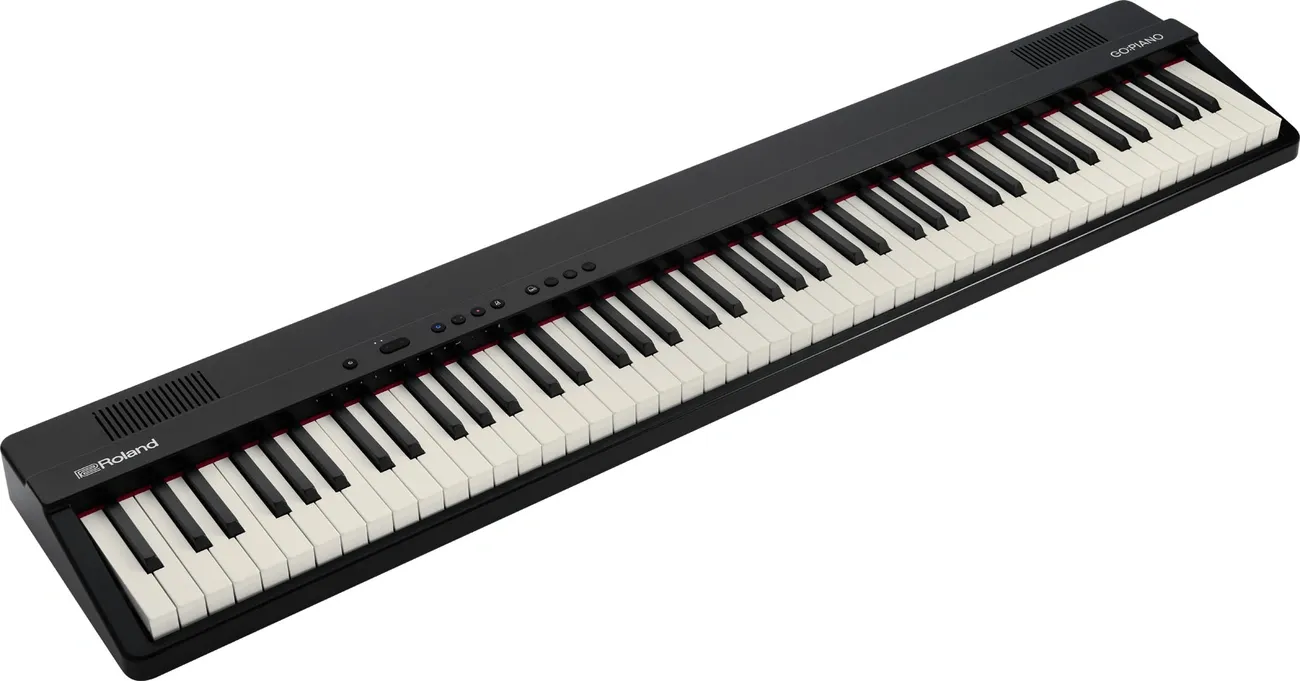
Image Source: Roland
Sometimes you need a piano that goes where you go. The Roland GO:Piano88 weighs a mere 5.8 kg (12.8 lbs) [14] – light enough to carry upstairs, pack in a car, or move between rooms without strain. This updated model cuts weight further from its predecessor while maintaining 88 full-size keys [4], making it the clear choice when mobility matters most.
Key Features & Specifications
|
Specification |
Details |
|
Keys |
88 full-size, semi-weighted with ivory feel coating [7] |
|
Polyphony |
64 notes [4] |
|
Voices |
40 onboard + 256 GM2 sounds via app [7] |
|
Speakers |
Dual 6W front-facing [4] |
|
Connectivity |
Bluetooth 5.0, USB-C [7] |
|
Dimensions |
128 x 27.6 x 8.4 cm [4] |
|
Weight |
5.8 kg (12.8 lbs) [14] |
|
Battery |
8 AA batteries [4] |
The Roland Piano App unlocks layer, twin, and split modes unavailable from the keyboard alone [4]. Your purchase includes one year of Roland Cloud Core membership with 500+ digital scores [14].
Sound Quality & Tone
Roland builds sympathetic resonance modeling into even this portable model, creating the subtle vibrations you hear when other strings resonate [6]. The 40 built-in tones span 10 pianos, 10 electric pianos, 10 organs, and 10 additional voices [7]. The main piano sound carries Roland’s FP-series DNA [4].
The dual 6W speakers deliver clear, balanced sound for practice [4]. Headphones reveal the fuller audio quality hiding beneath the compact design [6].
Key Action & Feel
Here’s where honesty matters. These semi-weighted keys feature ivory feel coating for better grip [7], but they feel heavier and stiffer than ideal for expressive playing [6]. Without hammer action [7], the keys don’t respond naturally to soft dynamics [6]. Half-pedaling support helps add expression when you connect compatible pedals [4].
Think of this as a compromise instrument – you gain extreme portability but give up some authentic piano feel.
Pros & Cons
Pros:
-
Exceptionally light at 5.8 kg [14]
-
Battery power means true anywhere practice [4]
-
40 sounds versus predecessor’s 4 [4]
-
Bluetooth 5.0 wireless connectivity [7]
-
Roland Cloud Core membership included [14]
Cons:
-
Heavy, stiff key response [6]
-
64-note polyphony limits complex pieces [4]
-
Semi-weighted action, not fully weighted [7]
-
Layer/split modes need app access [4]
Best For
This keyboard serves musicians who prioritize extreme portability over authentic touch. Outdoor performers and traveling players benefit most from the battery power [27]. The compact design fits spaces where heavier digital pianos simply won’t work.
Students moving between locations or families with limited space will appreciate the convenience, understanding the action trade-offs involved.
Quick Reference Guide: Digital Piano Comparison
Here’s how these 11 models stack up side-by-side. Use this table to compare the features that matter most for your family’s needs.
|
Model |
Keys |
Polyphony |
Voices |
Speakers |
Weight |
Price |
Best For |
|
Roland FP-10 |
88 fully weighted, PHA-4 Standard with escapement |
96 notes |
15 onboard (expandable to 35 via app) |
2 x 6W, downward-firing |
12.3 kg (27 lbs) |
~$500 |
Beginners building proper technique and intermediate players seeking portable practice instrument |
|
Yamaha P-145 |
88 fully weighted, GHC (Graded Hammer Compact) |
64 notes |
10 onboard sounds |
2 x 7W (12cm x 8cm oval) |
11.1 kg (24.5 lbs) |
Not mentioned |
Beginners wanting reliable instrument from trusted manufacturer; teachers giving lessons at multiple locations |
|
Casio CDP-S160 |
88 fully weighted, Scaled Hammer Action II |
64 notes |
10 onboard tones |
2 x 8W (12 x 6 cm oval) |
10.5 kg (23.1 lbs) |
Not mentioned |
Beginners needing maximum portability; students practicing in multiple locations |
|
Korg B2 |
88 fully weighted, NH (Natural Weighted Hammer Action) |
120 notes |
12 total (5 piano sounds) |
2 x 15W (30W total) |
11.4 kg (25.1 lbs) |
$500 (or $650 with stand and triple pedal in B2SP) |
Beginners prioritizing authentic piano sound over feature quantity |
|
Alesis Prestige Artist |
88 fully weighted, graded hammer action with adjustable touch response |
256 notes |
30 premium multi-sampled sounds |
50W (2x25W) micro-array system |
12.7 kg (28 lbs) |
~$500 |
Teachers using lesson mode; families with multiple learners; gigging musicians needing professional outputs |
|
Donner DDP-100 |
88 fully weighted, graded hammer action |
128 notes |
1 pure acoustic grand piano tone |
50W total (2x25W) |
40.6 kg (89.5 lbs) |
£479.99 |
Beginners wanting furniture-style esthetics in fixed locations; dedicated music rooms |
|
Yamaha P-45 |
88 fully weighted, Graded Hammer Standard (GHS) |
64 notes |
10 (2 pianos, 2 electric pianos, organs, strings, harpsichord, vibraphone) |
2 x 6W (12cm x 2) |
11.5 kg (25 lbs, 4 oz) |
Not mentioned (discontinued, available at discounted prices) |
Absolute beginners prioritizing Yamaha reliability over advanced features |
|
Casio CDP-S360 |
88 fully weighted, Scaled Hammer Action Keyboard II |
128 notes |
700 tones |
2 x 8W |
10.9 kg |
Not mentioned |
Musicians wanting one instrument handling piano, organ, strings, and accompaniment; church musicians and band players |
|
Korg B2SP |
88 fully weighted, NH (Natural Weighted Hammer Action) |
120 notes |
12 sounds |
2 x 15W (30W total) |
21 kg / 46.3 lbs (with stand) |
~$650 |
Beginners wanting complete furniture-style setup without purchasing accessories separately |
|
Alesis Recital Pro |
88 fully weighted, hammer action with adjustable touch response |
128 notes |
12 built-in sounds |
20W total (dual 10W woofers + dual 20W tweeters) |
26 lbs |
Not mentioned |
Beginners needing portability for multiple practice locations; musicians performing small gigs |
|
Roland GO:Piano88 |
88 full-size, semi-weighted with ivory feel coating |
64 notes |
40 onboard + 256 GM2 sounds via app |
Dual 6W front-facing |
5.8 kg (12.8 lbs) |
Not mentioned |
Musicians prioritizing extreme portability over authentic action; outdoor performers and traveling players |
Focus on the “Best For” column first. This tells you immediately which piano matches your situation. Then check the weight if portability matters to your family. Sound quality comes from the key action and polyphony specifications, not the number of voices.
Your Next Step
Each piano serves different family needs. The Roland FP-10 builds authentic technique through premium action. The Casio CDP-S160 travels anywhere your child needs to practice. The Korg B2 delivers concert hall sound quality. The Alesis Prestige Artist includes everything beginners need to start learning immediately.
Know your priorities first. Do you need portability for lessons and recitals? Choose lightweight models with battery operation. Want furniture-style elegance for your living room? Focus on console designs with wooden cabinets. Building serious piano technique? Prioritize authentic weighted action over flashy features.
Every instrument here delivers real value under $500. Your choice comes down to matching features with your family’s specific situation. A quality weighted-key digital piano supports proper learning from the very first lesson.
Ready to choose your family’s piano? Visit your local music store to feel these keyboards in person. Your fingers will tell you immediately which action feels right for serious practice.
References
[1] – https://www.pianodreamers.com/best-beginner-digital-pianos/
[2] – https://www.musicradar.com/news/best-digital-pianos
[3] – https://www.flykeysmusic.com/guides/top-digital-piano-brands-2026-best-value-beginner-guide.html
[4] – https://cooperpiano.com/top-5-digital-pianos-under-dollar500-for-beginners/
[5] – https://www.pianobuyer.com/post/review-roland-fp-10-digital-piano
[6] – https://www.roland.com/global/products/fp-10/
[7] – https://bestdigitalpiano.net/reviews/roland-fp-10/
[8] – https://www.musicradar.com/reviews/roland-fp-10-digital-piano-review
[9] – https://soundandsignal.co.uk/roland-fp-10-review/
[10] – https://www.thomann.ae/roland_fp_10.htm
[11] – https://saucysounds.com/blogs/saucy-sound-sessions/roland-fp-10-digital-piano-review-perfect-for-beginners?srsltid=AfmBOop_Qqyz6L6Lcm-O41FMldxumOBg7gHLxSZPPM9sBkBT8d_8CDAO
[12] – https://pianotone.ca/roland-fp10-review/
[13] – https://www.merriammusic.com/blog/pianos-blog/piano-reviews/roland-fp-10-review/
[14] – https://blog.bestbuy.ca/musical-instruments/yamaha-p-145-digital-piano-review
[15] – https://europe.yamaha.com/en/musical-instruments/pianos/products/p-series/p-145/
[16] – https://www.m4music.com/yamaha-p-145-portable-digital-piano?srsltid=AfmBOoqnRQRxn8cNlUNI5hyUHURP85JaQoTnnNyZIefibAFgfCIttzeD
[17] – https://bestdigitalpiano.net/reviews/yamaha-p45-vs-yamaha-p-145/
[18] – https://pianoers.com/yamaha-p-145-review/
[19] – https://www.gear4music.com/blog/yamaha-p145-review/
[20] – https://www.pianodreamers.com/casio-cdp-s110-s160-review/
[21] – https://www.casio.com/mea-en/electronic-musical-instruments/product.CDP-S160BK/
[22] – https://bestdigitalpiano.net/reviews/casio-cdp-s160/
[23] – https://pianotone.ca/casio-cdp-s160-review/
[24] – https://www.casio.com/uk/casio-blog/blog-post/the-best-digital-pianos-for-beginners-in-2025/
[25] – https://azpianoreviews.com/korg-b2-review-digital-piano-for-2023-best-for-499/
[26] – https://digitalpianoexpert.com/korg-b2-digital-piano-review-best-piano-under-500/
[27] – https://www.korg.com/us/products/digitalpianos/b2/
[28] – https://azpianoreviews.com/donner-ddp-100-ddp-90-review-digital-piano-should-you-buy/
[29] – https://www.rimmersmusic.co.uk/blog/2019/06/korg-b2-b2sp-b2n-digital-piano-review/
[30] – https://www.musicradar.com/reviews/korg-b2-review
[31] – https://pickmypiano.com/best-korg-digital-piano/korg-b2-review/
[32] – https://www.jeremysee.info/post/review-5-reasons-alesis-prestige-artist-is-the-best-piano-keyboard-under-600
[33] – https://www.bhphotovideo.com/c/compare/Alesis_Prestige_Digital_Piano_Bundle_with_Stand%2C_Bench%2C_Cover%2C_and_Stickers_vs_Alesis_Prestige_88-Key_Digital_Piano_Value_Kit_with_Stand%2C_Bench%2C_and_Pedal_vs_Casio_CDP-S160_88-Key_Slim-Body_Portable_Digital_Piano_Kit_with_Stand%2C_Bench%2C_and_Pedal_Black_vs_Alesis_Prestige_Artist_88-Key_Digital_Piano_Value_Kit_with_Stand%2C_Bench%2C_and_Pedal/BHitems/1699976-REG_1665247-REG_1689410-REG_1665248-REG
[34] – https://www.alesis.com/products/view2/prestige-artist.html
[35] – https://bestdigitalpiano.net/reviews/alesis-prestige-artist/
[36] – https://saucysounds.com/blogs/saucy-sound-sessions/alesis-prestige-artist-keyboard-the-ideal-beginner-digital-piano?srsltid=AfmBOoomxCvTqZ84woRirYMDPIi1dKdLvWnVEqFjyQd79uOqTw-jMQ8R
[37] – https://mixdownmag.com.au/reviews/review-alesis-prestige-artist-88-key-keyboard/
[38] – https://uk.donnermusic.com/products/donner-home-digital-piano-88-keys-piano-keyboard-bundle-with-furniture-stand-triple-pedals-for-beginners-hobbyists-ddp-100-black
[39] – https://ca.donnermusic.com/blogs/buying-guides/donner-ddp-100-review-a-comprehensive-guide-to-choosing-the-right-digital-piano
[40] – https://djcorner.ae/product/donner-ddp-100-88-keys-home-upright-digital-piano-black/?srsltid=AfmBOopAkxy0jLq-MehuKrpRWpVBdNpDKBy5disCq9DYl28FaBvc_X8T
[41] – https://uae.microless.com/product/donner-ddp-100-88-key-weighted-action-digital-piano-beginner-keyboard-piano-bundle-with-furniture-stand-128-polyphony-cabinet-with-sliding-key-cover-to-protect-the-key-power-adapter-white-ec3204/
[42] – https://bestdigitalpiano.net/reviews/donner-ddp-100/
[43] – https://bestdigitalpiano.net/reviews/donner-ddp-100-vs-donner-dep-20/
[44] – https://usa.yamaha.com/products/musical_instruments/pianos/p_series/p-45/specs.html
[45] – https://equipboard.com/items/yamaha-p-45-88-key-weighted-action-digital-piano
[46] – https://adawliahshop.com/en/product/p-45?srsltid=AfmBOooyEKaMEqlyOte_7JFuz9hfpC2zocr1uzMg5W3-Oai_82hLly87
[47] – https://usa.yamaha.com/files/download/other_assets/8/333228/P-45_owners_manual_En_D0.pdf
[48] – https://pianotone.ca/yamaha-p-45-review/
[49] – https://www.pianodreamers.com/yamaha-p45-review/
[50] – https://www.allpianos.com/yamaha-p-45
[51] – https://usa.yamaha.com/products/musical_instruments/pianos/p_series/p-45/index.html
[52] – https://adawliahshop.com/en/product/p-45?srsltid=AfmBOopW2llnPRCHEewX961Z8VOi6_seXvquYW_jLxV18TzdkqNXHyMZ
[53] – https://www.epianos.co.uk/is-the-p45-a-good-beginner-piano/
[54] – https://www.casio.com/intl/electronic-musical-instruments/product.CDP-S360BK/
[55] – https://www.thomann.ae/casio_cdp_s360.htm
[56] – https://uae.microless.com/product/casio-cdp-s360-88-key-compact-digital-piano-slim-scaled-hammer-action-ii-700-voices-200-rhythms-128-note-polyphony-usb-midi-battery-option-black-cdp-s360bk/
[57] – https://www.pianodreamers.com/casio-cdp-s360-review/
[58] – https://1st-note.com/en/digital-pianos/casio-cdp-s360/
[59] – https://www.korg.com/us/products/digitalpianos/b2sp/
[60] – https://www.korg.com/meen/products/digitalpianos/b2/specifications.php
[61] – https://soundandsignal.co.uk/korg-b2sp-review/
[62] – https://1st-note.com/en/digital-pianos/korg-b2sp/
[63] – https://www.alesis.com/products/view/recital-pro.html
[64] – https://www.jeremysee.info/post/review-9-things-i-love-about-the-alesis-recital-pro-digital-piano
[65] – https://www.pianote.com/blog/alesis-recital-pro/
[66] – https://www.pianodreamers.com/alesis-recital-pro-review/
[67] – https://pickmypiano.com/alesis-digital-pianos/alesis-recital-pro-review/
[68] – https://www.jazzwise.com/content/review/review-roland-gopiano88
[69] – https://www.pianodreamers.com/roland-go-piano-88px-review/
[70] – https://www.gearnews.com/roland-go-piano-88-digital-piano/
[71] – https://www.musicradar.com/music-tech/keyboards-pianos/roland-go-piano-88px-review
[72] – https://www.roland.com/global/products/gopiano_go-88p/