The 11 Best Upright Piano Brands in 2026 (Expert Tested & Reviewed)
For nearly two centuries, upright pianos have stood in family homes across the world[76]. When you press a key on a quality acoustic upright, a real wooden hammer strikes a steel string, and you hear that sound vibrating through a solid wood soundboard. This mechanical precision creates touch and tone that no digital piano can truly replicate.
Today, families in Dubai and the UAE face more piano choices than ever before. Walk into any showroom and you’ll find Yamaha uprights next to Steinway uprights, Kawai models beside European makers like Bechstein and Blüthner. Each manufacturer brings decades or centuries of heritage, distinct manufacturing approaches, and different tonal characteristics.
Understanding these differences matters when you’re investing in your child’s musical education. This guide examines 11 brands we’ve tested extensively, covering everything from reliable student instruments to concert-quality uprights that rival many grands in sound and touch.
Yamaha Upright Piano

Image Source: Park Pianos
Brand Overview and Heritage
When Torakusu Yamaha established his workshop in Hamamatsu, Japan in 1887, he set a standard that endures today. This is the story families in Dubai and the UAE need to understand: Yamaha began crafting their first upright piano in 1900, followed by their first grand in 1902 [2]. By 1965, they had become the largest producer of musical instruments globally [1].
Here’s what matters most: over 8 million Yamaha pianos have been built since the company’s founding [1], with more than 4 million uprights sold since 1967 alone [76]. These instruments represent over a century of refined manufacturing knowledge, passed down through generations of Japanese craftspeople who understand that families deserve pianos built to last decades.
Signature Upright Models
The U1 stands as Yamaha’s most trusted model since the 1970s – piano teachers across the UAE call it “the gold standard upright” [76] [76]. At 48 inches tall, this instrument delivers sound far bigger than its compact frame suggests. Your child will hear rich, full tone that encourages hours of practice.
The U3 takes this concept further. Standing 52 inches tall, it houses a massive spruce soundboard covering 2,369 square inches [76]. Those longer strings produce deeper bass response that fills your home with music. Think of it as having a small grand piano standing upright.
For families investing in premium quality, the YUS series represents Yamaha’s finest upright craftsmanship, built entirely in Japan [76]. The YUS5 at 52 inches features German Röslau music wire, agraffes, and an opening front panel that projects sound directly toward the listener [76] [76]. The P series, including the P116 and P121, offers European-influenced warm tone perfect for Dubai apartments and villas [76].
Key Features and Technology
Yamaha engineers solved a critical problem that affects pianos in the UAE’s climate. Their patented aluminum action rail resists the humidity and temperature changes that can throw lesser instruments out of regulation [7]. The V-Pro vacuum shield casting creates frames that won’t warp or crack under stress [7].
Every U and YUS series piano uses solid spruce soundboards sourced from Yamaha’s own Kitami Mill in Hokkaido [7]. This isn’t just any wood – it’s carefully selected timber that vibrates freely to produce clear, singing tone. The U3 and YUS5 feature floating soundboard systems that allow even freer vibration [76], creating the rich harmonics that make practice sessions inspiring rather than tedious.
Price Range and Value
|
Model |
Height |
Finish |
Price (AED) |
|
b1 |
43″ |
Polished Ebony |
17,621 [76] |
|
U1 |
48″ |
Satin/Polished Ebony |
41,856 [76] |
|
U3 |
52″ |
Polished Ebony |
53,459 [76] |
|
YUS1 |
48″ |
Satin/Polished Ebony |
57,278 [76] |
|
YUS5 |
52″ |
Polished Ebony |
77,107 [76] |
Who Should Choose Yamaha
Piano technicians recommend Yamaha more than any other brand for families and schools throughout Dubai and Abu Dhabi [76]. There’s a simple reason: these instruments stay in tune, hold their regulation, and respond predictably year after year [76].
The U1 suits students who plan to study seriously. Many children begin on this model and continue playing it through advanced levels [76]. Music teachers prefer Yamaha uprights because they know exactly how the action will feel and how the tone will respond [76].
For advanced students ready for concert-quality touch and tone, the YUS series delivers refinement that rivals many grand pianos [76]. Beginning students in smaller Dubai homes find the P series offers genuine acoustic piano experience with warm, forgiving tone that makes early lessons enjoyable [76].
Steinway Upright Piano
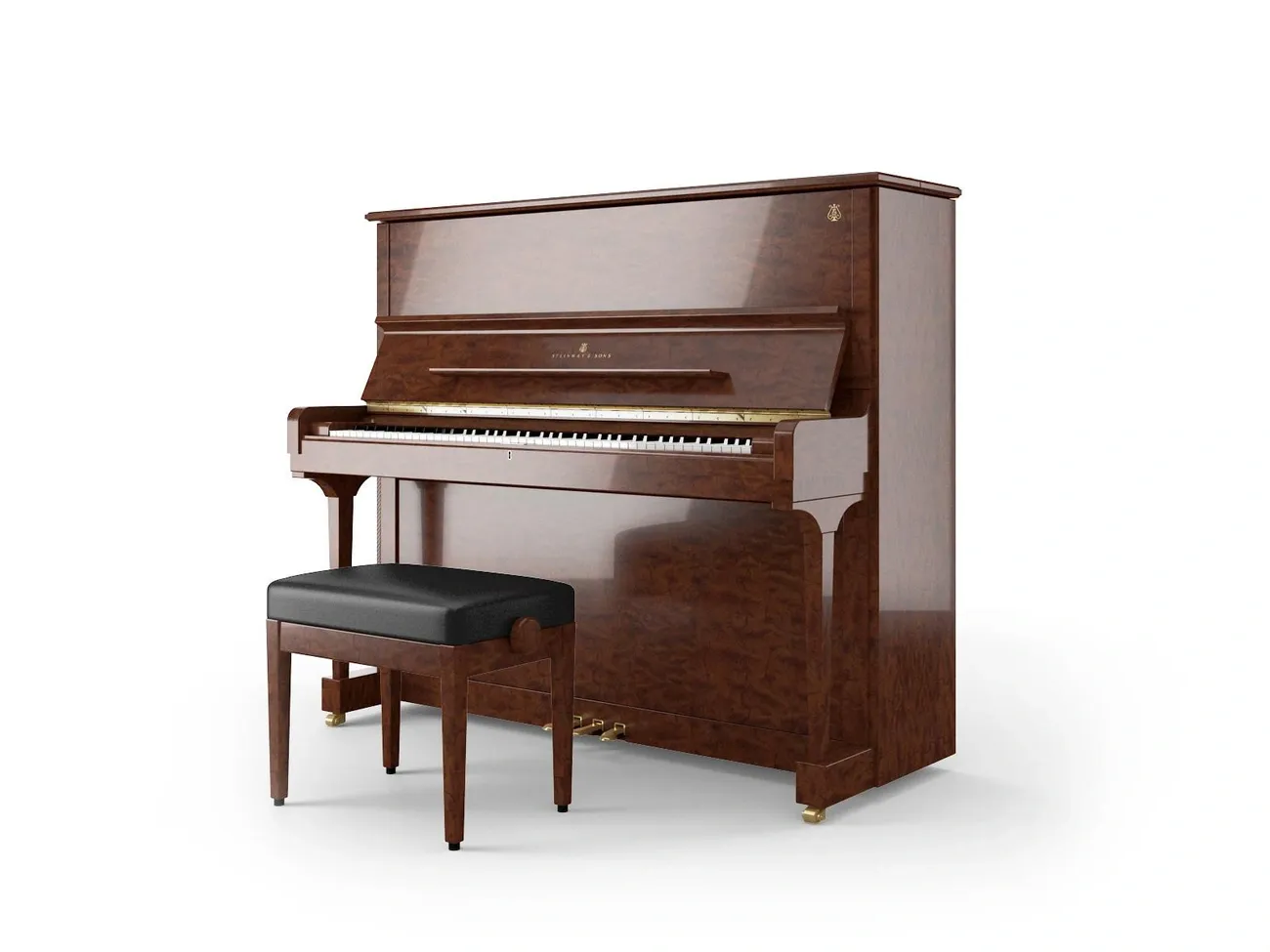
Image Source: Steinway & Sons
Brand Overview and Heritage
Picture a small Manhattan loft on Varick Street in 1853. German immigrant Henry E. Steinway founded Steinway & Sons in 1853 with a simple belief: build the best piano possible [78]. His vision drew from old-world craftsmanship, where skills passed from master to apprentice across generations [76].
Today, families in Dubai and Abu Dhabi recognize Steinway as the piano chosen by concert halls worldwide. Here’s what makes them different: while other manufacturers mass-produce uprights in separate facilities, Steinway handcrafts every vertical piano in the same Astoria, New York factory as their concert grands, using identical techniques and craftspeople [76]. Since 1857, they’ve developed over 125 patented features – each designed to solve specific musical challenges [76].
Signature Upright Models
Steinway produces three upright models, each built for different musical needs. The K-52, introduced in 1903, stands 52 inches tall and houses a soundboard larger than many grand pianos – creating unusually rich resonance for an upright [76]. Unlike most uprights, it includes a sostenuto pedal as standard equipment, a feature typically reserved for concert grands [76].
The Model 1098 measures 46.5 inches and serves schools and institutions where performance matters more than appearance [76]. For homes in Dubai where aesthetics count, the 45-inch Model 4510 features elegant Sheraton-style cabinet work [76].
Key Features and Technology
The K-52 showcases Steinway’s patented Hexagrip pinblock – seven layers of hard rock maple arranged to grip tuning pins with exceptional stability [76]. The soundboard uses close-grained, quarter-sawn Sitka spruce, carefully tapered from 8mm thick at the center to 5mm at the edges [76].
Most impressive is Steinway’s patented upright action. Traditional uprights struggle with repetition because gravity works against the hammers. Steinway engineers reduced the gap below each hammer, creating staccato repetition that feels remarkably close to a grand piano [76]. The Dolce soft pedal moves hammers, action parts, and keys together – eliminating the sluggish feel common in other uprights [76].
Price Range and Value
|
Model |
Height |
Finish |
Price (AED) |
|
4510 |
45″ |
Sheraton Satin Ebony |
249,691.95 |
|
1098 |
46.5″ |
Satin Ebony |
235,738.58 |
|
K-52 |
52″ |
Polyester Polished Ebony |
274,293.95 |
Who Should Choose Steinway
Professional pianists seeking an upright choose the K-52 for its concert-hall resonance and structural integrity [76]. The distinctive Steinway sound – clear, bell-like tone – appeals to serious musicians wanting grand piano quality in compact space.
For families in Dubai investing in their children’s musical future, Steinway represents generational value. The handcrafted construction and authentic materials mirror their legendary grands, ensuring an instrument that inspires practice while holding its value for decades to come.
Kawai Upright Piano
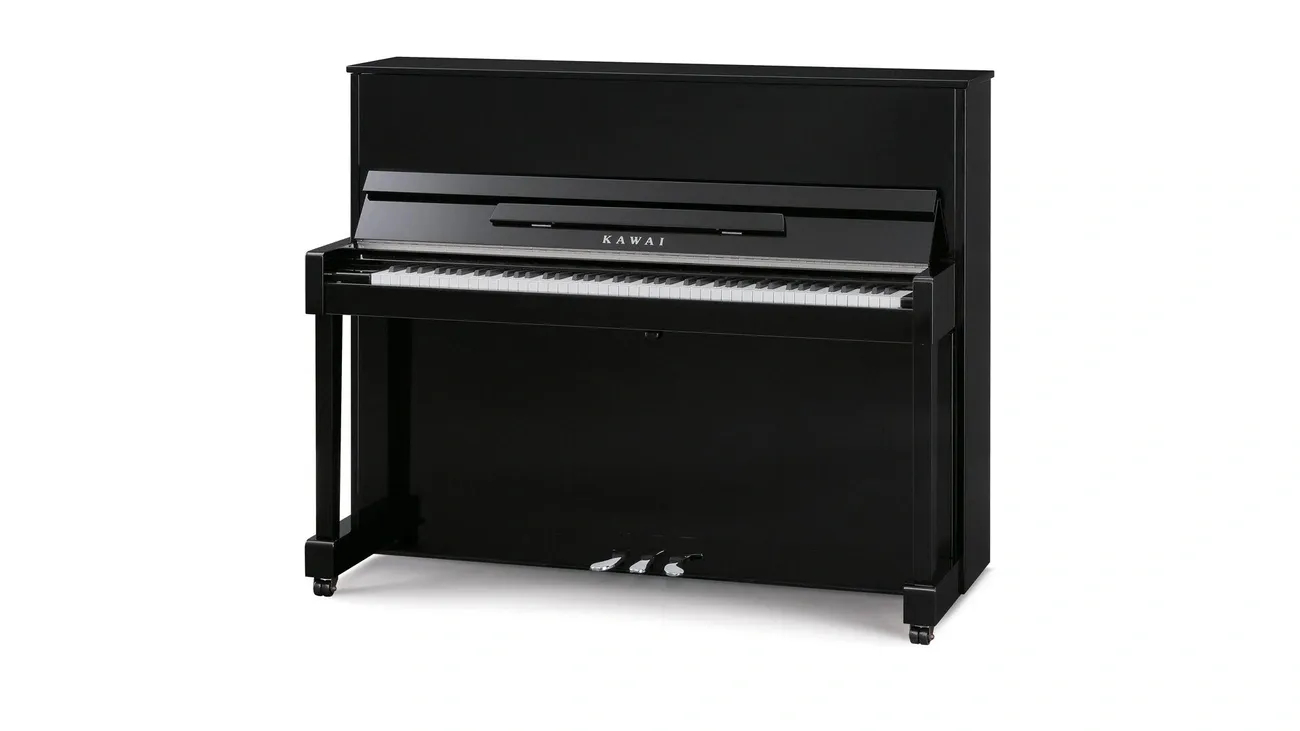
Image Source: Kawai Malaysia
Brand Overview and Heritage
Koichi Kawai founded the company in 1927 with a background most piano makers lack: he actually understood how piano actions work [76]. After working as an inventor at Yamaha, Kawai became the first person in Japan to design and build a complete piano action from scratch. This hands-on engineering expertise still drives the company today.
Kawai ranks second among Japanese piano manufacturers, yet this smaller size becomes an advantage [76]. While Yamaha produces millions of instruments, Kawai focuses on fewer models with deeper innovation. The company builds nearly all grands and taller uprights in Japan, moving only console and studio models to Indonesia [76]. Three generations of the Kawai family have maintained ownership since 1927, keeping decision-making focused on long-term quality rather than quarterly profits [76].
Signature Upright Models
Five models define Kawai’s professional K series. The K-200 at 45 inches and K-300 at 48 inches both target serious students [76]. Here’s where Kawai shows attention to detail: the K-300 and K-400 share identical 48-inch internal dimensions, but the K-400 features a grand piano-style music desk and folding fallboard [76]. These small touches matter during long practice sessions.
The K-500 stretches to 51 inches, while the flagship K-800 reaches 53 inches [76]. Kawai updated this entire lineup in 2014, replacing the older K-2, K-3, K-5, K-6, and K-8 models [76]. Schools appreciate the ST-1 at 46 inches, which replaced the UST-9 with stronger back assembly, longer keys, and a center pedal that operates a muffler rail [76]. Console players choose between the 44.5-inch model 506N, 44-inch K-15, and 44.5-inch model 508 [76].
Key Features and Technology
Kawai solved a problem that has plagued upright pianos for decades: slow action response. Their Millennium III action uses ABS-Carbon composite parts created by infusing carbon fiber into ABS Styran [76]. This material proves 90% stronger than traditional wood [76], making the action approximately 16% faster than conventional upright mechanisms [76].
Every K-series model combines this composite action with mahogany hammer moldings and specialized underfelt for improved touch [76]. Kawai tapers their solid Sitka spruce soundboards for optimal vibration, extends bass strings for fuller low notes, and double-braces the keybed with steel reinforcement to prevent warping over time [76] [76].
Price Range and Value
|
Model |
Height |
Origin |
Price Range (AED) |
|
K-15 |
44″ |
Indonesia |
20,545 – 22,032 |
|
K-200 |
45″ |
Indonesia |
20,545 – 22,032 |
|
K-300 |
48″ |
Japan |
35,954 – 40,063 |
|
K-500 |
51″ |
Japan |
51,820 – 57,278 |
|
K-800 |
53″ |
Japan |
73,439 – 79,277 |
Who Should Choose Kawai
Classical pianists notice the difference immediately [76]. Kawai’s faster action response and refined touch quality make difficult passages more manageable. The K-300 delivers Japanese manufacturing precision at accessible pricing for serious students and intermediate players [76]. Advanced musicians who need dynamic range and tonal richness often choose the K-500 [76]. Professional studios find the K-800 provides grand piano-like control in spaces where a grand won’t fit [76].
C. Bechstein
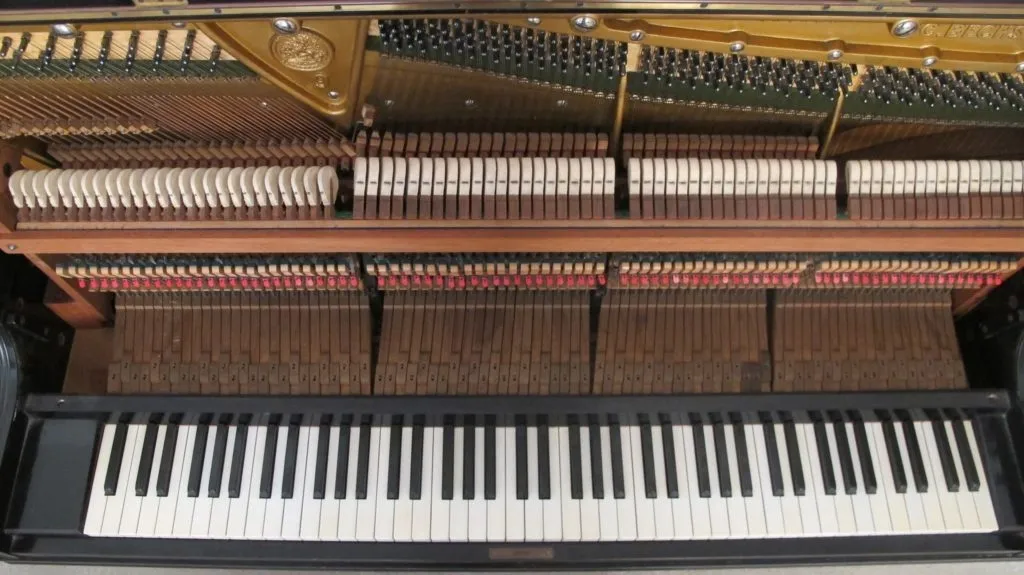
Image Source: Pianobook
Brand Overview and Heritage
Berlin in 1853 bustled with musical innovation when Carl Bechstein opened his piano workshop. The same year Steinway began in New York, Bechstein set his sights on building instruments that could handle the most demanding virtuosos of his era. Franz Liszt acquired his first Bechstein grand in 1860, and by 1870, endorsements from Liszt and conductor Hans von Bülow had established these pianos in concert halls across Europe.
Queen Victoria placed her royal seal of approval on the brand in 1881, commissioning a gilded art-case piano for Buckingham Palace. Production reached 5,000 pianos annually by 1900, making Bechstein the largest German manufacturer of high-end pianos. This heritage matters today because the same meticulous construction methods that impressed 19th-century virtuosos continue in every instrument.
Signature Upright Models
The Concert 8 stands as the flagship at 131cm (51.5 inches), often called “king of uprights.” This model houses the same acoustic assembly found in Bechstein’s Masterpiece grand pianos. Artists including Simon & Garfunkel, Sir Simon Rattle, and the Beatles chose the Concert 8 for their professional work – not because of marketing, but because it delivers grand piano dynamics in upright form.
The Classic 124 measures 124cm (49 inches) and receives over 180 hours of manufacturing time. Each instrument gets individual attention from craftspeople who shape the distinctive Bechstein tone: warm, hollow, and delicate. The Elegance 124, also at 124cm, offers the same tonal characteristics with refined cabinet styling.
Entry-level options include the Academy series (A2, A4, A6 models) and Residence line (R2, R4, R6 Classic models) for families seeking German craftsmanship at accessible price points.
Key Features and Technology
Bechstein sources Val di Fiemme spruce from the same Italian Alpine region that supplied Antonio Stradivarius for his violins. This wood choice reflects how seriously the company takes sound quality – they use the finest available materials regardless of cost.
The construction incorporates dark walnut double-felted hammers, pure copper hand-wound bass strings, and vertically laminated bridges. Each piano takes months to complete because the design philosophy centers on activating the entire cabinet to maximize resonance. Triple joinery and precision-fitted, long-aged woods minimize energy loss. Top-tier Renner actions provide the exceptional control that professionals demand.
Price Range and Value
|
Model |
Height |
Price Range (AED) |
|
Academy A2 |
– |
120,807 |
|
Classic R2 |
– |
150,550 |
|
Elegance 124 |
124cm |
155,690 – 172,581 |
|
Concert 8 |
131cm |
257,036 – 286,411 |
All instruments include a 5-year warranty covering parts and labor to the original purchaser.
Who Should Choose Bechstein
Families in Dubai and the UAE who want European refinement often choose Bechstein for their children’s musical development. The Concert 8 suits those requiring the absolute best upright available, though the price reflects its premium positioning. Classical musicians value the tonal clarity and sympathetic resonance that comes from centuries of German craftsmanship.
The Classic 124 serves advanced students who want exquisite touch without grand piano investment. Music schools and conservatories benefit from instruments built to perform for 100+ years – making them practical choices despite higher initial cost.
Blüthner
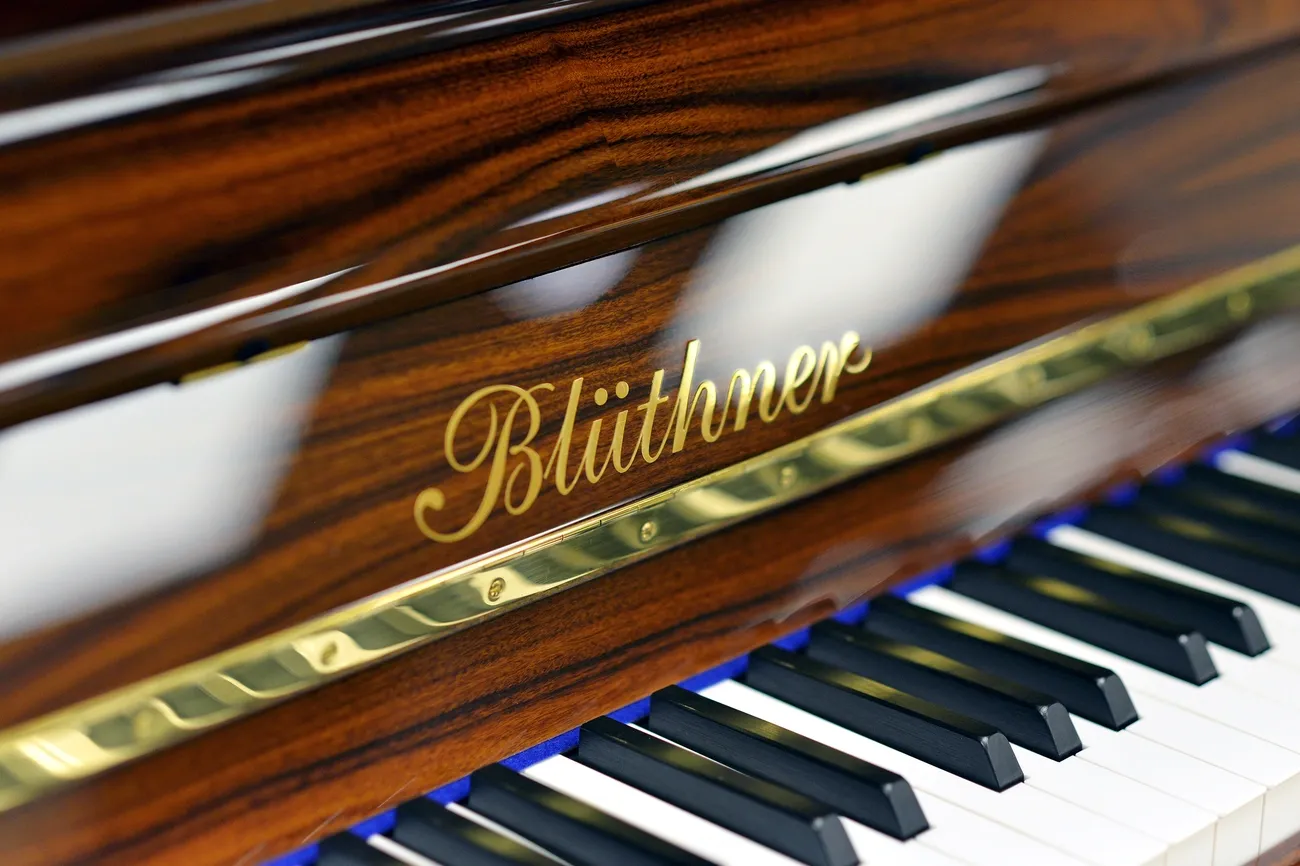
Image Source: Blüthner
Brand Overview and Heritage
Picture this: you’re playing a beautiful melody on the upper keys, and suddenly you hear something magical – additional strings singing along in harmony, even though you never touched them. This is the “Golden Tone” that made Julius Blüthner famous when he opened his Leipzig workshop in 1853 [14].
Blüthner earned endorsements from the greatest composers of his era. Franz Liszt, Claude Debussy, Richard Wagner, and Sergei Rachmaninoff all chose these pianos for their personal use [14]. By 1900, the company had grown to become Europe’s largest piano manufacturer [14]. Today, Dr. Christian Blüthner-Haessler leads the fifth generation of family ownership, maintaining the same dedication to craftsmanship his ancestors established over 170 years ago [14]. The German factory produces only about 100 uprights each year, ensuring each instrument receives careful attention [3].
Signature Upright Models
Five models span from compact home instruments to concert-quality uprights. The smallest Model D measures 116cm (45.7 inches), followed by Model C at 118cm (46.2 inches) [15]. Model A stands 124cm (49 inches) tall, while Model B reaches 132cm (52.2 inches). The impressive Model S towers at 145cm (57.3 inches) – one of the tallest uprights available anywhere [15].
For serious musicians, the Irmler Supreme SP 132 represents Blüthner’s premium offering, featuring a single-piece solid spruce soundboard and carefully selected Abel hammers [16].
Key Features and Technology
The secret behind every Blüthner lies in Julius Blüthner’s 1872 innovation: the Aliquot system [17]. Here’s how it works: in the upper register, each note has not three strings but four. That fourth string sits close to the others but receives no hammer strike [18]. Instead, it vibrates sympathetically when you play, adding rich harmonic overtones that create the distinctive “Golden Tone” [18].
The soundboards use Alpine spruce that seasons for more than ten years, shaped with a unique cylindrical crown that maintains tuning stability [19]. Each hammer gets cut at a precise angle and mounted straight on its shank, spreading the striking force evenly across the string [3]. German Renner actions and Abel hammers complete the careful construction [14].
Price Range and Value
|
Model |
Height |
Finish |
Price (AED) |
|
D |
45.7″ |
Satin/Polished Ebony |
123,520 |
|
C |
46.2″ |
Satin/Polished Ebony |
137,246 |
|
A |
49″ |
Satin/Polished Ebony |
158,132 |
|
B |
52.2″ |
Satin/Polished Ebony |
179,018 |
|
S |
57.3″ |
Satin/Polished Ebony |
240,564 |
Every instrument comes with a comprehensive 10-year parts and labor warranty [3].
Who Should Choose Blüthner
Families in Dubai seeking that warm, romantic sound that made European salons famous will find Blüthner delivers something special [19]. These pianos excel with Romantic-era music – think Chopin nocturnes, Liszt rhapsodies, or Debussy’s impressionistic pieces. The lyrical, singing qualities suit students developing musical expression beyond basic technique.
Advanced pianists who value refined touch and families investing in a generational instrument benefit from German build quality designed to perform beautifully for decades [14]. The Aliquot system creates tonal richness that remains unique among upright pianos.
Boston Piano (Steinway-Designed)
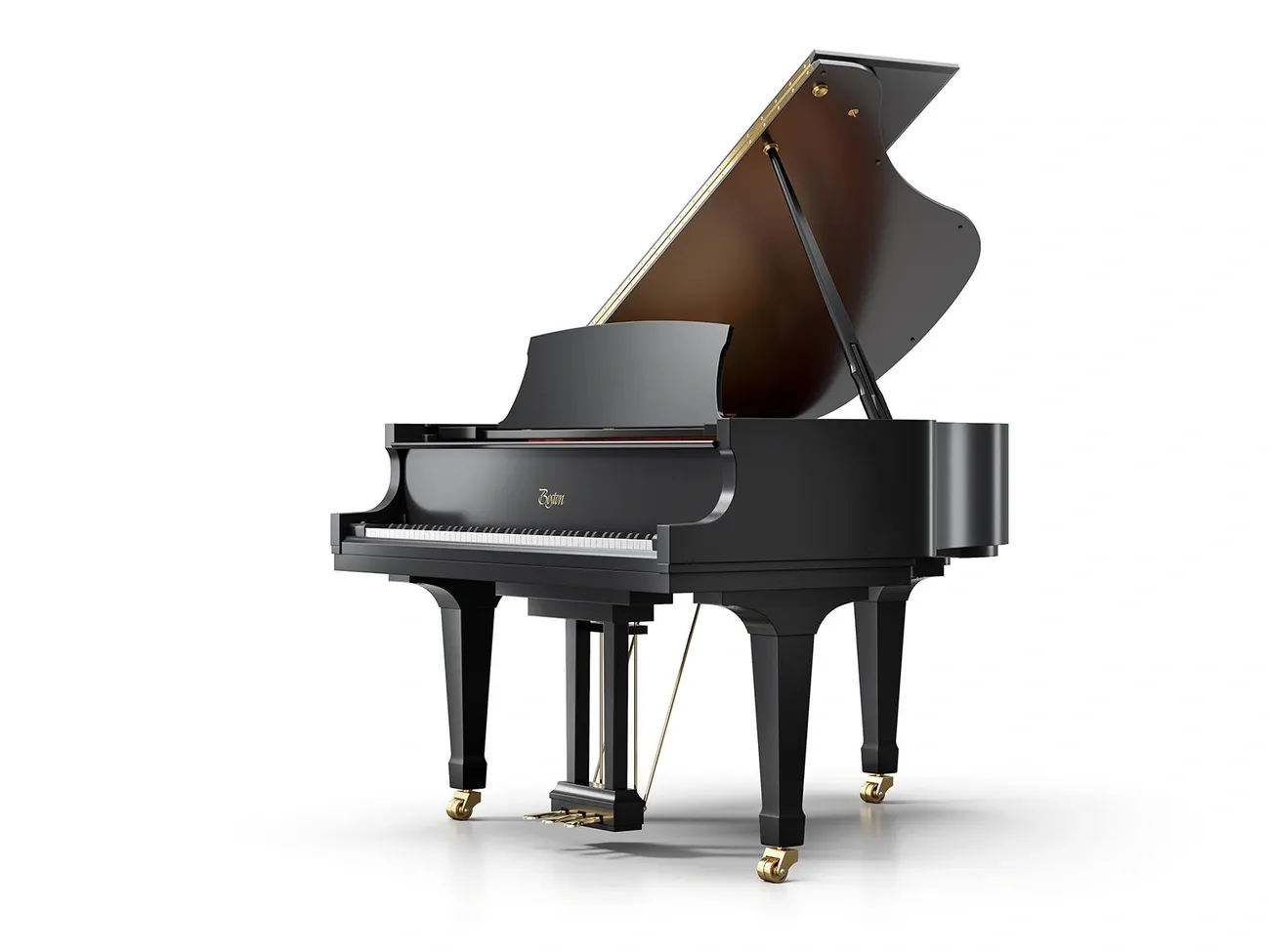
Image Source: Boston | Essex Pianos
Brand Overview and Heritage
Steinway & Sons launched the Boston line in 1992 with a clear purpose: bring Steinway design to families who want quality without paying handcrafted prices [20]. Engineers at Steinway’s New York factory designed every Boston piano from scratch, applying 169 years of piano-making expertise [20]. Here’s where it gets interesting: Steinway partners with Kawai in Japan to build these instruments to exact Steinway specifications [21].
This partnership makes sense. Steinway brings the design heritage, while Kawai provides efficient Japanese manufacturing precision. The result? Steinway-designed pianos at prices that work for serious students and families.
Signature Upright Models
Boston offers four upright models, each serving different needs. The UP-118E Performance Edition stands 46.5 inches tall with a compact 23.5-inch depth [22]. The UP-120S Performance Edition measures 47.4 inches [23]. For teaching studios, the UP-126E at 50 inches provides room-filling sound [23]. The flagship UP-132E reaches 52 inches and delivers tone that rivals many grand pianos [24].
Key Features and Technology
Steinway’s patented low-tension scaling extends string life while producing longer sustain [20]. The tapered solid Sitka spruce soundboard creates fuller tone and increased resonance [20]. Boston uses an Octagrip pinblock with 11 layers of hard rock maple glued at 60-degree angles for superior tuning stability [22]. Unlike cheaper pianos with plastic parts, Boston uses all-wood action components that mirror Steinway construction [25]. Staggered backposts address tension at critical stress points [22].
Price Range and Value
|
Model |
Height |
Finish |
Price (EUR) |
|
UP-118E |
46.5″ |
Polished Ebony |
€15,500 [26] |
|
UP-126E |
50″ |
Polished Ebony |
€18,250 [26] |
|
UP-132E |
52″ |
Polished Ebony |
€21,750 [26] |
Who Should Choose Boston
Students and families seeking Steinway design without premium pricing find Boston delivers real value. The 10-year Steinway Promise allows you to trade your Boston at 100% original purchase price toward a new Steinway grand [26]. Music schools pursuing All-Steinway designation often choose Boston uprights alongside genuine Steinways [27]. You get build quality that exceeds typical manufactured pianos, backed by the Steinway name.
Schimmel
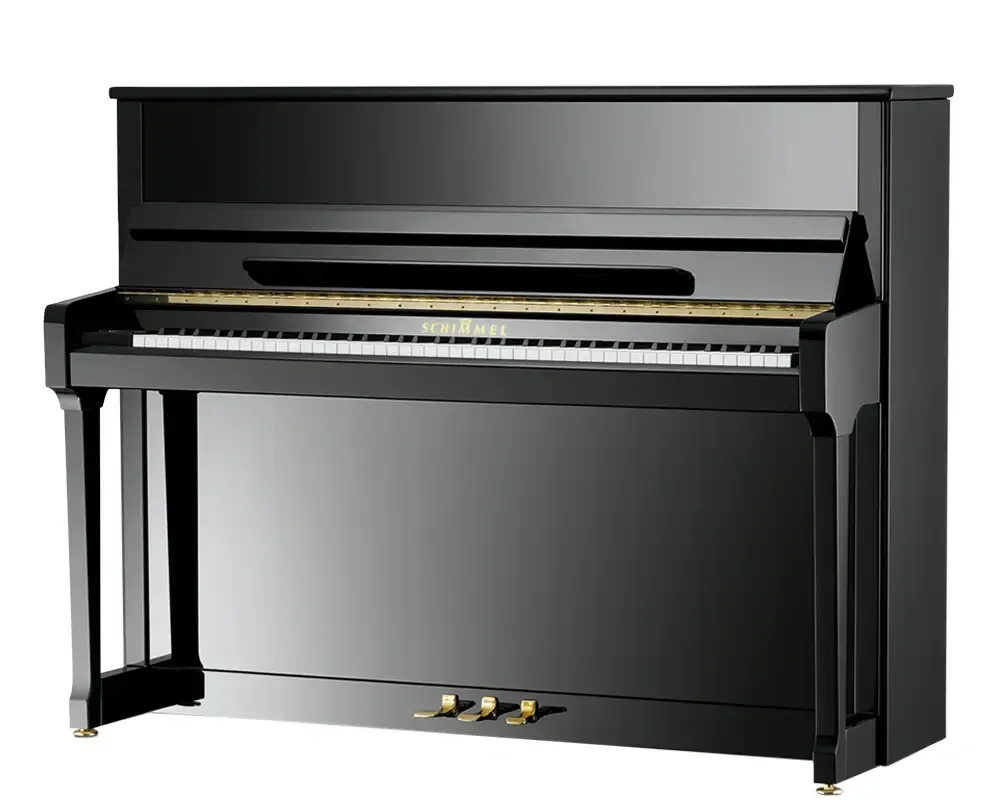
Image Source: Schimmel Pianos
Brand Overview and Heritage
Wilhelm Schimmel started small in 1885 – just 13 square meters in Leipzig, Germany [28]. Yet within ten years, his workshop was producing over 1,000 instruments annually [10]. By 1958, Schimmel had earned recognition as the world’s bestselling upright made by a resident German manufacturer [28].
Today, this family business operates under fourth-generation leadership [29], crafting approximately 3,000 pianos each year [10]. The 2016 partnership with Pearl River Piano Group brought a 90% controlling interest and global expansion capabilities [28]. This alliance created something unique: German design philosophy executed across four distinct manufacturing tiers.
Signature Upright Models
Think of Schimmel’s lineup as four clear pathways, each serving different family needs and budgets.
The Konzert series represents pure German craftsmanship from Braunschweig, featuring the 48-inch K122, 49-inch K125, and 52-inch K132 [10]. The Classic series, also German-built, offers the 46-inch C116, 48-inch C120, 50-inch C126, and 51-inch C130 [10].
Wilhelm Schimmel models come from Kalisz, Poland, including the 46-inch W114, 48-inch W118, and 49-inch W123 [10]. The entry-level Fridolin Schimmel series, manufactured by Pearl River in Guangzhou, China, includes the 46-inch F116, 48-inch F121, and 49-inch F123 [10].
Key Features and Technology
Schimmel pioneered Computer Assisted Piano Engineering (CAPE) software during the 1980s for precise research, design, and scale optimization [30]. Their patented mass-reduced bridge uses dynamic contouring to boost richness and sustain [4]. Konzert series instruments feature triplex scaling and treble scales identical to their Konzert grands [30].
Soundboards use mountain-grown spruce from Bavarian and Bohemian forests, though only 2% of available timber meets their production standards [4]. Mineral key tops provide sensitive, glare-free touch [4].
Price Range and Value
|
Series |
Manufacturing Location |
Price Range (AED) |
|
Fridolin |
China |
89,963 – 133,787 |
|
Wilhelm |
Poland |
180,898+ |
|
Classic |
Germany |
203,242 – 454,572 |
|
Konzert |
Germany |
Premium tier |
Who Should Choose Schimmel
Advanced pianists seeking German engineering with refined tonal dynamics gravitate toward Konzert series instruments [30]. Wilhelm Schimmel pianos suit serious students requiring European craftsmanship at accessible pricing [31]. Families and beginning players find Fridolin models deliver German design philosophy through Pearl River manufacturing [10].
The four-tier approach means families in Dubai and the UAE can access Schimmel design at their comfort level, whether starting with affordable Fridolin models or investing in handcrafted German Konzert instruments.
Sauter
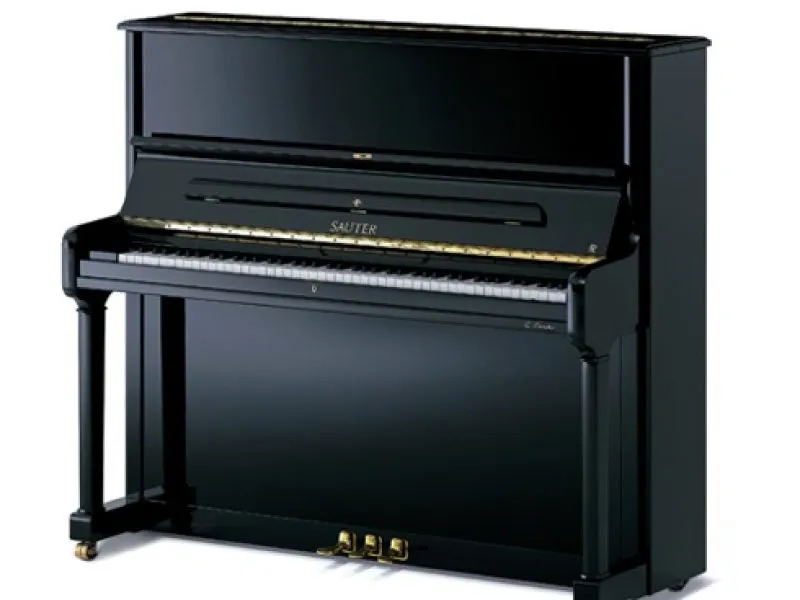
Image Source: Rosario Pianos
Brand Overview and Heritage
The world’s oldest continuously operating piano manufacturer traces back to 1819 when Johann Grimm began handcrafting instruments in Spaichingen, Germany [32]. Grimm spent six years apprenticing in Vienna with Johann Andreas Streicher and Nanette Streicher, who built pianos for Beethoven himself [11]. This direct connection to classical tradition shapes every instrument the company produces today.
After returning home, Grimm began crafting virginals before his nephew Carl Sauter transformed the workshop into a proper factory in 1846 [11][11]. Six generations of the Sauter family have maintained this legacy, with Ulrich Sauter currently directing operations alongside majority owner Otto Hott [32]. This represents something increasingly rare: genuine artisan tradition preserved across two centuries.
Signature Upright Models
The Vista 122 stands 48 inches tall with Sauter’s revolutionary R2 Double Repetition Action [33]. The Competence 130 measures 51 inches and incorporates spherical concavity soundboards that enhance vibration patterns [34]. Masterclass uprights use white spruce sourced specifically from Germany’s Fiemme Valley, paired with walnut core hammerheads and hand-polished cast plates [32].
For those seeking contemporary aesthetics, designer Peter Maly created the Pure Basic, Rhapsody, and Vitrea models, with the latter featuring striking glass veneer covering the entire cabinet [35].
Key Features and Technology
Here’s what makes Sauter special: their patented R2 Double Repetition Action solves gravity’s problem with upright piano repetition [32]. When you press and release a key on most uprights, gravity works against quick repetition. Sauter’s R2 system mimics the repetition mechanism found in grands, where springs rather than gravity control the action.
The spherical concavity soundboard curves slightly inward, allowing freer vibration and richer harmonic development [35]. Sliding titanium duplex bridge supports let technicians fine-tune sympathetic string vibrations for enhanced tonal color [35]. Production totals approximately 500 units annually [11], with every component manufactured in-house in Germany [11].
Price Range and Value
|
Model |
Height |
Price (AED) |
|
112 |
46″ |
80,416 |
|
116 |
46″ |
89,963 |
|
122 |
48″ |
161,565 |
|
130 |
51″ |
178,089 |
Each piano includes a 5-year parts and labor warranty [13].
Who Should Choose Sauter
Concert pianist Harriet Stubbs ranked Sauter alongside Bösendorfer and Steinway, praising its distinctive dark sound that rewards dedicated practice [32]. Advanced players who want grand piano touch sensitivity in an upright will appreciate the R2 action’s unique capabilities [36].
Sauter suits those who value exclusivity and customization. Their small factory approach allows personalized finishes and specifications that mass producers simply cannot offer [35]. Families in Dubai seeking a truly unique instrument for serious musical study find Sauter delivers both historical pedigree and modern innovation.
Steingraeber & Söhne
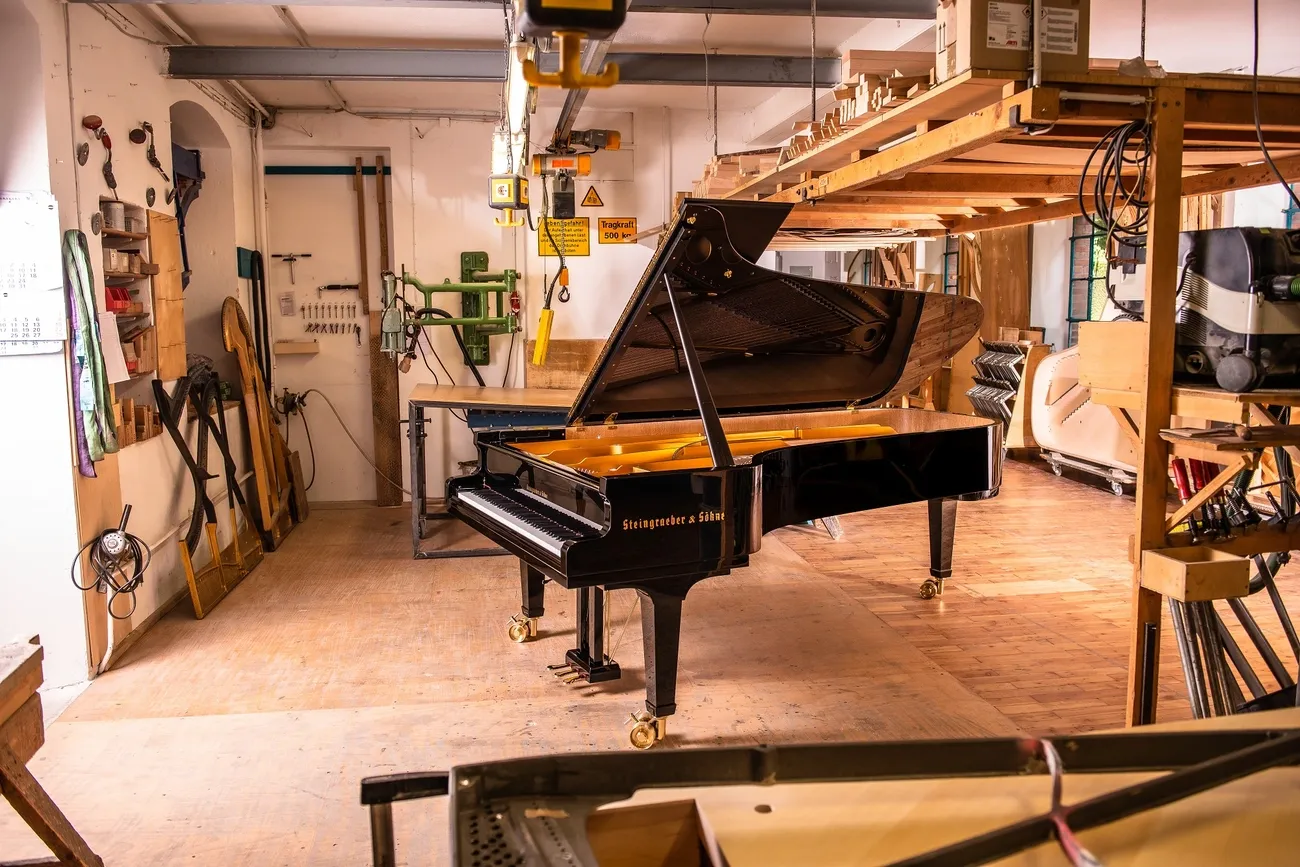
Image Source: Steingraeber Bayreuth
Brand Overview and Heritage
Picture this: Eduard Steingraeber arrived in Bayreuth in 1852 with a bold vision. He wanted to blend the best of Viennese lightness with English power, creating something entirely new. His revolutionary Opus 1 launched what would become one of Germany’s most exclusive piano makers [37]. Since 1867, international awards have recognized their exceptional craftsmanship [37].
What makes Steingraeber special? Six generations of the same family have poured their hearts into these instruments. Udo Schmidt-Steingraeber has guided the company since 1980 [37], with the seventh generation now carrying the torch [38]. They deliberately keep production tiny—just approximately 110 instruments annually [38] with fewer than 40 skilled craftspeople [9]. Each piano takes shape in the same historic 18th-century Bayreuth building where Wagner once walked [39].
Signature Upright Models
Three extraordinary uprights tell the Steingraeber story. The 122T stands 48 inches tall and features something remarkable: an additional soundboard that vibrates in sympathy with the main one [40]. Think of it as two hearts beating together.
The 130T reaches 51 inches and produces sound equivalent to a 160cm baby grand [41]. But the flagship 138K truly astounds. At 54 inches [9], this represents the largest upright piano in the world, with acoustic power matching a 180cm salon grand [42]. Paris Le Monde magazine awarded it “Best Piano in the World” [40]. All models can include the optional Steingraeber-Ferro-Magnet (SFM) Action [41].
Key Features and Technology
The SFM action replaces traditional springs with precisely positioned magnets under the hammer mechanism [43]. This creates grand piano-like repetition speed in an upright format [44]. Soundboards use only Bergfichte spruce aged at least 250 years [43]—wood that has witnessed centuries of Alpine seasons.
Each upright requires four months to complete [43]. Steingraeber works with specially manufactured Renner parts [43] and stores all wood at exactly 40% humidity [43]. This attention to detail explains why so few emerge from their workshop each year.
Price Range and Value
|
Model |
Height |
Price (GBP) |
|
122 |
48″ |
31,180 [8] |
|
130 |
51″ |
39,550 – 48,995 [8] |
|
138 |
54″ |
42,595 – 65,000 [8] |
Who Should Choose Steingraeber
Universities, small concert halls, and churches often choose the 138K where space prevents installing a grand [42]. Professional pianists seeking exceptional clarity and power find these instruments deliver what larger halls demand [39]. Families in Dubai and the UAE who value absolute exclusivity appreciate owning one of only 110 instruments made each year worldwide.
The investment reflects not just superior craftsmanship, but ownership of a piece of German musical heritage built to perform for generations.
Bösendorfer
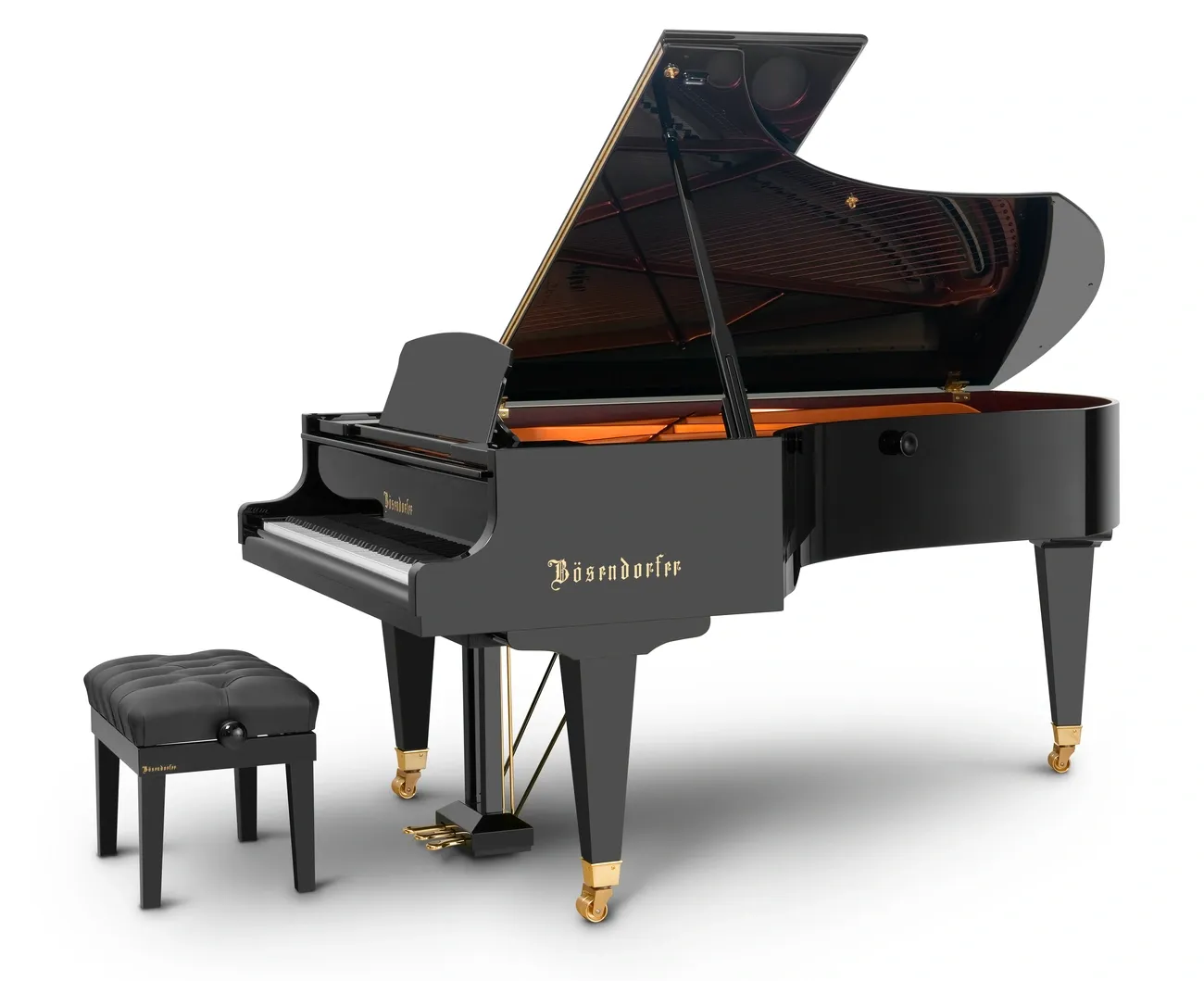
Image Source: Bösendorfer
Brand Overview and Heritage
Vienna has nurtured classical music for centuries, and when Ignaz Bösendorfer opened his workshop in 1828 [45], he tapped into this rich tradition. Franz Liszt himself performed on a Bösendorfer Grand in 1838, captivating audiences and establishing the brand’s reputation among virtuoso performers [45]. While Yamaha acquired the company in 2008, the Austrian factory maintains its independence [12], handcrafting close to 300 instruments each year [12].
Signature Upright Models
Bösendorfer keeps their upright range focused with two models. The Grand Upright 120 stands 47 inches tall, while the Grand Upright 130 measures 52 inches (130cm) [12]. That larger 130 model produces subtle musical nuances and powerful bass response that rivals many grand pianos [46], though it weighs approximately 582 pounds [47].
Key Features and Technology
Picture this: more than 80% of each Bösendorfer consists of spruce tone wood that air-dries naturally through four complete seasons [46]. Skilled craftspeople hand-wind the bass strings, adding one or two copper layers over steel cores for warmth and depth [46]. The sand-cast frames rest outdoors for six months, releasing forging stress before they support 20 tons of string tension [46]. Renner actions provide a lighter, more fluid feel compared to other premium brands [47]. Each instrument requires up to a year to complete [46].
Price Range and Value
|
Model |
Height |
Price (AED) |
|
130CL |
52″ |
326,795 [48] |
Who Should Choose Bösendorfer
Pianists seeking rich, dark, orchestral tone favor these instruments [45]. The warm sound suits musicians who need precise tonal control and a singing upper register [47]. Advanced players who prefer silky, responsive touch benefit from the refined action characteristics [47]. Families in Dubai and the UAE considering a Bösendorfer should understand they’re investing in Austrian craftsmanship that produces some of the most distinctive voices in the piano world.
Essex (Steinway Family)
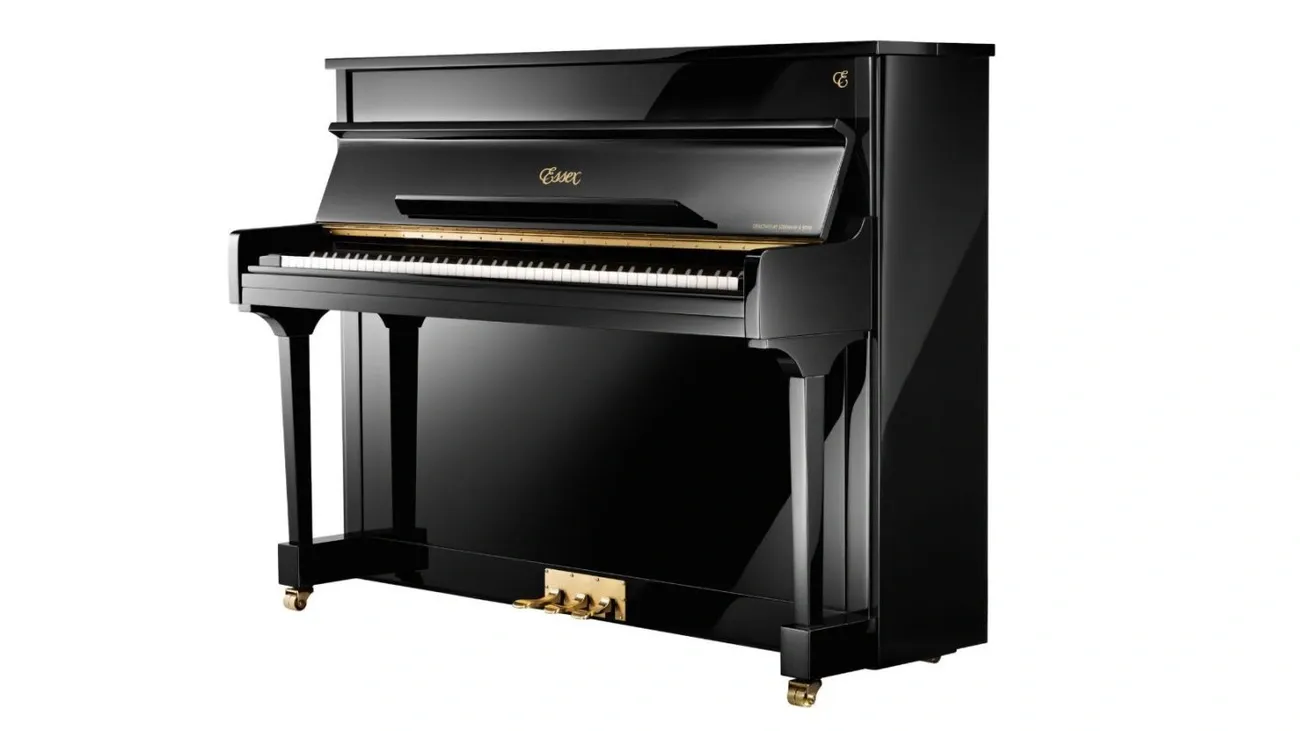
Image Source: Steinway pianos
Brand Overview and Heritage
Families often ask us: “Can we get Steinway quality without the premium price?” Essex represents Steinway’s answer to exactly this question. Steinway introduced Essex in 2001 with limited models, then executed a major relaunch in 2006 comprising 35 grand and 31 vertical models [5]. Here’s what makes Essex special: engineers at Steinway’s New York facility designed these instruments from scratch, manufactured at Pearl River’s China facility [49]. The collaboration with renowned furniture designer William Faber produced museum-quality finishes at accessible pricing [50]. Over 75,000 instruments have sold since launch [5], with each inspected by Steinway-trained technicians before shipping [50].
Signature Upright Models
Essex keeps their upright lineup simple with four well-designed models. The 42-inch EUP-108C offers continental styling [5]. The 44-inch EUP-111E console follows [5]. The 46-inch EUP-116E features seven cabinet styles including Queen Anne, French Formal, and Contemporary [5]. The flagship 48.5-inch EUP-123E delivers versatility through classic straight legs with grand-style leg tops [49].
Key Features and Technology
Essex uprights incorporate genuine Steinway engineering principles. Solid quarter-sawn spruce soundboards with diaphragmatic tapering produce stronger tone [51]. Staggered backposts position where string tension peaks [52]. Low-tension scaling designed by Steinway yields fuller, warmer sound with extended sustain [52]. All-wood action parts with solid spruce keys provide authentic touch [52]. When you play an Essex, you’re experiencing scaled-down versions of the same design principles found in concert Steinways.
Price Range and Value
|
Model |
Height |
Price (EUR) |
|
EUP-108C |
42″ |
€7,250 |
|
EUP-111E |
44″ |
€7,950 |
|
EUP-116E |
46″ |
€8,750 |
|
EUP-123E |
48.5″ |
€9,250 |
The real value comes with Essex’s remarkable guarantee: a 10-year trade-in program that refunds 100% original purchase price toward any new Steinway grand [50]. No other piano manufacturer offers anything close to this level of buyer protection.
Who Should Choose Essex
Essex serves families in Dubai and the UAE who want to test their commitment before making a substantial piano investment. Beginning students benefit from Steinway design without premium investment [49]. Families testing commitment before luxury purchases find Essex delivers quality assurance [49]. Entry-level buyers seeking accessible gateway into Steinway family favor these instruments [53]. Think of Essex as your stepping stone into the Steinway world – with the unique safety net that if your child develops serious musical ambitions, you can trade up at full value.
Piano Brand Comparison: Your Decision Guide for Dubai & UAE Families
When you walk into a piano showroom in Dubai, this comparison becomes your roadmap. Each brand tells a different story about quality, heritage, and value. Here’s how these 11 manufacturers stack up for families seeking the right instrument for their children’s musical journey.
|
Brand |
Country |
Founded |
Height Range |
What Makes Them Different |
Price Range (AED) |
Perfect For |
|
Yamaha |
Japan |
1887 |
43″ – 52″ (109-131cm) |
Vacuum-cast frames, humidity-resistant action rails, floating soundboards that vibrate freely |
17,621 – 77,107 |
Students, teaching studios, music schools; reliable performance year after year |
|
Steinway |
USA (New York) |
1853 |
45″ – 52″ (114-132cm) |
Seven-layer pinblocks, upright action that feels like a grand, soft pedal system, 125+ patents |
235,739 – 274,294 |
Professional pianists, advanced students, families wanting generational instruments |
|
Kawai |
Japan/Indonesia |
1927 |
44″ – 53″ (112-135cm) |
Carbon-fiber action parts (16% faster response), tapered soundboards, steel-reinforced frames |
20,545 – 79,277 |
Classical pianists, serious students (K-300), advanced musicians (K-500), professional studios (K-800) |
|
C. Bechstein |
Germany (Berlin) |
1853 |
124-131cm (49-51.5″) |
Stradivarius-region spruce, walnut hammers with double felt, copper-wound bass strings |
120,807 – 286,411 |
Classical musicians, professionals wanting refined European sound, conservatories |
|
Blüthner |
Germany (Leipzig) |
1853 |
116-145cm (45.7-57.3″) |
Fourth sympathetic string that vibrates freely, 10+ year aged Alpine spruce, “Golden Tone” |
123,520 – 240,564 |
Pianists wanting warm romantic tone, Chopin and Liszt repertoire, generational instruments |
|
Boston |
Japan (Kawai factory) |
1992 |
46.5″ – 52″ (118-132cm) |
Steinway-designed, low-tension strings for longer life, 11-layer pinblocks, all-wood action |
€15,500 – €21,750 |
Families wanting Steinway design at accessible prices, schools, students with trade-in guarantee |
|
Schimmel |
Germany/Poland/China |
1885 |
46″ – 52″ (117-132cm) |
Computer-optimized design, mass-reduced bridges, Bavarian mountain spruce, mineral key tops |
89,963 – 454,572+ |
Advanced pianists (Konzert), serious students (Wilhelm), beginners (Fridolin) |
|
Sauter |
Germany |
1819 |
46″ – 51″ (117-130cm) |
Double repetition action like grands, curved soundboards, titanium bridge supports |
80,416 – 178,089 |
Advanced players wanting grand piano touch, those seeking custom specifications |
|
Steingraeber & Söhne |
Germany (Bayreuth) |
1852 |
48″ – 54″ (122-138cm) |
Magnetic action replacing springs, 250+ year-old spruce, world’s largest upright (138K) |
£31,180 – £65,000 |
Universities, small concert halls, professional pianists wanting exceptional clarity |
|
Bösendorfer |
Austria (Vienna) |
1828 |
47″ – 52″ (120-130cm) |
80% spruce construction, four-season air-dried wood, hand-wound bass strings, outdoor-aged frames |
326,795 |
Pianists wanting rich orchestral tone, singing upper register, silky responsive touch |
|
Essex |
China (Pearl River) |
2001 |
42″ – 48.5″ (107-123cm) |
Steinway-designed, quarter-sawn spruce soundboards, low-tension scaling, 35 cabinet styles |
€7,250 – €9,250 |
Beginning students, families testing commitment, entry-level Steinway family gateway |
Reading This Table: Production volumes range from 110 instruments yearly (Steingraeber) to over 8 million total (Yamaha). Premium European brands include 5-10 year warranties. Boston and Essex offer unique 10-year trade-in guarantees toward new Steinway grands – essentially a risk-free trial period.
The price currencies vary (AED, EUR, GBP) based on regional availability in Dubai and the UAE. Contact authorized dealers for current local pricing and delivery to Abu Dhabi, Sharjah, or other Emirates locations.
Conclusion
Your family’s piano choice comes down to three simple questions: What does your child need now? What will they need in five years? What does your home space and budget allow?
We’ve walked through eleven quality manufacturers, each with distinct strengths. Japanese makers like Yamaha and Kawai offer dependable instruments that hold their value and require minimal maintenance. German builders like Bechstein, Blüthner, and Sauter create instruments that can serve multiple generations. Steinway uprights provide concert-quality sound, while Essex and Boston offer Steinway design at accessible pricing.
Visit piano showrooms in Dubai or Abu Dhabi and play these instruments yourself. Bring your child if they’re old enough. Listen to how each piano responds when you press the keys. Notice which touch feels most natural. Pay attention to how the sound fills the room.
The right upright piano will feel different under your fingers than others. You’ll hear the difference in tone quality. Your child will sense it too. Trust that feeling – it guides you toward an instrument that will inspire daily practice and musical growth for years to come.
Take your time with this decision. Quality acoustic pianos last decades when properly maintained. The instrument you choose today becomes part of your family’s musical story.
FAQs
Q1. Which upright piano brands are recommended for home use? Yamaha and Kawai are excellent choices for home use, offering reliability and quality at accessible price points. Other brands worth considering include Boston (Steinway-designed) and Schimmel, which provide consistent playability and tone suitable for domestic environments.
Q2. What distinguishes the “Big Four” piano manufacturers? The “Big Four” refers to the most prestigious piano brands that have built exceptional reputations over centuries: Steinway & Sons, C. Bechstein, Bösendorfer, and Blüthner. These manufacturers are renowned for their handcrafted quality, superior materials, and distinctive tonal characteristics that appeal to professional pianists and serious musicians.
Q3. How does Fazioli compare to Steinway in terms of sound? Fazioli pianos are known for their consistent, brighter, and balanced tone with powerful bass. Their overall sound is characterized as clear and precise. Steinway pianos, in contrast, produce warmer tones, particularly in the bass section, offering a more romantic and singing quality.
Q4. What makes Yamaha uprights popular among piano technicians? Piano technicians recommend Yamaha more frequently than any other brand due to their precision engineering, exceptional reliability, and consistent performance. These instruments hold their regulation well over time and feature innovations like V-Pro vacuum shield casting and aluminum action rails that resist humidity fluctuations.
Q5. What is the Aliquot system found in Blüthner pianos? The Aliquot system, patented by Julius Blüthner in 1872, incorporates a fourth sympathetic string in the treble section that vibrates freely without being struck by the hammer. This innovation enriches harmonic overtones and creates Blüthner’s signature “Golden Tone,” producing a warmer and more resonant sound.
References
[1] – https://luxury-pianos.com/best-upright-pianos/?srsltid=AfmBOooguO1-ZTpLe0inF5M9wQ9aCQ1DdNRqnkTBdihUeGXmlaZn_zF
[2] – https://www.sykespianos.co.uk/post/the-history-yamaha-pianos
[3] – https://greenemusic.com/yamaha-pianos/?srsltid=AfmBOoq6qVZt2BxkWdGZCydsGxHxPUf7x9SDLfPU6X6CnjEIIna71b3R
[4] – https://www.mencheymusic.com/acoustic_and_digital_pianos/yamaha-upright-pianos/
[5] – https://www.brighamlarsonpianos.com/blogs/yamaha-piano-blog/best-yamaha-upright-piano-for-beginners?srsltid=AfmBOooA2AMOnqnqY4qU_YwU8CBqYwV3SbWgNhkcJamErn6uDxeI0B5v
[6] – https://www.merriammusic.com/pianos/brands/yamaha/?srsltid=AfmBOopLzSXsn-PouIvjlJfyaNbDTZag8vKcX5Ahkx7DIzovHyqqMBSV
[7] – https://www.pianodistributors.com/yamaha-pianos/yamaha-vertical-pianos/
[8] – https://www.coachhousepianos.co.uk/blog/articles/best-yamaha-upright-pianos-guide/?srsltid=AfmBOoqtEOMfSG7cxG8vrRvAxrL03XdunqZL5eHvjfZj2UfIFVUj2Pk5
[9] – https://www.pianobuyer.com/yamaha
[10] – https://usa.yamaha.com/products/musical_instruments/pianos/upright_pianos/u_series/u-series.html
[11] – https://www.steinway.com/news/features/steinway-an-american-story
[12] – https://www.steinwayes.com/heritage
[13] – https://msteinert.com/blog/which-upright-piano-is-best
[14] – https://www.steinway.com/pianos/steinway/upright
[15] – https://www.merriammusic.com/blog/pianos-blog/steinway-k-52/
[16] – https://bradfieldpiano.com/steinway-piano-cost/
[17] – https://www.steinway.com/news/features/upright-action
[18] – https://www.pianobuyer.com/kawai
[19] – https://www.merriammusic.com/pianos/brands/kawai/?srsltid=AfmBOopw8s44s_ThXiYA8Q5ruXytbQKGNK_M8CbYtPRTOEZhWY1QoduK
[20] – https://www.kawai-global.com/support/faq/what-is-the-millennium-iii-action/
[21] – https://www.kawai.de/milleniumiiigrand.htm
[22] – https://www.richardlawsonpianos.com/piano-dealer/which-is-the-right-kawai-piano-for-you/
[23] – https://luxury-pianos.com/all-about-bluthner-pianos/?srsltid=AfmBOor2sTdKCtVuWLLIp8-Z3pEowcLdJHcnTJow9MXMb6_fbnCcALnC
[24] – https://www.pianobuyer.com/bluthner
[25] – https://www.merriammusic.com/pianos/brands/bluthner/?srsltid=AfmBOopfgnhqhe5FERg5CCyh_tqncGR4oSrLb2uanj5MXiBdJ-TQEnjf
[26] – https://www.allpianos.com/bluthner
[27] – https://www.pianostreet.com/blog/piano-news/bluthner-and-the-aliquot-fourth-string-system-4711/
[28] – https://bluthner.co.uk/world-of-bluthner/craftsmanship
[29] – https://www.klaviano.com/pianos-for-sale/bluthner.html?srsltid=AfmBOoqgEX8XkQkNtGJopqnovKVPvAXVVYYoW3MarWQQNe_E6LsshxyQ
[30] – https://www.steinway.com/news/features/the-steinway-designed-boston
[31] – https://www.concertpitchpiano.com/Boston-Piano-Prices.html
[32] – https://www.bostonpianos.com/pianos/boston/upright/up-118e-pe
[33] – https://www.steinwaypianogallery.com/pianos/boston/upright
[34] – https://houseofpianos-uae.com/boston-up-132/
[35] – https://eu.bostonpianos.com/en/pianos/boston
[36] – https://eu.bostonpianos.com/en/pianos/prices/prices-boston
[37] – https://www.loudlandsmusic.com/blog/steinway-boston-piano
[38] – https://schimmelpianos.com.au/heritage-and-awards/history/
[39] – https://www.merriammusic.com/pianos/brands/schimmel/?srsltid=AfmBOoo76VqfvfGgRnW-F1hczKjfZ_XWwnF58fEGpfVvyWkwmZnSHfI7
[40] – https://cooperpiano.com/the-history-of-schimmel-pianos/
[41] – https://europianosnaples.com/best-piano-brands-schimmel-piano/
[42] – https://www.schimmel-pianos.de/en/classic/c-116-modern-2/
[43] – https://www.pianobuyer.com/post/two-schimmel-reviews-wilhelm-schimmel-w180-grand-and-schimmel-c121-upright
[44] – https://blog.coachhousepianos.co.uk/why-we-love-sauter-pianos
[45] – https://en.wikipedia.org/wiki/Sauter_Piano_Manufaktur
[46] – http://sauter-pianos.de/japanese/pianos/122klasse/vista122.html
[47] – https://www.sauter-pianos.de/en/competence-130
[48] – https://www.pianistmagazine.com/news/the-piano-worlds-best-kept-secret/
[49] – https://europianosnaples.com/piano-brands-all-about-the-best-pianos-sauter/
[50] – https://blog.coachhousepianos.co.uk/the-double-repetition-action-by-sauter
[51] – https://www.steingraeber.de/en/about-us/history/
[52] – https://www.pianistmagazine.com/news/steingraeber-the-german-piano-manufacturer-proud-to-be-the-beauty-of/
[53] – https://www.merriammusic.com/pianos/brands/steingraeber-sohne/?srsltid=AfmBOoqQHvSOPNifhZBLChp3ii_P7evZh51Fx_UJ0nYeOjYLLhz-hAuE
[54] – https://www.pianosnow.com/post/steingraeber-söhne-the-finest-piano-in-the-world-now-in-the-pacific-northwest
[55] – https://marksonpianos.com/blog/best-steingraeber-pianos/
[56] – https://www.steingraeber.de/en/instrumente/upright-pianos/
[57] – https://www.steingraeber.de/en/instrumente/upright-pianos/138-k/
[58] – https://bolpianos.com/en/products/steingraeber-sohne-138-sfm
[59] – https://www.steingraeber.de/en/innovationen/sfm-upright-piano-action/
[60] – https://marksonpianos.com/product-category/new-pianos/new-acoustic-upright-pianos/steingraeber-sohne-upright-pianos/
[61] – https://www.coachhousepianos.co.uk/blog/articles/why-should-consider-a-bosendorfer-piano/?srsltid=AfmBOoo3F2aQtDcqUFuH9c3MIzvJGu2wFwG9BdbiRKqvjMZWiSv4kgMl
[62] – https://www.boesendorfer.com/en/about/history-1
[63] – https://www.boesendorfer.com/en/pianos/pianos/grand-upright-130
[64] – https://faustharrisonpianos.com/bosendorfer-piano-prices/?srsltid=AfmBOopxhjCoA7H0mQOFYnZVU0lmyuXuWhwNCEkqXVrRABBDb6hVaoHR
[65] – https://faustharrisonpianos.com/bosendorfer-piano-prices/?srsltid=AfmBOornKaQNjNmfGSeJMwTrtc6XVR2uoBS2Vje5j-iTS6cVRAoAIbNc
[66] – https://www.pianobuyer.com/essex
[67] – https://msteinert.com/blog/essex-piano-infused-with-steinways-design
[68] – https://steinway.ae/essex/
[69] – https://www.essexpianos.com/pianos/essex/upright/eup-116e
[70] – https://www.steinwaypianos.in/pianos/essex/upright
[71] – https://msteinert.com/blog/6-reasons-your-first-piano-should-be-an-essex-piano