Table of Contents
- The Golden Age: Piano’s Entry into Arabic Music
- Technical Adaptations: The Oriental Piano and Quarter-Tones
- Modern Dubai: Where Arabic and Western Music Converge
- The Role of Quality Used Pianos in Arabic Music Today
- Finding Authentic Japanese Pianos in Dubai
- FAQ
- Conclusion
The piano’s journey through Arabic culture tells one of music’s most compelling cross-cultural stories. When this Western instrument arrived in the early 20th century, it quickly carved out a special place in Dubai’s thriving music scene, building bridges between Eastern and Western musical traditions like few other instruments could. Musicians and enthusiasts today often seek out [used Japanese pianos in Dubai] for their authentic sound—instruments that respect classical Western heritage while adapting beautifully to Arabic music’s intricate demands.
The Golden Age: Piano’s Entry into Arabic Music
The piano found its voice in Arabic music during the 1920s and 1930s, especially in Egypt and Lebanon. This Golden Age of Arabic music saw legendary composers like Mohammed Abdel Wahab and Farid al-Atrash weaving piano melodies into traditional Arabic compositions.
What made the piano so appealing was its flexibility. Traditional Arabic instruments worked within specific scales, but the piano offered a complete chromatic range that could still capture the delicate microtonal shifts that give Arabic music its distinctive character. Egyptian films from this era showcased piano-driven soundtracks, establishing the instrument as part of popular Arabic culture.
Lebanese musicians—many trained in European conservatories—led the charge in adapting Western piano techniques for Arabic musical forms. These musicians found inventive ways to honor both traditions, creating a unique fusion that shaped Middle Eastern music for generations.
Technical Adaptations: The Oriental Piano and Quarter-Tones
Blending these musical worlds presented real challenges. Arabic music depends on quarter-tones and microtonal intervals that standard Western pianos simply can’t produce naturally. In the mid-20th century, musicians and technicians addressed this by developing the “Oriental piano.”
Musicians and piano technicians tried various modifications:
- Retuning specific keys to fit maqam scales
- Using prepared piano techniques with objects placed on strings
- Developing specialized playing techniques to “bend” notes
- Creating custom tuning systems for different Arabic modes
Many accomplished Arabic pianists discovered that high-quality acoustic pianos, particularly Japanese instruments from Yamaha and Kawai, offered the tonal flexibility they needed. These pianos provided the dynamic range and touch sensitivity essential for expressing the emotional subtleties at the heart of Arabic music.
Modern Dubai: Where Arabic and Western Music Converge
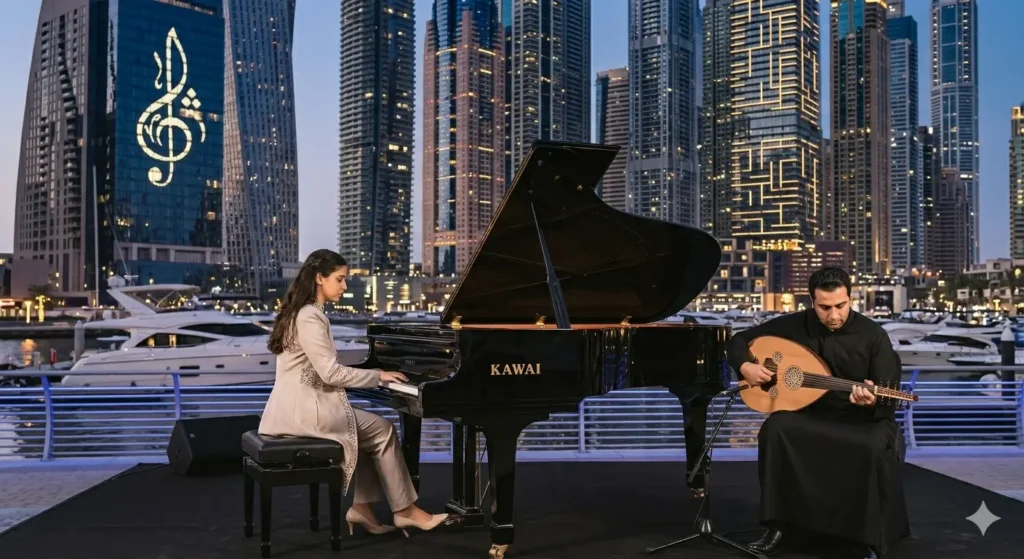
Dubai has become a cultural crossroads where traditional Arabic music meets contemporary global sounds. The city’s diverse population and dedication to cultural development have created the perfect environment for the piano to flourish across multiple musical contexts.
The Dubai Culture Piano Camp exemplifies this cultural bridge. Here, students tackle Western classical pieces right alongside Arabic compositions, building skills that respect both traditions. This approach has boosted demand for quality acoustic pianos versatile enough for different musical styles. Dubai’s music schools, conservatories, and private studios need reliable instruments that perform consistently across genres. Given the region’s tough climate—with its temperature swings and humidity shifts—Japanese-made instruments are particularly valued for their proven resilience and stability.
The Role of Quality Used Pianos in Arabic Music Today
Any professional musician or dedicated student will tell you that instrument quality shapes musical expression. This becomes even more critical in Arabic music, where emotional subtlety and tonal nuance take center stage—the piano’s touch response and harmonic depth can make or break a performance.
Professionally refurbished second-hand Japanese pianos often outperform new instruments in both value and character. Decades of use help these instruments mature, creating more stable tuning and deeper tonal qualities that work beautifully with both Western and Arabic musical styles.
Many established Arabic pianists prefer vintage Yamaha and Kawai instruments for their:
- Consistent action response across all keys
- Rich harmonic overtones that complement Arabic scales
- Proven durability in various climate conditions
- Superior touch sensitivity for expressive playing
Finding Authentic Japanese Pianos in Dubai
Dubai’s role as a cultural hub has fostered a sophisticated market for quality musical instruments. Musicians looking for authentic Japanese pianos benefit most from working with dealers who understand Arabic music’s technical needs and appreciate the value of instrument heritage.
When choosing a piano for Arabic music performance, consider these factors:
• Touch sensitivity: Essential for expressing dynamic variations in Arabic compositions
• Tonal consistency: Critical for maintaining pitch relationships in maqam scales
• Climate stability: Important for Dubai’s environmental conditions
• Professional refurbishment: Ensures optimal performance and longevity
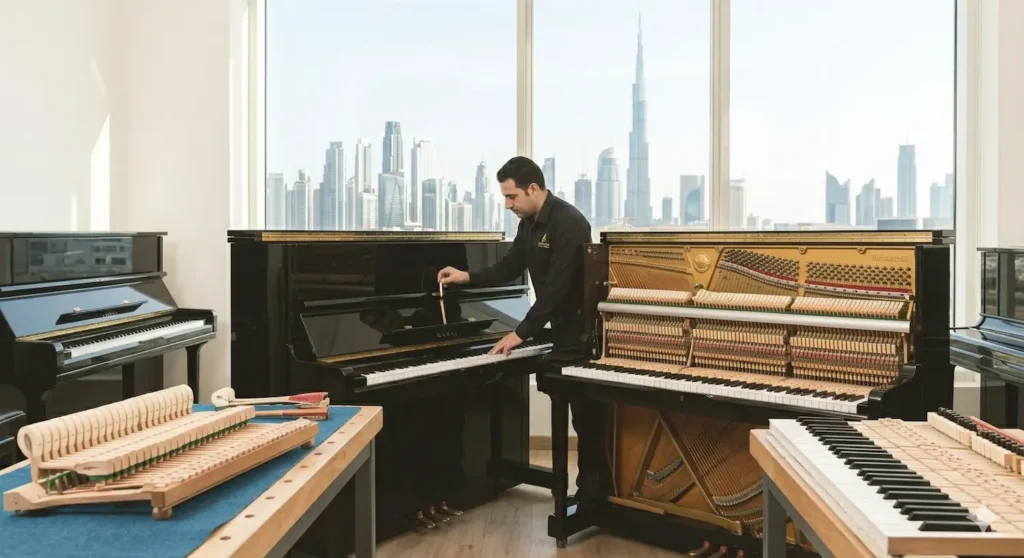
At Lotfi Piano’s Ras Al Khor showroom, musicians can experience a curated selection of professionally refurbished Japanese pianos. Each instrument undergoes complete restoration and certification to meet the high standards that serious musical study and performance demand.
The company’s commitment to quality includes:
• 3-5 year comprehensive warranty on all instruments
• Free professional tuning within 15 days of delivery
• Flexible Tabby installment options for budget management
• Free delivery throughout the UAE
• Direct importation from Japan ensuring authentic provenance
Whether you’re a conservatory student exploring Arabic-Western fusion or a professional musician needing a reliable performance instrument, the right piano can transform your musical journey.
FAQ
What makes Japanese pianos particularly suitable for Arabic music?
Japanese pianos, especially Yamaha and Kawai models, deliver exceptional touch sensitivity and tonal consistency. These characteristics are crucial for capturing the subtle microtonal variations and emotional depth that define Arabic musical expression.
Can standard pianos effectively play Arabic music without modifications?
Absolutely. Skilled pianists can adapt standard piano techniques to express Arabic musical elements. While some compositions may require modified tunings, most Arabic piano music performs beautifully on high-quality acoustic pianos without permanent modifications.
How has Dubai’s cultural environment influenced piano music?
Dubai’s multicultural environment has created unique opportunities for musical fusion. Local music programs and cultural initiatives have increased demand for versatile instruments capable of handling both Western classical and Arabic traditional repertoires.
What should I look for when buying a used piano for Arabic music?
Focus on touch sensitivity, tonal consistency across all keys, and overall instrument stability. Proper restoration and certification help ensure the piano can handle Arabic music’s technical challenges.
Are there specific piano brands preferred by Arabic musicians?
Arabic pianists often choose Japanese brands like Yamaha and Kawai for their reliable quality, durability, and tonal characteristics. These instruments perform well in different climates while providing the touch sensitivity that expressive Arabic music requires.
How important is professional piano maintenance for Arabic music performance?
Professional maintenance is crucial, particularly in Dubai’s climate. Regular tuning and regulation keep the piano’s tone stable and touch responsive—both essential for the precise intonation and expression that Arabic music requires.
What role do piano camps and music education play in preserving Arabic piano traditions?
Programs like Dubai Culture Piano Camp preserve and develop Arabic piano traditions by teaching young musicians to work with both Western and Arabic musical styles, keeping these cultural connections alive for future generations.
Conclusion
The piano’s journey through Arabic music demonstrates how cultures can adapt and innovate together. From its Golden Age debut to its place in modern Dubai’s vibrant musical scene, the instrument keeps connecting Eastern and Western traditions.
For musicians ready to explore this rich musical heritage, everything starts with a quality instrument. Visit lotfipiano.ae to discover professionally refurbished Japanese pianos that honor both the technical demands of Arabic music and the classical traditions of Western piano performance.