Table of Contents
- The Question Every Piano Buyer Asks
- What Makes Japanese Piano Craftsmanship Different
- The Materials That Last Decades
- Why Yamaha and Kawai Retain Resale Value
- What This Means When You Buy a Second-Hand Piano in the UAE
- FAQs
- Ready to Play Before You Pay?
The Question Every Piano Buyer Asks
You’re looking at a used piano in Dubai and wondering: is this actually worth it? Will it hold up? And if you ever want to sell it down the line, will it still have value?
These are fair questions. A piano is not a small purchase. And if you’re considering a pre-owned instrument, you want to know you’re not buying something that will lose its sound, its structure, or its resale appeal within a few years.
Here’s the honest answer: not all used pianos age the same way. Second-hand Japanese pianos, particularly from Yamaha and Kawai, have a well-earned reputation for holding their value better than almost any other brand on the market. This article explains exactly why, and what it means for you as a buyer in the UAE.

What Makes Japanese Piano Craftsmanship Different
Japan’s piano industry was built on precision. When Yamaha and Kawai established their manufacturing standards in the twentieth century, they did so with an obsessive focus on consistency, tolerances, and long-term performance, not just how the instrument sounded on day one.
Japanese factories apply strict quality control at every stage of production. The wood drying process alone, which directly affects how a piano’s soundboard behaves over decades, is treated with a level of care that most manufacturers simply don’t match. The result is an instrument that stays stable in tone and touch far longer than average.
This isn’t marketing language. It’s why piano technicians around the world consistently recommend Japanese instruments when clients ask what holds up best over time.
The Materials That Last Decades
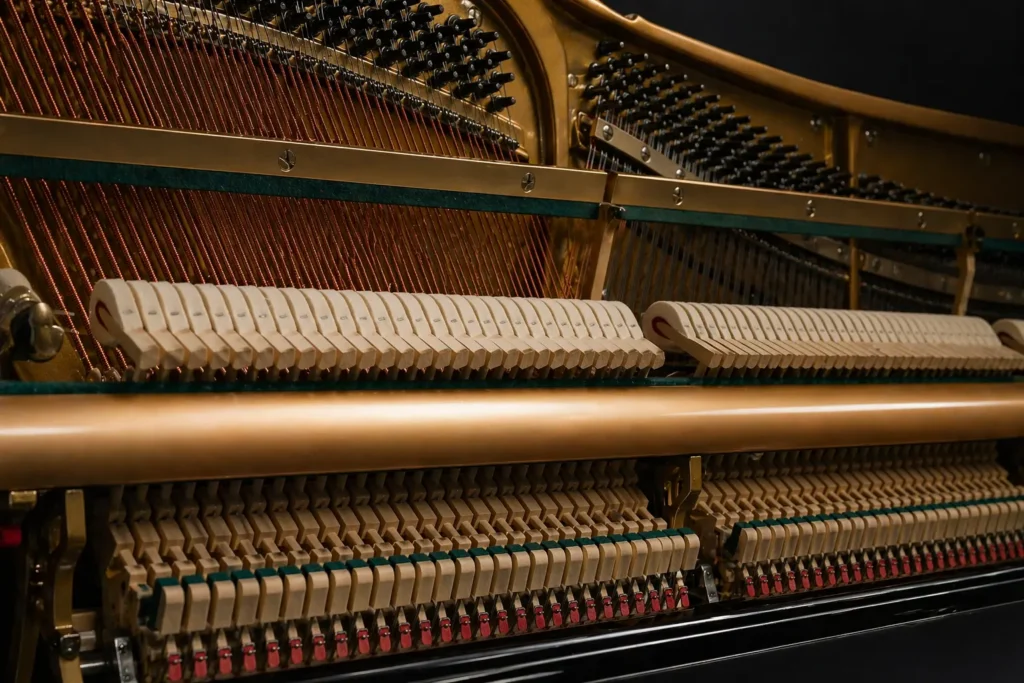
Japanese piano craftsmanship starts with the raw materials. Yamaha and Kawai source high-grade spruce for their soundboards, a wood known for its resonance and durability. The hammers, strings, and action parts are manufactured to tight specifications and, crucially, they respond well to professional maintenance and refurbishment.
This matters enormously for second-hand instruments. A piano built with quality materials can be professionally restored to near-original condition. A piano built with cheaper components often can’t, no matter how skilled the technician.
When a used Yamaha or Kawai arrives at a refurbishment facility, there is a clear path to bringing it back to exceptional condition. The bones of the instrument are sound. The action can be regulated. The soundboard and strings can be assessed and serviced. That’s why a properly refurbished Japanese piano doesn’t just play well, it plays like it has a long life ahead of it.
Why Yamaha and Kawai Retain Resale Value
Resale value comes down to demand and trust. Yamaha and Kawai have both, in abundance.
Piano teachers across the UAE, MENA, and globally recommend these brands to their students. Music schools specify them. Serious hobbyists seek them out. That consistent, worldwide demand means a well-maintained used Yamaha or Kawai will always find a buyer, and will always command a fair price.
Compare that to lesser-known brands or mass-produced instruments from other regions. Without the same reputation, the same parts availability, or the same technician familiarity, their resale value drops significantly after the first few years.
A 2nd hand Kawai or Yamaha upright, properly refurbished and certified, can hold a meaningful percentage of its value for fifteen to twenty years or more. That’s a very different story from most consumer goods, and it’s a key reason why buying a used Japanese piano in Dubai is a genuinely smart financial decision, not just an acoustic one.
What This Means When You Buy a Second-Hand Piano in the UAE
Understanding Japanese piano value retention changes how you should think about the purchase.
You’re not buying a used item that has depreciated into a compromise. You’re buying a mature instrument that has already passed through its steepest depreciation curve, while still retaining the acoustic quality and structural integrity that made it valuable in the first place.
The key is sourcing and certification. A pre-owned Japanese piano imported directly from Japan, professionally refurbished, and certified before sale is a very different proposition from a privately listed instrument with unknown history.
At Lotfi Piano, every instrument is imported directly from Japan, refurbished by professionals, and certified before it reaches the showroom or ships to your home. You can explore [used Yamaha upright pianos] and [second-hand Kawai pianos] with full transparency on condition and pricing, from 4,800 AED for the Kawai BS10 to 9,000 AED for the Yamaha U1H.
Each piano comes with:
- 100% authentic Japanese origin, certified and documented
- Comprehensive refurbishment to exceptional, used-like-new condition
- A full warranty included with every purchase
- One free professional tuning at your location within 15 days
- Free delivery and setup anywhere in the UAE
- A free matching piano bench
If you’re in Dubai, Abu Dhabi, or Sharjah, you can also [book a showroom visit] at the Ras Al Khor location and play the instrument yourself before committing. That hands-on experience matters, especially for a purchase like this.
FAQs
Why do Japanese pianos hold their value better than other brands?
Japanese manufacturers like Yamaha and Kawai use high-grade materials and strict quality control processes that make their instruments durable and stable over decades. Combined with consistent global demand from teachers, schools, and musicians, these pianos retain both acoustic quality and resale value far longer than most alternatives.
Is buying a used Japanese piano in the UAE a good investment?
Yes, particularly when the instrument has been professionally refurbished and certified. A second-hand Yamaha or Kawai that has been properly restored offers genuine acoustic quality at a fraction of the new price, and it holds its value well if maintained correctly.
What’s the difference between a refurbished Japanese piano and a privately sold used piano?
A professionally refurbished piano has been assessed, serviced, and certified by technicians who know what to look for. A privately sold instrument comes with unknown history, unknown maintenance records, and no warranty. The difference in long-term reliability is significant.
How long does a refurbished Yamaha or Kawai piano last?
With proper care and periodic tuning, a well-maintained Japanese acoustic piano can last fifty years or more. The quality of materials and manufacturing means these instruments age gracefully rather than degrading quickly.
Can I try a used Japanese piano before buying it in Dubai?
Yes. The Lotfi Piano showroom in Ras Al Khor, Dubai lets you sit down and play any instrument before purchasing. This is one of the most important steps in choosing the right piano, and it’s always available to you.
Are Yamaha pianos better than Kawai for resale value?
Both brands hold their value exceptionally well. The choice between them often comes down to personal preference in touch and tone rather than resale potential. Yamaha tends to have a slightly broader recognition globally, while Kawai is highly regarded for its action quality. Either is a strong choice.
What should I look for when buying a second-hand Japanese piano in the UAE?
Look for documented origin, professional refurbishment, a clear certification process, and a warranty. Avoid instruments with unknown service history or no physical inspection option. Buying from a specialist retailer that imports directly from Japan gives you the best combination of authenticity and accountability.
Ready to Play Before You Pay?
A used Japanese piano is one of the few purchases where quality and value genuinely align. The craftsmanship holds. The sound holds. And the resale value holds.
If you’re ready to find your instrument, explore the full collection of [second-hand Yamaha and Kawai pianos] at lotfipiano.ae, or contact the team directly at +971501181300 to arrange a showroom visit in Dubai. Come play before you pay.