The 13 Best Music Keyboard 88 Keys Options in 2026 (Tested & Ranked)
Piano shopping today offers more quality choices than ever before. Brands like Yamaha and Kawai continue balancing affordability with exceptional standards [2] [2], while digital piano technology now captures the touch and sound of acoustic grands with remarkable accuracy. You might need a full piano keyboard for your home, a portable digital piano keyboard for gigs, or a professional electric piano keyboard for studio work – but sorting through dozens of options takes time you probably don’t have.
That’s where this guide helps. I’ve spent months testing 13 of the best music keyboard 88 keys options available in 2026, playing everything from classical pieces to jazz standards. Each piano earned its ranking through hands-on evaluation of key action, sound quality, build materials, and real-world performance. Whether you’re a parent seeking the right instrument for your child or a professional musician needing reliable stage equipment, you’ll find the perfect piano 88 key keyboard match here.
Yamaha P-525: Best Overall Piano 88 Key Keyboard
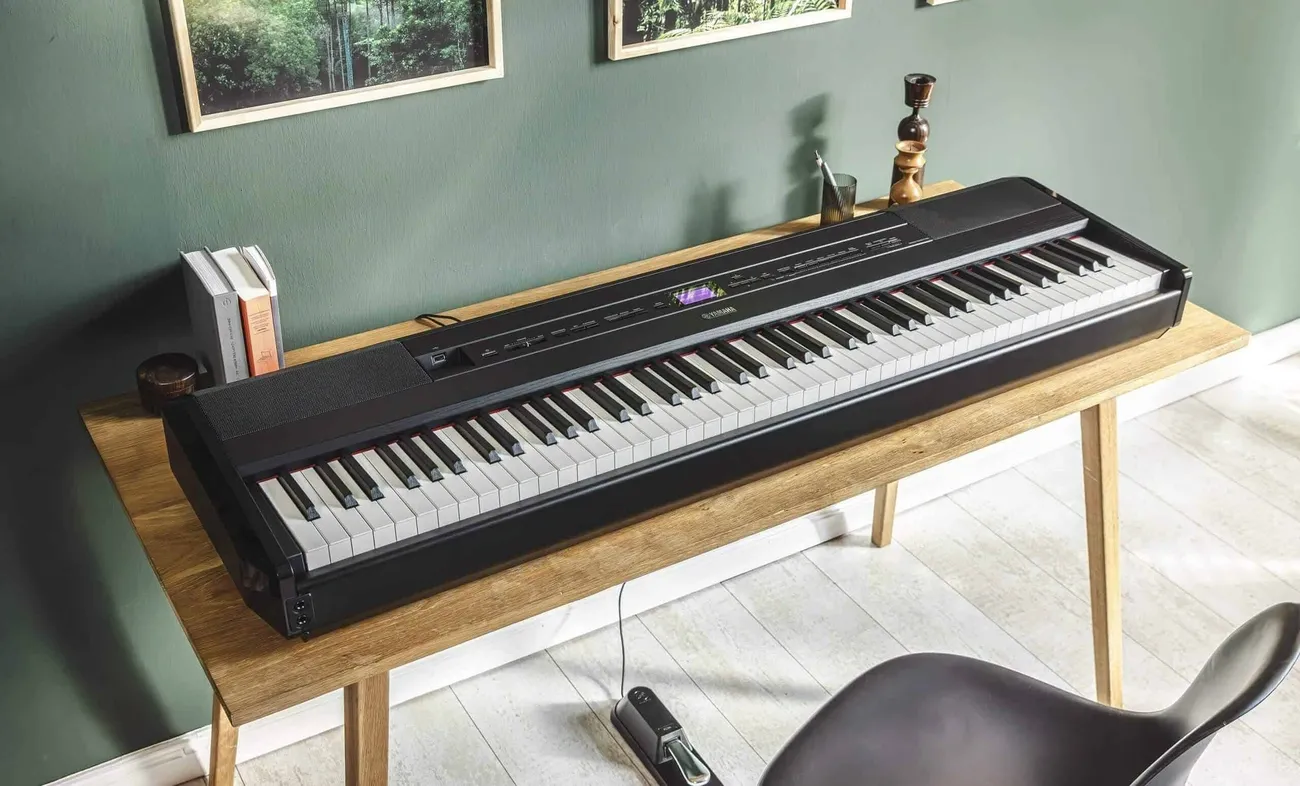
Image Source: ePianos
Overview & Key Specifications
Yamaha builds the P-525 as their flagship portable digital piano keyboard, measuring 1,336 mm wide, 145 mm high, and 376 mm deep [1]. At 22 kg [1], this full piano keyboard houses genuine wooden white keys paired with synthetic ebony and ivory keytops [1]. When you press a key, the GrandTouch-S action responds through the same escapement mechanism found in acoustic grands. The 256-voice polyphony [1] flows through a 40W speaker system: dual 20W main drivers handle the fundamental tones while 6W tweeters add clarity to higher frequencies [1].
Playability & Key Action
The wooden white keys feel substantial under your fingers, with that subtle notch sensation acoustic pianists recognize as escapement [1]. Unlike cheaper digital pianos where keys feel different depending on where you press, this keyboard maintains even resistance across the entire key length thanks to longer pivot points [2]. Five touch sensitivity settings let you adjust how the piano responds to your playing style [1]. The laminated wood construction resists warping even in humid climates [3].
Sound Engine & Tones
Two concert grands live inside this piano: the bright, sparkling Yamaha CFX and the warm, rich Bösendorfer Imperial from Vienna [1]. Virtual Resonance Modeling recreates how strings vibrate sympathetically when you hold the sustain pedal, while Grand Expression Modeling captures the dynamic changes that happen when you play softly versus powerfully [1]. Beyond the main piano voices, you get 542 total sounds including 44 carefully sampled instruments, 18 drum kits, and 480 XG voices for variety [1].
Connectivity Features
Bluetooth Audio and MIDI connect wirelessly to your phone, tablet, or computer [1]. The USB-to-host port doubles as a 44.1 kHz, 24-bit audio interface [1] – plug directly into recording software without buying extra equipment. Two headphone jacks mean you and your teacher can listen simultaneously during lessons [2].
Price & Value
This piano delivers professional features without the premium price tag. You’re getting authentic wooden key action, concert grand samples, and studio-quality recording capabilities at a price point that makes sense for serious students and performing musicians.
Best For
This music keyboard 88 keys works perfectly for intermediate to advanced players who want authentic piano touch, gigging musicians needing reliable portability with professional sound, and home players ready for studio-quality recording capabilities.
Kawai ES920: Best Premium Digital Piano Keyboard
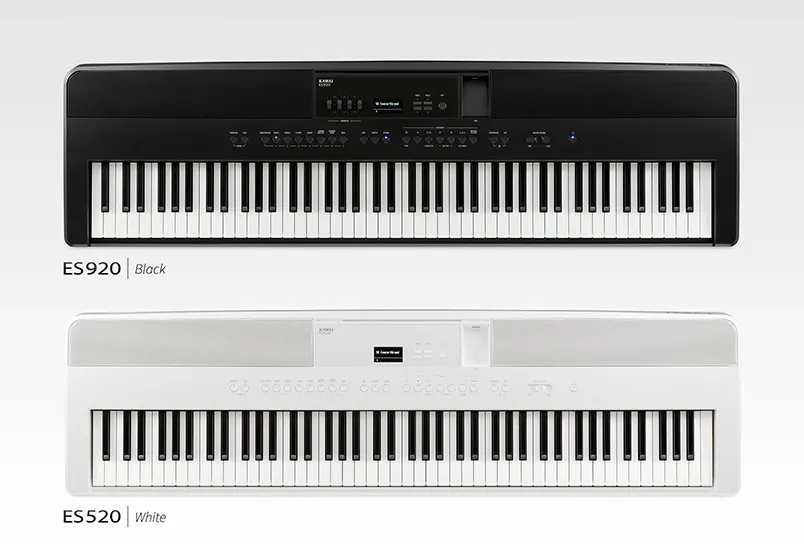
Image Source: Kawai Global
Overview & Key Specifications
Kawai builds the ES920 for musicians who want concert grand quality in a portable package that balances affordability with higher standards [2]. At 134 x 37.5 x 14.5 cm and weighing just 17 kg [10], this digital piano keyboard feels substantial yet manageable for regular transport. The Responsive Hammer III keyboard action features triple-sensor detection [10] that captures every nuance of your touch. A crisp 128 x 64 pixel OLED display [2] keeps settings visible, while dual 20W speakers deliver 40W of clear, room-filling sound [2].
Playability & Key Action
When you press a key on the RHIII action, Ivory Touch surfaces grip your fingertips without feeling sticky, even during long practice sessions [10]. The triple sensors detect the slightest touch variations during rapid passages [10], while built-in counterweights make soft playing feel natural and controlled [10]. Each key feels progressively heavier from treble to bass, just like sitting at a real grand piano [10]. The let-off simulation creates that subtle click sensation you feel right before the hammer strikes the string [10].
Sound Engine & Tones
Harmonic Imaging XL captures the full character of three world-class instruments: the SK-EX, SK-5, and EX concert grands, with each of the 88 keys recorded individually [10]. This attention to detail produces 256-note polyphony [10] across 38 carefully selected instrument sounds [10]. Virtual Technician lets you adjust how heavy the keys feel, how bright or warm the tone sounds, and even add subtle mechanical noises that make the experience feel authentic [10].
Connectivity Features
Bluetooth MIDI and Audio connect wirelessly to your phone or tablet [10]. The USB port accepts flash drives for backing tracks or recording your performances [10]. Four EQ faders on the top panel let you shape the sound instantly during performances [10]. Spatial Headphone Sound creates a three-dimensional listening experience with settings optimized for different headphone types [10].
Price & Value
Kawai consistently achieves higher standards at accessible price points, delivering premium features without requiring flagship investment.
Best For
Advanced players seeking authentic grand piano touch, performing musicians needing professional sound in a lightweight package, and home users wanting studio-quality recordings without external equipment.
Roland FP-90X: Best Professional Electric Piano Keyboard
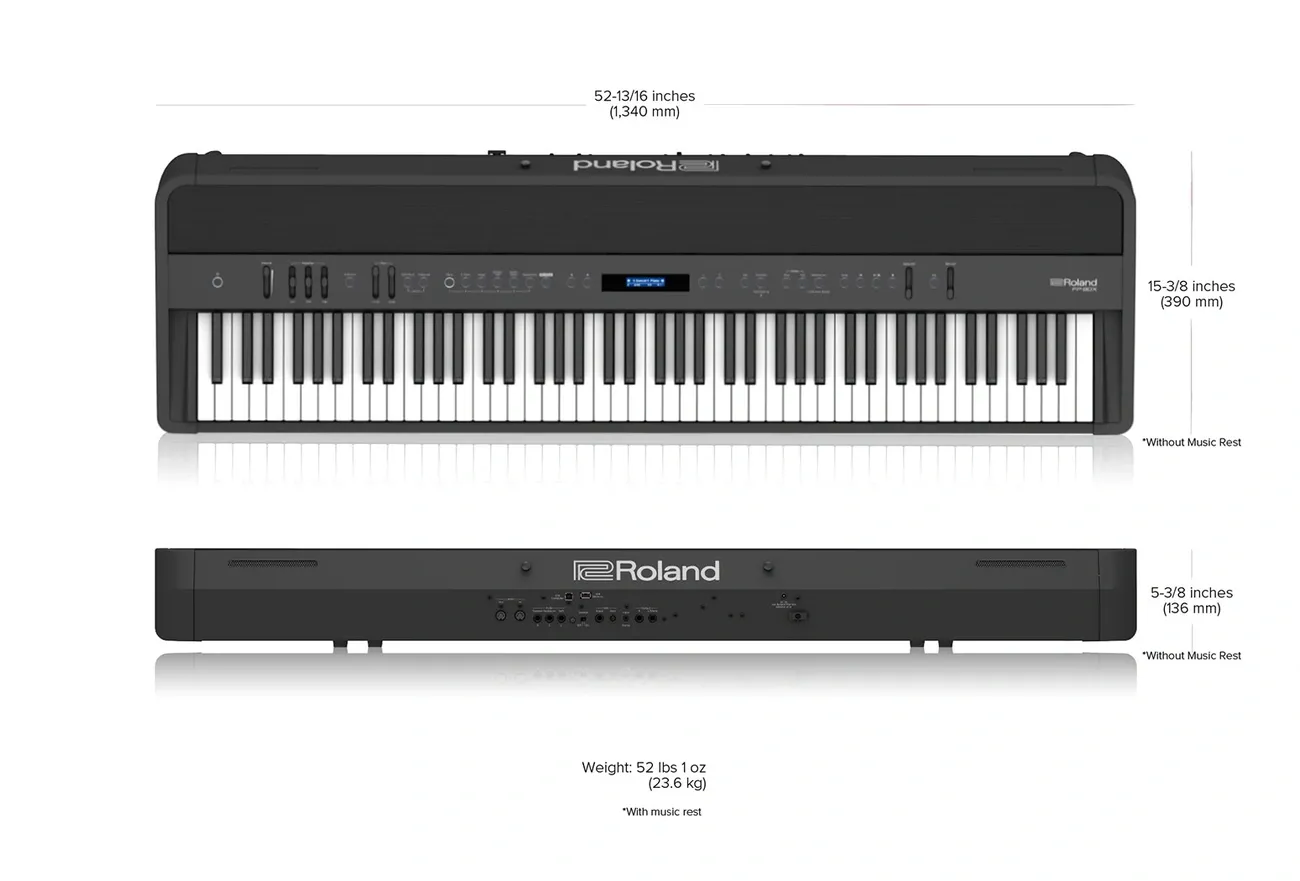
Image Source: Roland
Overview & Key Specifications
Roland marks three decades of FP series excellence with the FP-90X, building this electric piano keyboard as their flagship portable professional instrument [2]. This full piano keyboard spans 1,340 mm wide, 390 mm deep, and 136 mm high, weighing 23.6 kg [2]. Four speakers power the sound system: dual 12 cm woofers push 25W each while 2.5 cm dome tweeters add 5W each, creating 60 watts total [2] [2]. The 132 x 32 pixel graphic LCD screen guides navigation [2], and backlit buttons stay visible during dimly lit performances [2].
Playability & Key Action
The PHA-50 Progressive Hammer Action blends wooden components with molded materials, forming a hybrid structure that includes escapement mechanism [2]. Ivory and ebony textures grip your fingers without causing sticky resistance [2], while longer key sticks let you play deeper into each key with less finger effort [2]. Roland uses this same action in their premium RD-2000 stage piano, and gigging musicians report solid reliability after hundreds of performances [2].
Sound Engine & Tones
PureAcoustic Piano Modeling creates sound through pure software algorithms rather than recorded samples, capturing both European and American piano characteristics [2]. These eight modeled pianos provide limitless polyphony [2] [2] – you can layer as many notes as your ten fingers can manage. The remaining 354 sounds use SuperNATURAL sampling with 256-note polyphony [2]. Piano Designer allows real-time tweaking of string resonance, damper noise, and individual note tuning [2].
Connectivity Features
Bluetooth Audio plays backing tracks through the internal speakers, while Bluetooth MIDI connects to apps like Piano Every Day and GarageBand [2][23]. Standard connections include MIDI In/Out jacks, USB-to-host and USB-to-device ports, stereo 1/4″ outputs, and dual headphone jacks [2][8]. The 1/4″ microphone input deserves special mention – it processes vocals through compressor, doubling, and echo effects, then amplifies everything through the onboard speakers [2][23].
Price & Value
Roland positions this as their top portable model, so expect pricing that reflects professional-grade specifications and the PureAcoustic engine previously found only in their premium LX home series [2].
Best For
This music keyboard 88 keys serves professional gigging musicians who need robust amplification without hauling external PA systems, classical pianists wanting authentic grand piano action, and performers seeking vocal capabilities through the built-in mic processing.
Yamaha Clavinova CLP-785: Best Console Style Full Piano Keyboard
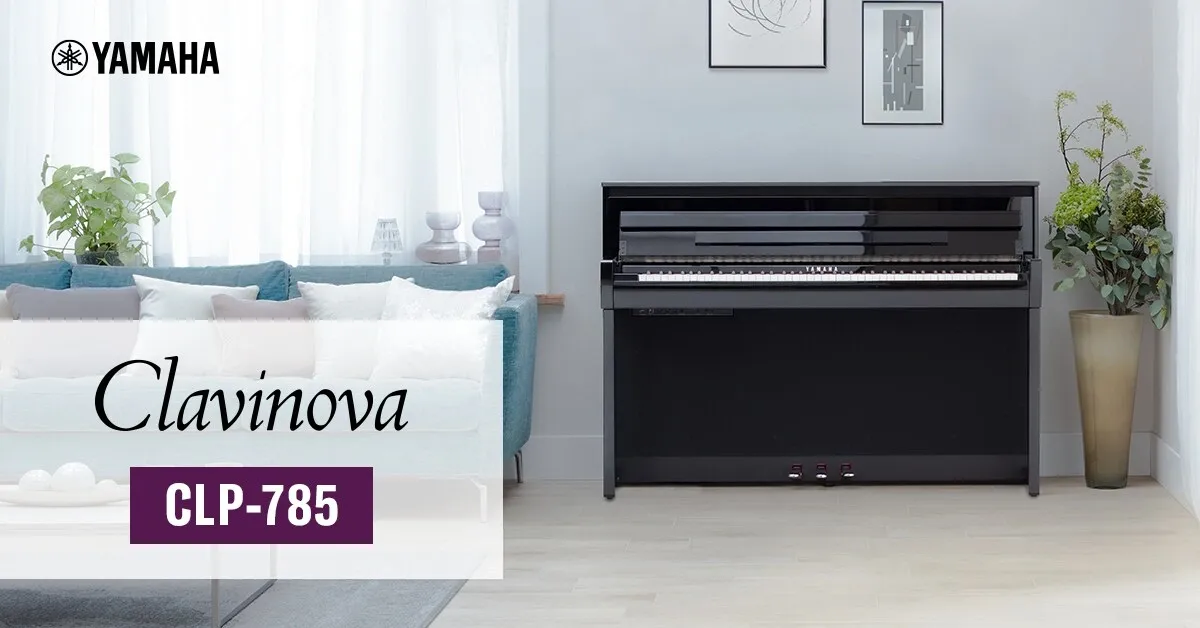
Image Source: Yamaha Music – Yamaha Corporation
Overview & Key Specifications
Yamaha’s CLP-785 brings concert hall presence into your home through authentic console furniture design. This full piano keyboard measures 1,461 mm wide, 459 mm deep, and weighs 60 kg (63 kg polished finish) – substantial enough to stay put during passionate playing sessions. Eight speakers powered by six 50W amplifiers create 300W total output, while Spruce Cone speakers crafted from recycled Yamaha piano mill sawdust add authentic resonance.
Playability & Key Action
Real wooden white keys make all the difference here. When you press a key, you feel genuine wood grain under your fingers, not plastic attempting to mimic the real thing. Each of the 88 keys carries individual counterweights – heavier in the bass, lighter in the treble, just like the mechanical action inside a Yamaha S3X 6’1″ grand piano. The GP Response Damper Pedal starts light when you first press it, then grows heavier as you deepen the depression, recreating that familiar resistance pianists know from acoustic instruments.
Sound Engine & Tones
Two legendary concert grands power this digital piano keyboard: the brilliant Yamaha CFX and the warm, Viennese-toned Bösendorfer Imperial. But the historical voices set this instrument apart – four authentic fortepianos from Scarlatti’s, Mozart’s, Beethoven’s, and Chopin’s eras. These aren’t approximations; they’re recordings of actual period instruments, letting you hear exactly what these composers heard when they pressed their keys centuries ago.
Connectivity Features
The Smart Pianist app pairs wirelessly through Bluetooth, while USB Audio Recorder captures your performances as high-quality WAV files. The control panel appears smooth and unmarked when powered off – maintaining that acoustic piano appearance – but lights up with touch-sensitive controls when you need them.
Price & Value
Console pianos traditionally cost significantly more than portables, but Yamaha keeps this model accessible while delivering premium materials and authentic construction.
Best For
This music keyboard 88 keys works perfectly for advanced players who want console furniture in their homes, classical pianists studying historical performance practice through the fortepiano voices, and families needing concert hall volume through the 300W speaker system.
Kawai CA-901: Best Authentic Piano Feel
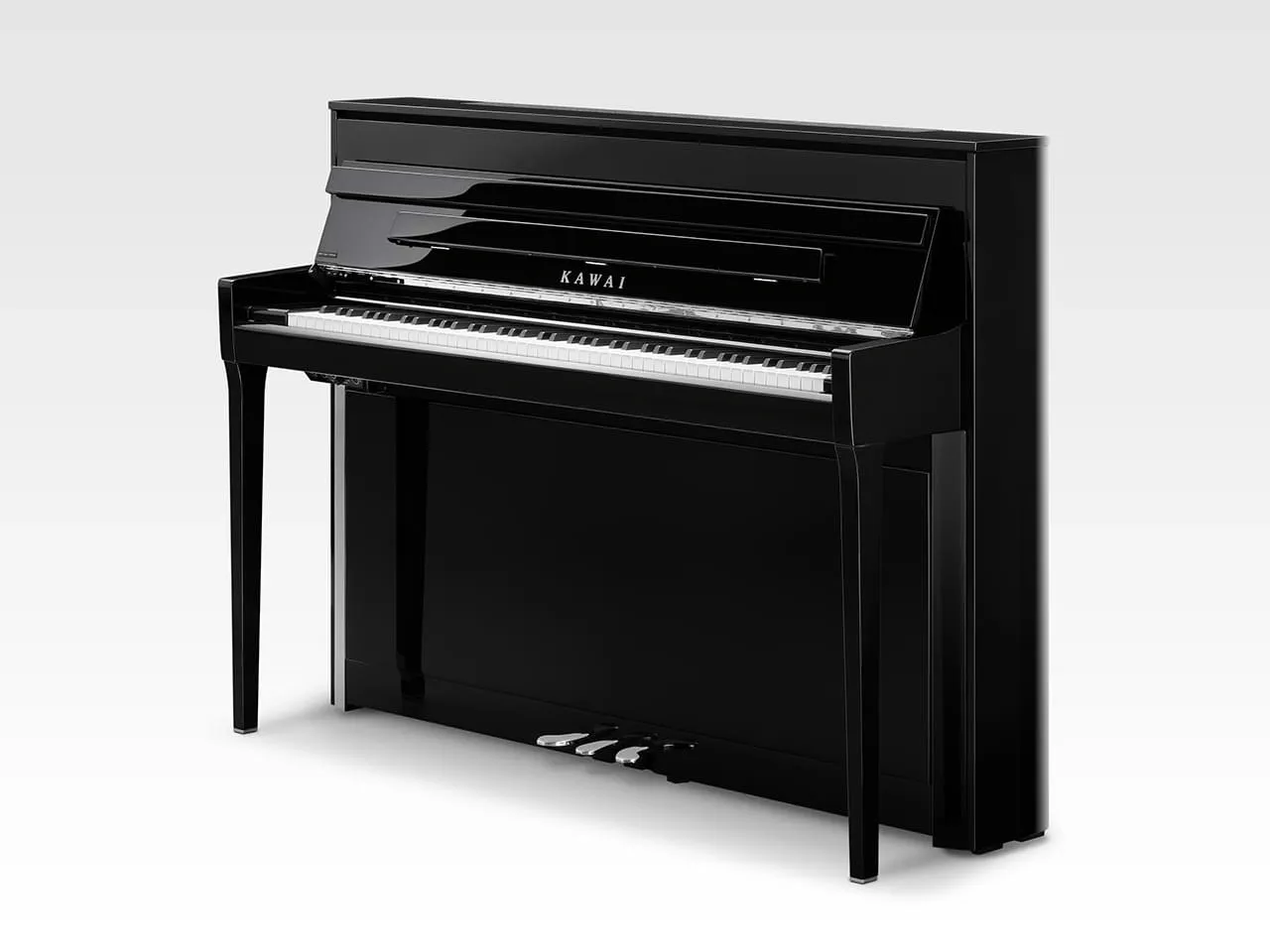
Image Source: Kawai Global
Overview & Key Specifications
Kawai builds their flagship CA-901 console around authentic acoustic piano materials and construction methods. This full piano keyboard measures 145.5 cm wide, 47.5 cm deep, and 101 cm high, weighing between 82.5 kg and 91.5 kg depending on finish [10]. The TwinDrive Soundboard Speaker System houses six speakers with 135W total output (50W + 50W + 35W) [10], channeling sound energy through transducers onto an actual wooden soundboard [2]. A 5″ anti-glare touchscreen display sits within the left cheekblock [2].
Playability & Key Action
The Grand Feel III action builds all 88 keys from long pieces of wood [2], pivoting on balance pins just like acoustic piano keys [2]. When you press an Ivory Touch white key or Ebony Touch black key, the moisture-absorbing surfaces feel natural under your fingers [2]. Triple sensors detect every nuance during fast passages [2], while let-off simulation creates that subtle notch feeling you get on concert grands [2]. Each key contains grade-weighted hammers and metal counterweights that respond properly during gentle playing [2].
Sound Engine & Tones
SK-EX Rendering captures each of the 88 keys individually through multi-channel sampling combined with resonance modeling [62]. The SK-EX Competition Grand delivers the bright, clear sound you hear sitting at the piano bench [62], while the SK-EX Concert Grand provides warmer, more sensitive tones [61]. Each piano voice offers five distinct characters: Classic, Brilliant, Romantic, Rich, and Vintage [62]. The dual DAC system uses custom piano filtering that preserves the SK-EX’s natural characteristics [62].
Connectivity Features
Bluetooth V5 MIDI and Audio connect wirelessly to your devices [62]. The PianoRemote app puts sound controls at your fingertips [63]. USB-to-host and USB-to-device ports handle computer connections and flash drive recording [10]. Spatial Headphone Sound adds natural depth during headphone practice [63].
Price & Value
Kawai achieves genuine acoustic piano authenticity at a fraction of grand piano costs, making wooden key construction and soundboard speaker technology accessible for serious home players.
Best For
This music keyboard 88 keys suits advanced pianists demanding real wood key construction, classical players needing authentic let-off simulation, and home users wanting concert-quality sound that resonates through an actual wooden soundboard.
Casio Privia PX-S7000: Best Slim Design
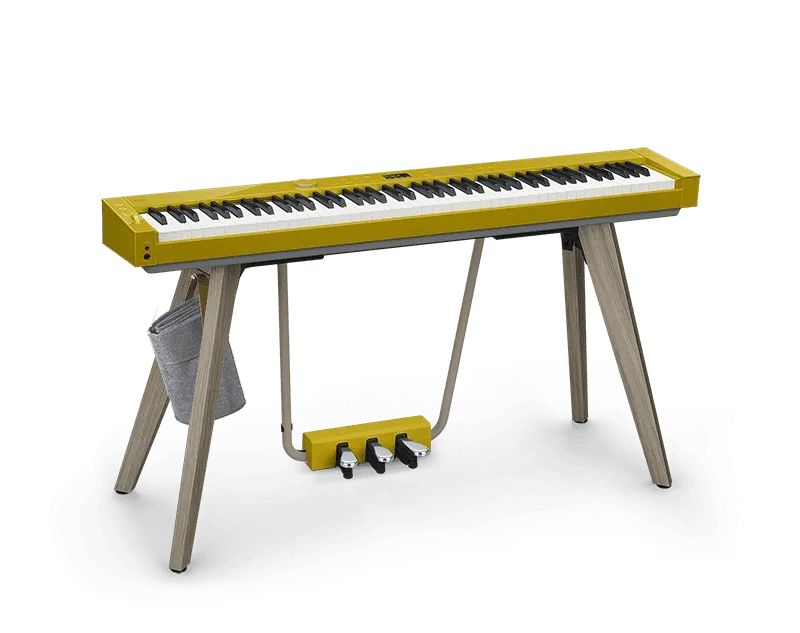
Image Source: CASIO
Overview & Key Specifications
Casio tackles a real problem with the PX-S7000: space-saving depth of just 242 mm [12]. This digital piano keyboard weighs 14.8 kg [13] and arrives in three finishes: black, white, and Harmonious Mustard [14]. The integrated stand and three-pedal unit form clean lines that work in tight spaces [12]. Four 8-watt speakers produce 32 watts total [15], housed in a wood/resin composite structure [14].
Playability & Key Action
The Smart Hybrid Hammer Action mixes wooden spruce parts with digital controls [14]. White keys use spruce/resin composite with ivory-style texture [16], while black keys get ebony-style matte finish [16]. Each key responds individually with digital volume scaling [14]. Ten hammer response steps let you adjust how quickly sound follows your key press [14].
Sound Engine & Tones
Multi-Dimensional Morphing AiR samples three concert grands: New York Steinway D, Hamburg Steinway D, and Berlin Bechstein D282 [15]. You get 400 total tones [14] with 256-note polyphony [5]. String resonance and aliquot modeling add sympathetic vibrations [14]. The Spatial Sound System adjusts based on wall, center, table, or standard placement [12].
Connectivity Features
The WU-BT10 adapter handles Bluetooth Audio and MIDI [14]. A microphone input with volume control offers 25 vocal effects [16]. Casio Music Space app provides wireless editing and PDF score display [17].
Price & Value
Casio positions this as a design-first choice. While Yamaha and Kawai typically balance affordability with higher standards in this category, the PX-S7000 prioritizes form over traditional piano qualities.
Best For
This music keyboard 88 keys works for style-conscious players who need slim furniture, apartment dwellers where every centimeter counts, and performers wanting battery power (8 AA batteries run 4 hours) [13].
Korg Grandstage X: Best for Gigging Musicians
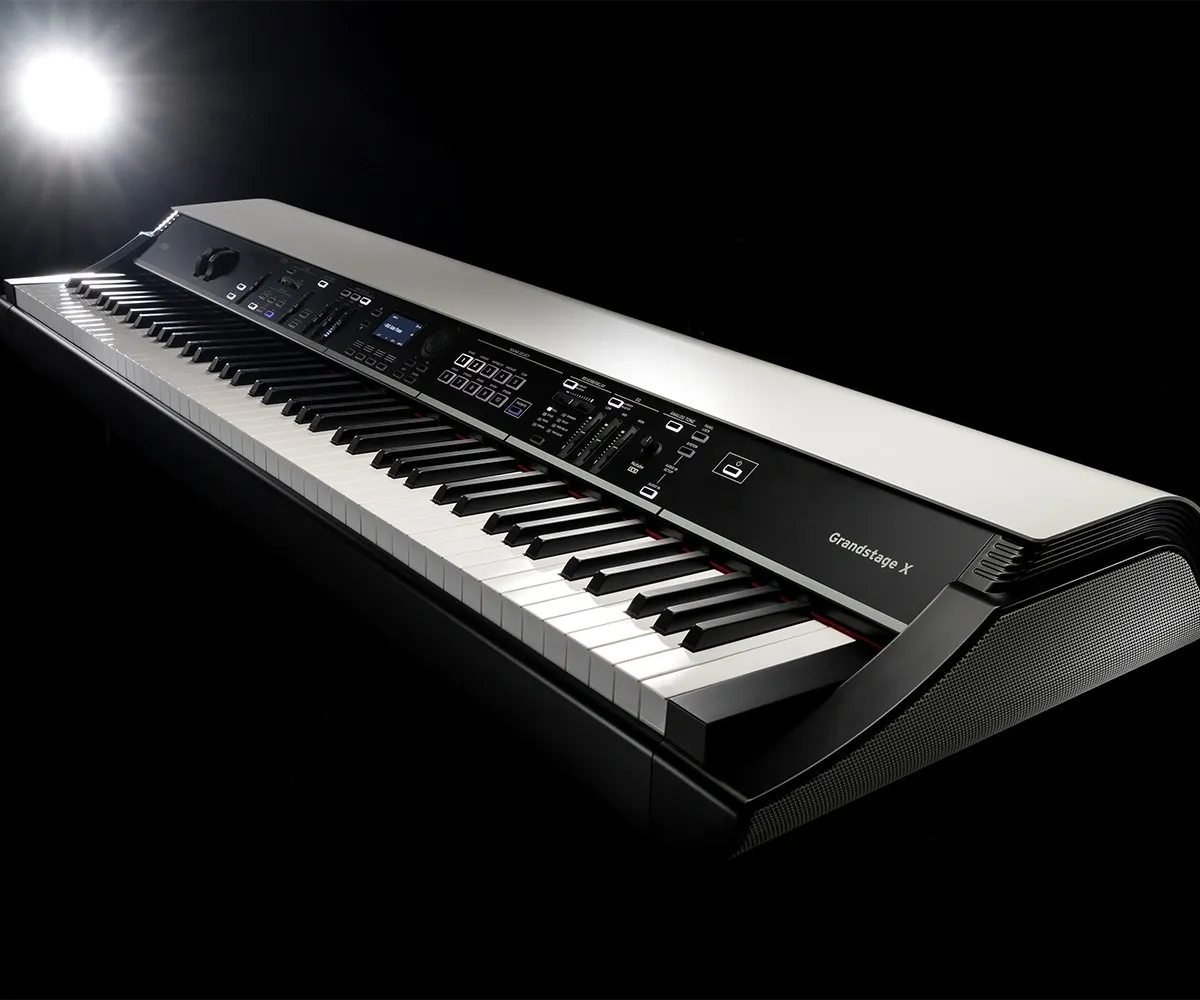
Image Source: Korg
Overview & Key Specifications
Stage presence matters, and Korg rebuilt their flagship stage piano to command attention. The Grandstage X sports an aluminum body with perforated metal side panels measuring 1,371 mm wide, 461 mm deep, and 168 mm high [18]. Weighing 25 kg [18], this professional workhorse delivers 128-voice polyphony [19] across 700 preloaded sounds [7]. The light ivory two-toned design catches stage lights beautifully [20], while backlit controls stay visible when venue lighting drops [21].
Playability & Key Action
The RH3 Real Weighted Hammer Action feels solid under your hands, with bass keys offering proper resistance that lightens as you move up the keyboard [22]. What sets this apart: a key-touch slider that adjusts volume and timbre response while you play [7]. This real-time control lets you match the key feel to whatever sound you’re using, whether you’re playing delicate piano passages or driving electric sounds [23].
Sound Engine & Tones
Seven sound engines live inside this digital piano keyboard: SGX-2 acoustic piano, EP-1 electric piano, AL-1 analog modeling, CX-3 tonewheel organ, VOX transistor organ, FC-1 transistor organ, and HD-1 PCM [22]. The SGX-2 engine uses non-looping samples with up to 12 velocity levels per key [7], while 25.5 GB PCM memory [18] stores everything from concert grands to vintage synthesizers [19]. This covers more musical ground than most stage pianos attempt.
Connectivity Features
Balanced XLR outputs [19] connect directly to mixing boards without the hum and buzz that plague cheaper keyboards, plus the LIFT-GND switch eliminates ground loop problems [23]. The stereo audio input handles microphones or backing tracks with dedicated MIC/LINE switching and level control [19]. An SD card slot accepts additional sound libraries [21], while standard USB and MIDI ports handle computer connections [18].
Price & Value
Korg targets serious stage performers with the Grandstage X, positioning this as a premium gigging instrument with specialized live performance features. While Yamaha and Kawai typically balance affordability with higher standards in comparable segments, this focuses squarely on professional stage requirements.
Best For
This electric piano keyboard serves performing musicians who need rock-solid XLR connectivity, multi-genre players requiring diverse sound engines beyond basic pianos, and stage performers wanting panel lock protection [22] that prevents accidental setting changes during energetic live shows.
Roland RD-2000: Best Studio Music Keyboard 88 Keys
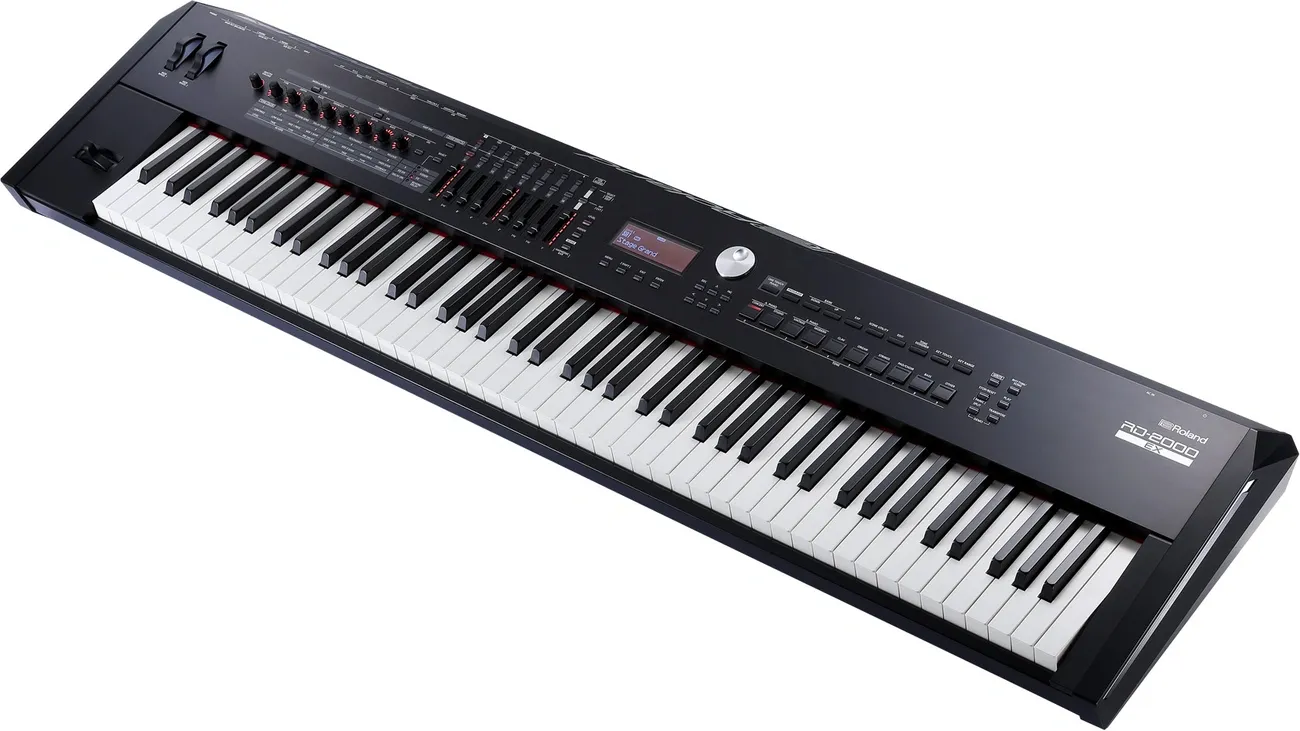
Image Source: Roland
Overview & Key Specifications
Roland built the RD-2000 in 2017 as their flagship stage piano, though it works equally well in studio environments. This music keyboard 88 keys measures 1,412 mm wide, 367 mm deep, and 140 mm high while weighing 21.7 kg [4]. What sets this instrument apart: two completely separate sound engines running simultaneously. The SuperNATURAL engine provides 128-voice polyphony, while V-Piano patches offer unlimited polyphony [4].
Playability & Key Action
The PHA-50 progressive hammer action combines wooden components with molded materials, creating hybrid construction with escapement mechanism [4]. Studio musicians and live performers consistently praise its reliability after years of heavy use [24]. This same action appears in Roland’s premium instruments, proving its worth for both delicate classical passages and aggressive rock performances [25].
Sound Engine & Tones
Here’s where the RD-2000 differs from typical digital pianos: V-Piano modeling technology generates acoustic sounds through mathematical algorithms rather than recorded samples [26]. The SuperNATURAL engine adds over 1,100 tones covering electric pianos, organs, strings, and synths [4]. Vintage enthusiasts appreciate the authentic recreations of the RD-1000 and MKS-20 module, capturing those distinctive 1980s sounds [4].
Connectivity Features
Professional studios demand reliable connections. XLR and 1/4″ main outputs handle any setup [4], while USB audio/MIDI supports 24-bit/192 kHz resolution for pristine recordings [4]. Eight assignable zones let you layer internal sounds with software instruments seamlessly [4]. The 100 scene memories store complete keyboard configurations, perfect for complex studio sessions [4].
Price & Value
Roland positions this digital piano keyboard as a premium studio solution with dual-engine flexibility. While Yamaha and Kawai typically balance affordability with higher standards, the RD-2000 commands professional pricing for its specialized capabilities.
Best For
Studio professionals needing extensive real-time control through eight knobs and nine sliders, multi-genre musicians requiring diverse sound libraries beyond basic pianos, and recording engineers wanting high-resolution USB audio integration without compromise.
Yamaha P-145: Best Budget-Friendly Option
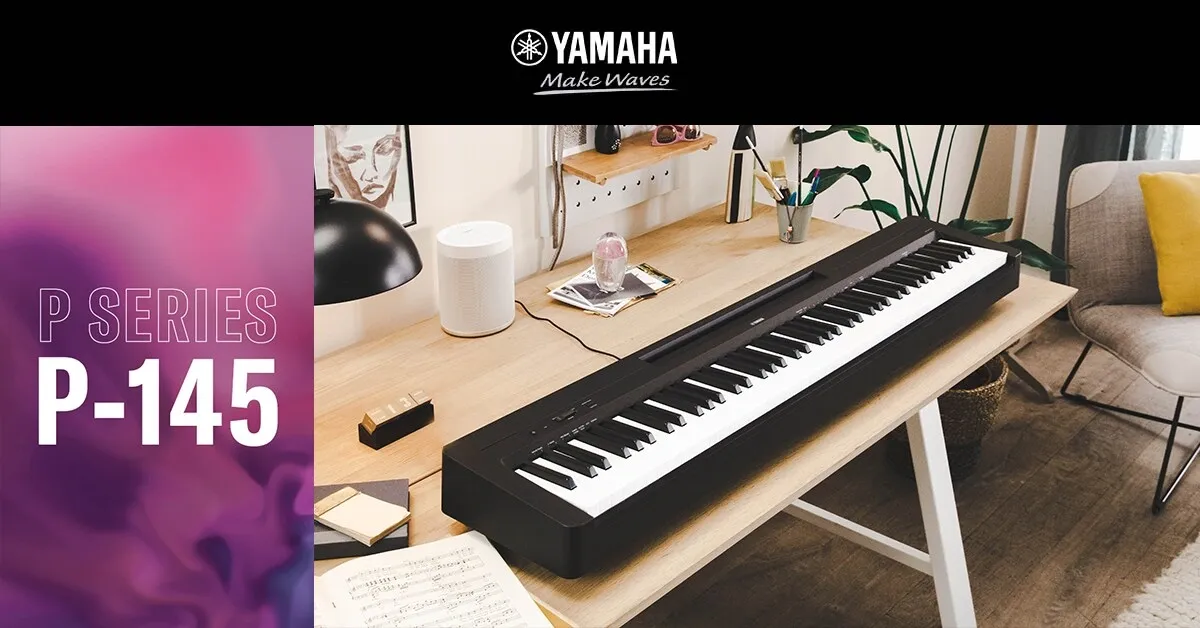
Image Source: Yamaha Music – Yamaha Corporation
Overview & Key Specifications
Yamaha strips away extras with the P-145, creating an entry-level digital piano keyboard that focuses on fundamentals. This instrument measures 1,326 mm wide, 129 mm high, and 268 mm deep [27], while weighing just 11.1 kg [27] – making it surprisingly portable for families who need to move their piano around. The Graded Hammer Compact action uses matte black keytops [9] that won’t get slippery during practice sessions, paired with dual 7W speakers [9] in compact oval drivers [28].
Playability & Key Action
Here’s what matters most for developing proper technique: the Graded Hammer Compact action makes bass keys feel heavier and treble keys lighter [8], just like a real acoustic piano. When you press a key in the lower register, you’ll notice more resistance – this builds finger strength correctly from day one [8]. The matte key surface prevents your fingers from sliding during longer practice sessions [8], while maintaining the same touch quality found in previous P Series models [27] despite the more compact design.
Sound Engine & Tones
Yamaha captures samples from their CFIIIS concert grand [27] for authentic piano tone, while damper resonance [28] recreates what happens when you press the sustain pedal on an acoustic piano – strings vibrate sympathetically, creating richer harmonics. The 64-note polyphony [9] handles most beginner and intermediate pieces well, though you might occasionally lose notes during complex passages with heavy pedal use [8]. Ten instrument presets [27] provide variety beyond piano sounds, including electric pianos, organs, and strings.
Connectivity Features
The USB-to-host port functions as a simple 44.1 kHz, 16-bit audio interface [27], enabling direct recording to your computer without buying additional equipment. One headphone jack [29] keeps practice sessions quiet for apartment living. The Smart Pianist app simplifies control through your phone [30], while the optional LP-5A three-pedal unit [27] adds sustain, soft, and sostenuto pedals for advanced techniques. Note that this music keyboard 88 keys skips Bluetooth connectivity [8] to keep costs down.
Price & Value
This represents Yamaha’s approach to accessible quality – genuine weighted action and concert grand samples without the premium price tag [29]. Rather than cutting corners on key essentials, Yamaha removes features most beginners won’t need initially.
Best For
This piano 88 key keyboard suits first-time buyers who want weighted keys without overwhelming options [8], students building proper finger technique from the start, and apartment dwellers needing headphone practice with the included footswitch sustain pedal [9]. Perfect when you need authentic piano feel but don’t want to spend months researching features you may never use.
Kawai KDP-120: Best Value Console Piano
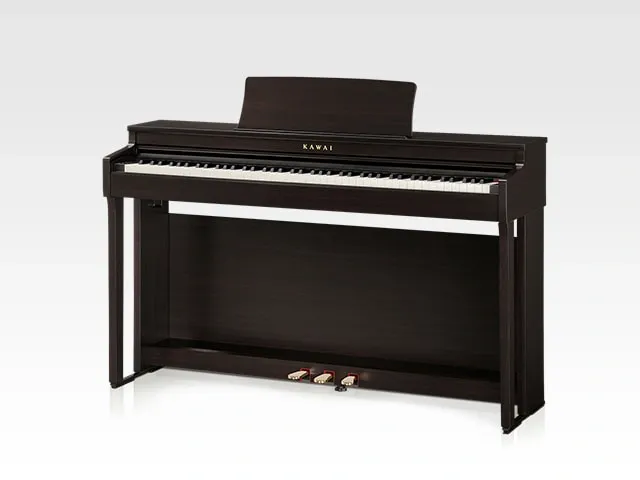
Image Source: Kawai Global
Overview & Key Specifications
Families seeking their first console piano often face a difficult choice: spend significantly more for premium features or settle for basic plastic construction. The KDP120 solves this dilemma by delivering authentic console furniture appearance in a compact package measuring 136 cm wide, 40.5 cm deep, and 85.5 cm high [31]. At 37 kg [31], this full piano keyboard weighs substantially less than acoustic uprights while maintaining the visual presence families want. The Responsive Hammer Compact II action provides 88 grade-weighted keys [31], while the 40W stereo amplifier [31] drives dual speakers. Three finish options (Premium Rosewood, Satin Black, Satin White) [31] coordinate with most home decors, and the built-in music rest, key cover, and three-pedal system create that complete piano look [32].
Playability & Key Action
When you press a key, the RHCII action responds without the spring mechanisms found in cheaper alternatives. This spring-less construction with triple-sensor key detection [31] means better responsiveness during rapid playing and the ability to layer notes gradually without cutting off previous tones [33]. The grade-weighted hammers feel heavier in the bass and lighter in the treble [33], just like acoustic pianos, while matte key surfaces prevent slipping during practice [31]. The Grand Feel Pedal System replicates the individual weighting of damper, soft, and sostenuto pedals from Kawai’s SK-EX Concert grand [34], teaching proper pedal technique from the start.
Sound Engine & Tones
Kawai recorded each of the 88 keys individually from their flagship Shigeru Kawai SK-EX concert grand [31], capturing multiple dynamic levels to preserve the natural harmonic character [33]. This attention to detail shows in the sound quality – you hear the difference between pressing middle C softly versus firmly, not just volume changes but actual tonal variation. The engine handles 192-note polyphony [31] across 15 instrument voices [31], covering essential sounds like electric pianos, organs, harpsichord, vibraphone, and strings [33]. Six reverb types simulate different acoustic spaces from intimate recital rooms to grand concert halls [35].
Connectivity Features
Modern learning benefits from technology integration. Bluetooth MIDI connects wirelessly to smart devices [31], while USB-MIDI supports computer connectivity [33]. The PianoRemote and PiaBookPlayer apps put control and sheet music display right on your tablet [34]. Dual headphone jacks mean teacher and student can listen simultaneously during lessons [33]. Spatial Headphone Sound provides three acoustic presets with headphone type optimization [33], reducing ear fatigue during those longer practice sessions [34].
Price & Value
Kawai balances affordability with higher standards throughout this console range. Built-in lesson songs from established method books – Burgmüller, Czerny, Beyer etudes, and Alfred Basic Piano course materials [31] – eliminate the need for separate lesson software purchases. The Low Volume Balance feature adjusts both touch sensitivity and tonal response at reduced speaker volumes [34], ensuring practice remains musical even at whisper-quiet levels.
Best For
This music keyboard 88 keys serves beginners who want structured learning through built-in lesson content [35], experienced players needing a second piano for silent headphone practice [34], and families seeking authentic console furniture aesthetics without the maintenance requirements, tuning costs, and space demands of acoustic uprights.
Nord Piano 5: Best Hybrid Sound Technology
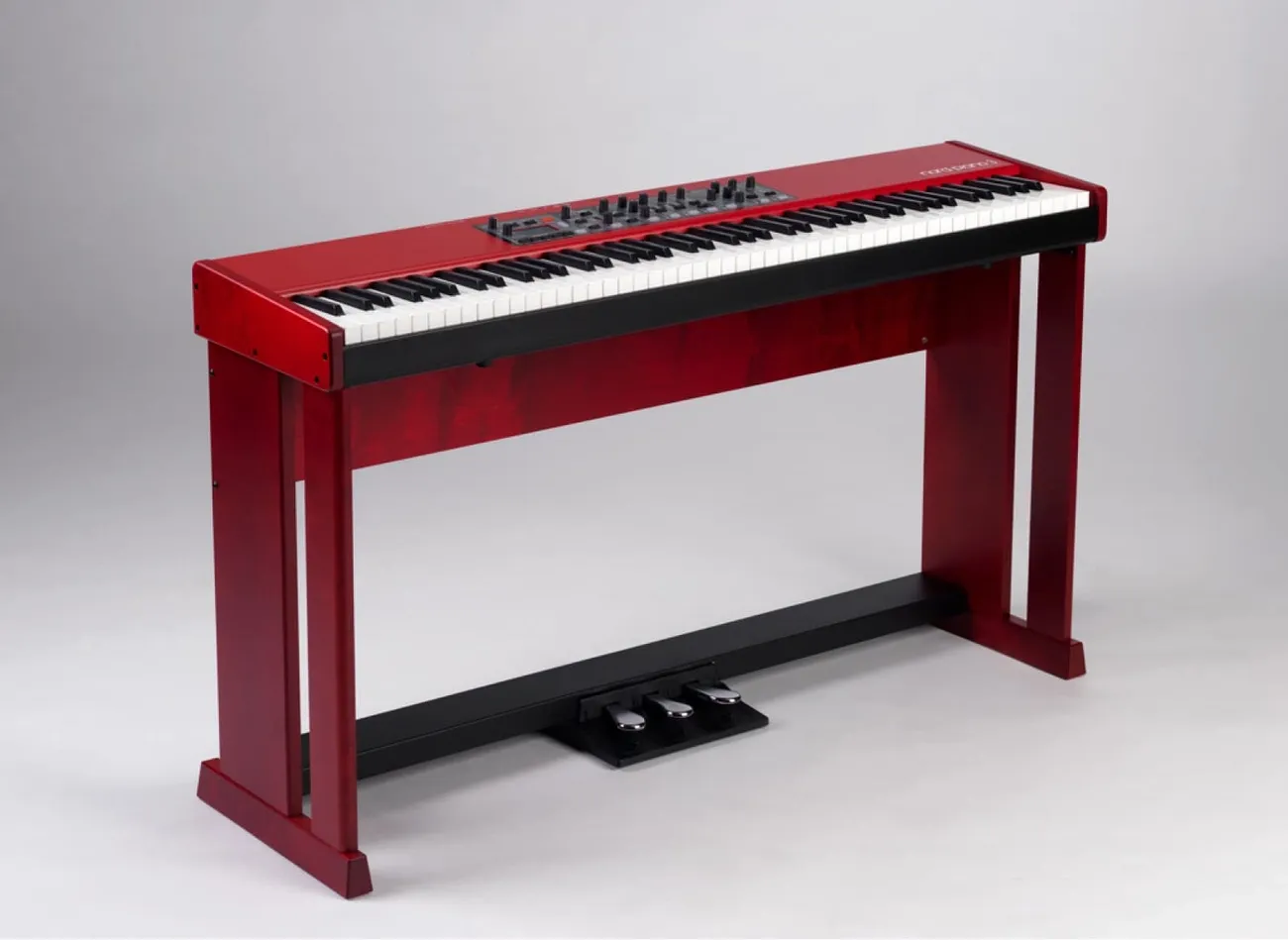
Image Source: Nord Keyboards
Overview & Key Specifications
Swedish manufacturer Clavia built something different with the Nord Piano 5, housing dual piano engines and dual sample synths in a single instrument [36]. This digital piano keyboard measures 1,287 mm wide, 342 mm deep, and 120 mm high while weighing 18.5 kg [36]. The OLED display [36] keeps navigation simple, while 3 GB total memory splits between the Nord Piano Library (2 GB) and Nord Sample Library (1 GB) [36]. Think of it as having two complete keyboards in one body.
Playability & Key Action
The Triple Sensor keybed with grand weighted action [36] uses Virtual Hammer Action Technology to mimic real piano mechanics [37]. This Fatar TP/40-based action [38] responds better than earlier Nord models, especially during rapid passages. Three keyboard touch velocity curves [36] let you match the response to your playing style – lighter for jazz, heavier for classical.
Sound Engine & Tones
Here’s where Nord gets interesting: two independent piano layers deliver 120-voice polyphony [36], while two sample synth layers add 40+ voices [36]. The factory bank includes 9 grands, 9 uprights, and 10 electric pianos [37]. Advanced String Resonance Generation 2 [36] recreates those subtle sympathetic vibrations you hear when pressing the sustain pedal. The sample synth section features Unison blending and Tru-Vibrato modeling [37] for authentic vintage keyboard sounds.
Connectivity Features
Two 1/4″ audio outputs, MIDI In/Out, and USB Type B [36] handle studio integration smoothly. The included Nord Triple Pedal supports dynamic sustain [36]. Seamless transitions [36] mean no audio dropouts when switching between sounds mid-performance.
Price & Value
Nord positions this as a premium hybrid option with free library updates [39]. While Yamaha and Kawai typically balance affordability with higher standards, Nord focuses on expandable sound libraries and dual-engine flexibility at a higher price point.
Best For
This music keyboard 88 keys works best for performers who need piano and sample synth sounds simultaneously, musicians wanting expandable sound libraries that grow over time, and players requiring portable stage pianos with professional dual-engine architecture.
Casio CDP-S160: Best Portable Music Keyboard 88 Keys
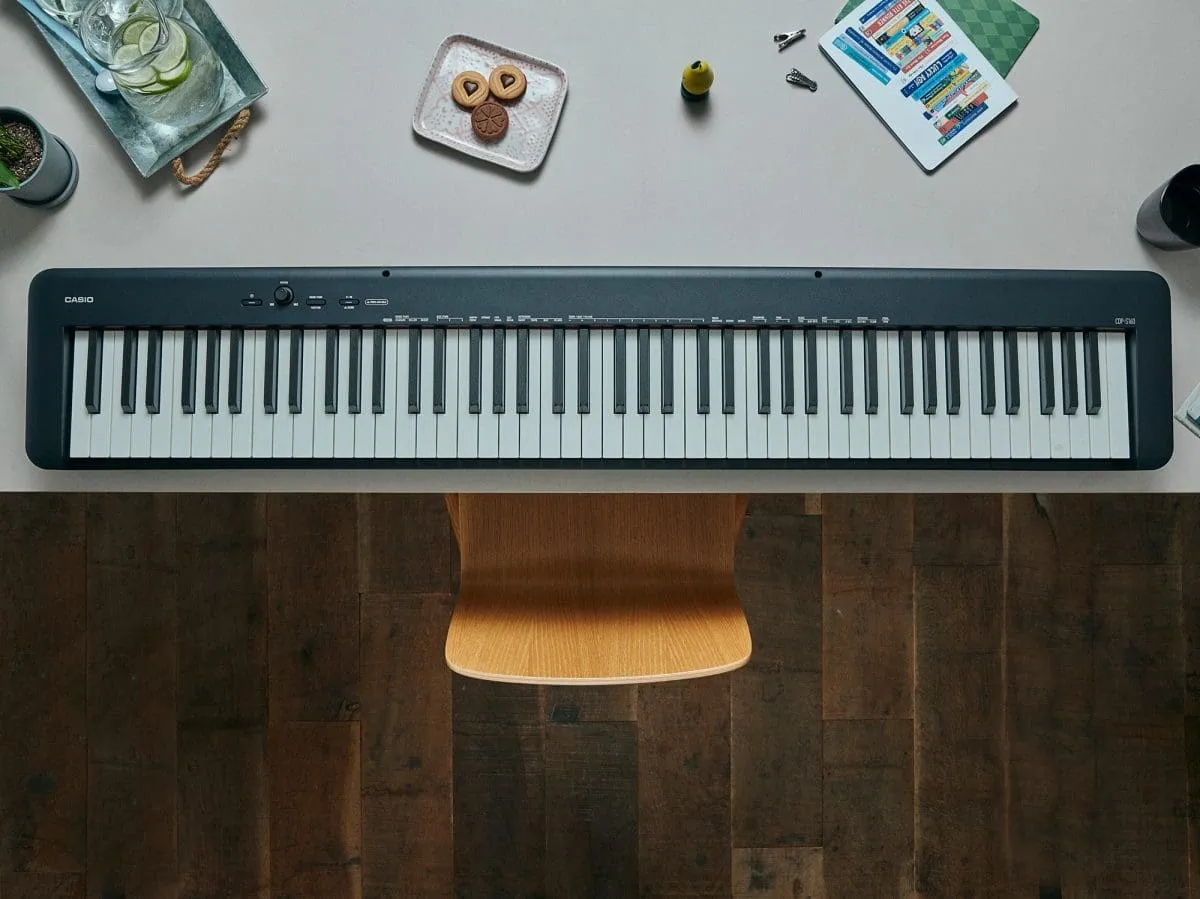
Image Source: CASIO
Overview & Key Specifications
Picture this: a full-sized piano that fits in your car trunk. The CDP-S160 measures just 232 mm deep [40] – barely deeper than a laptop – and weighs only 10.5 kg [41]. Six AA batteries power this music keyboard 88 keys for roughly 13 hours [6], letting you practice anywhere from hotel rooms to park benches. The dual 8W speakers [6] pump out 16W total through compact oval drivers, while 64-note polyphony [40] handles most pieces without cutting off notes.
Playability & Key Action
The Scaled Hammer Action Keyboard II packs genuine weighted keys into this slim design [42]. Your fingers feel the familiar resistance: heavier in the bass, lighter in the treble, just like a real piano. Simulated ebony and ivory surfaces [40] grip your fingertips without feeling sticky during long practice sessions. Three touch sensitivity levels [6] let you adjust how hard you need to press for volume changes, though the overall feel stays consistent [41].
Sound Engine & Tones
Ten instrument sounds cover the basics: grand pianos, electric pianos, and essential accompaniment voices [40]. Each tone responds to how hard you strike the keys [42], so gentle touches produce soft sounds while firm strikes deliver bold volume. Layer mode stacks two sounds together, while reverb and four chorus effects [40] add space and richness to your playing.
Connectivity Features
The USB-MIDI connection sends your performance data to recording software [40], working with Mac OS X 10.5 and Windows 7 or newer systems. Casio’s Music Space app controls settings from your phone [43]. The 3.5mm audio input lets you play backing tracks through the internal speakers [40]. Duet mode splits the keyboard down the middle, creating two identical piano sections for teacher-student lessons [41].
Price & Value
Casio built this as an ultra-portable entry option. While Yamaha and Kawai typically offer more refined key actions and richer sounds, the CDP-S160 serves a specific purpose: giving you real weighted keys wherever you need them.
Best For
This portable music keyboard 88 keys works for travelers who need practice capabilities on the road, students taking lessons where Duet mode helps teachers demonstrate techniques, and casual players wanting authentic weighted action without investing in heavy furniture.
Alesis Recital Pro: Best for Absolute Beginners
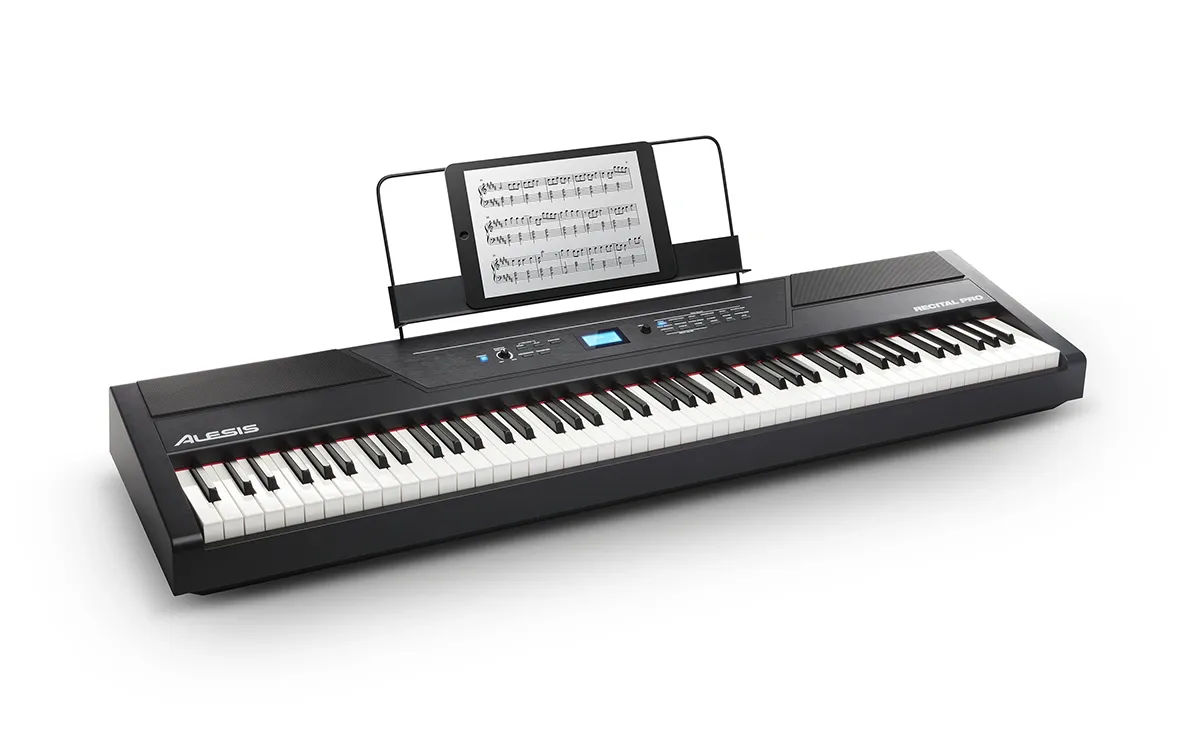
Image Source: Alesis
Overview & Key Specifications
Budget-conscious families find their starting point with the Alesis Recital Pro, measuring 51.6″ wide x 13.8″ high x 5.5″ deep and weighing just 26 lbs (11.8 kg) [44]. This digital piano keyboard provides 88 hammer-action keys with adjustable touch response [45] across four sensitivity levels: Off, Soft, Medium, and Hard [46]. The 20W speaker system combines 2 x 20W speakers plus 2 x 10W tweeters [45], handling 128-note polyphony [45] for basic practice needs.
Playability & Key Action
The hammer-action keyboard offers weighted resistance, though expect a springy, button-like response [11] quite different from the wooden actions found in premium models. Plastic construction creates a less refined feel than Yamaha or Roland instruments [44], with some mushiness when pressing keys deeply [47]. Three touch sensitivity settings control volume response [45], though the keys lack graded weighting from bass to treble [11].
Sound Engine & Tones
Twelve built-in voices cover essential sounds: piano, bright piano, electric piano, vibraphone, organs, harpsichord, clavi, synth, strings, and bass [48]. Layer Mode blends two voices together, while Split Mode assigns different sounds to each hand [46]. Basic Modulation, Reverb, and Chorus effects [45] provide simple sound shaping for practice sessions.
Connectivity Features
USB-MIDI output connects to learning software [48], while stereo 1/4″ outputs allow external amplifier connection [45]. The headphone jack silences internal speakers [45] for quiet practice. Six D-cell batteries [48] power the unit for portable use when electrical outlets aren’t available.
Price & Value
At £280-£320 [44], this music keyboard 88 keys costs substantially less than comparable weighted-key options. While Yamaha and Kawai balance affordability with higher standards [44] in their entry models, Alesis focuses on basic functionality at rock-bottom pricing. Lesson Mode divides the keyboard into matching halves [48], and Record Mode captures practice sessions [46] for self-evaluation.
Best For
This piano 88 key keyboard works for absolute beginners who need weighted keys without serious financial risk, students benefiting from Lesson Mode during teacher-student practice, and casual players who accept basic sound quality in exchange for true portability and low cost.
Side-by-Side Comparison: Find Your Match
After testing each piano extensively, this comparison table cuts through the marketing noise to show you what actually matters. Look for the features that align with your specific needs rather than getting caught up in spec sheets.
Comparison Table: The 13 Best Music Keyboard 88 Keys Options in 2026
|
Product |
Weight |
Key Action |
Polyphony |
Speaker System |
Voices/Tones |
Connectivity |
Special Features |
Best For |
|
Yamaha P-525 |
22 kg |
GrandTouch-S (wooden white keys, escapement) |
256-voice |
40W (2x20W + 6W tweeters) |
542 total (44 primary, 18 drum kits, 480 XG) |
Bluetooth Audio/MIDI, USB audio interface (44.1kHz/24-bit), 2 headphone jacks |
CFX & Bösendorfer samples, Virtual Resonance Modeling |
Intermediate to advanced players, gigging musicians, home recording |
|
Kawai ES920 |
17 kg |
Responsive Hammer III (triple-sensor, Ivory Touch) |
256-note |
40W (2x20W) |
38 instruments |
Bluetooth MIDI/Audio, USB-to-device, 4-band EQ |
Harmonic Imaging XL, Virtual Technician, Spatial Headphone Sound |
Advanced players, performing musicians, studio recording |
|
Roland FP-90X |
23.6 kg |
PHA-50 (wooden/hybrid, escapement) |
Limitless (modeled), 256 (sampled) |
60W (2x25W woofers + 2x5W tweeters) |
362 total (8 modeled + 354 sampled) |
Bluetooth Audio/MIDI, MIDI In/Out, USB, mic input with effects |
PureAcoustic Piano Modeling, backlit buttons, vocal amplification |
Professional gigging musicians, classical pianists, performers |
|
Yamaha Clavinova CLP-785 |
60-63 kg |
GrandTouch (wooden keys, individual weighting) |
Not mentioned |
300W (6x50W, 8 speakers) |
53 voices + 14 drum kits + 480 XG |
Bluetooth Audio/MIDI, USB Audio Recorder (WAV) |
Spruce Cone speakers, GP Response Damper Pedal, 4 fortepiano voices |
Advanced players, classical pianists, home users |
|
Kawai CA-901 |
82.5-91.5 kg |
Grand Feel III (all wooden keys, triple-sensor) |
Not mentioned |
135W (50W+50W+35W, 6 speakers) |
SK-EX with 5 tonal characters |
Bluetooth V5 MIDI/Audio, USB, PianoRemote app |
TwinDrive Soundboard Speaker, real wooden soundboard, 5″ touchscreen |
Advanced pianists, classical players, concert-quality home use |
|
Casio Privia PX-S7000 |
14.8 kg |
Smart Hybrid Hammer Action (spruce/resin composite) |
256-note |
32W (4x8W) |
400 tones |
Bluetooth Audio/MIDI (WU-BT10), mic input, Casio Music Space app |
242mm slim depth, 3 concert grand samples, battery operation (8 AA) |
Style-conscious players, apartment dwellers, portable performers |
|
Korg Grandstage X |
25 kg |
RH3 Real Weighted Hammer Action (graded) |
128-voice |
Not mentioned |
700 preloaded sounds |
Balanced XLR outputs, USB, MIDI, SD card slot, stereo audio input |
7 sound engines, 25.5GB PCM, panel lock, backlit interface |
Gigging musicians, multi-genre players, stage performers |
|
Roland RD-2000 |
21.7 kg |
PHA-50 (wooden/hybrid, escapement) |
128 (SuperNATURAL), Unlimited (V-Piano) |
Not mentioned |
1,100+ tones |
XLR/1/4″ outputs, USB audio/MIDI (24-bit/192kHz) |
Dual sound engines, 8 assignable zones, 100 scene memories |
Studio professionals, multi-genre musicians, recording engineers |
|
Yamaha P-145 |
11.1 kg |
Graded Hammer Compact (GHC, matte black keys) |
64-note |
14W (2x7W) |
10 instruments |
USB-to-host (44.1kHz/16-bit), Smart Pianist app, 1 headphone jack |
CFIIIS concert grand samples, damper resonance, optional LP-5A pedal |
First-time buyers, students, apartment dwellers |
|
Kawai KDP-120 |
37 kg |
Responsive Hammer Compact II (triple-sensor, spring-less) |
192-note |
40W stereo |
15 voices |
Bluetooth MIDI, USB-MIDI, 2 headphone jacks, PianoRemote app |
Grand Feel Pedal System, built-in lessons, Spatial Headphone Sound |
Beginners, experienced players (second piano), families |
|
Nord Piano 5 |
18.5 kg |
Triple Sensor (Fatar TP/40-based, Virtual Hammer Action) |
120 (piano), 40+ (synth) |
Not mentioned |
28 factory pianos/EPs + sample synth |
2×1/4″ outputs, MIDI In/Out, USB Type B |
Dual piano engines, dual sample synths, 3GB total memory, free library updates |
Performers, musicians needing layering, expandable sound libraries |
|
Casio CDP-S160 |
10.5 kg |
Scaled Hammer Action Keyboard II (graded) |
64-note |
16W (2x8W) |
10 tones |
USB-MIDI, 3.5mm audio input, Casio Music Space app |
Battery operation (6 AA, 13 hours), 232mm depth, Duet mode |
Travelers, students, casual players |
|
Alesis Recital Pro |
11.8 kg (26 lbs) |
Hammer-action (adjustable touch, 4 levels) |
128-note |
40W (2x20W + 2x10W tweeters) |
12 voices |
USB-MIDI, stereo 1/4″ outputs, headphone jack |
Layer/Split modes, Lesson Mode, Record Mode, battery operation (6 D-cell) |
Absolute beginners, students, casual players on budget |
Notice how Yamaha and Kawai consistently appear in multiple categories. That’s not coincidence – both manufacturers balance affordability with higher standards across their ranges. When you press a key on their instruments, you feel the difference immediately through better-weighted actions and hear it through more authentic piano sounds.
For quick decision-making: Start with your budget, then match the weight requirements to your space, and finally focus on the key action quality. Everything else becomes secondary once you’ve narrowed down these three factors.
Conclusion
The right music keyboard 88 keys choice comes down to matching your specific needs with honest quality standards. After testing these 13 instruments extensively, I can say confidently that Yamaha and Kawai consistently deliver authentic piano experiences without inflated pricing. The P-525 and ES920 represent exceptional value – you get professional-grade key actions and concert grand sounds at prices that won’t break your budget.
Each family’s situation differs. Some need ultra-portable options for small apartments. Others want console furniture that enhances their living room. Studio musicians require different features than classical students. Focus on what genuinely improves your daily practice experience rather than getting caught up in specification lists.
Most importantly, remember that any of these instruments will serve you well for years of musical growth. Choose based on your budget, space, and playing goals. The best piano is the one you’ll actually sit down and play every day.
Happy playing!
FAQs
Q1. Which 88-key keyboard offers the best value for money in 2026? The Yamaha P-525 and Kawai ES920 consistently deliver exceptional value by balancing affordability with professional-grade features. Both brands offer premium key actions, authentic piano sounds, and comprehensive connectivity options without the premium price tags of flagship models, making them ideal choices for serious players seeking quality without compromise.
Q2. What’s the difference between Kawai and Roland digital pianos? Kawai digital pianos typically appeal to classical pianists with their natural wooden key actions and rich, warm tones that closely replicate acoustic grand pianos. Roland instruments attract jazz and contemporary musicians with their bright, versatile sounds and flexible performance features. Both manufacturers excel in different areas, so your choice depends on your playing style and musical preferences.
Q3. Which 88-key keyboard sounds most realistic? The Yamaha Clavinova CLP-785 and Kawai CA-901 deliver the most authentic piano experience, featuring all-wooden key actions, concert grand samples, and advanced speaker systems. For portable options, the Roland FP-90X’s PureAcoustic Piano Modeling technology generates limitless polyphony through software algorithms, creating remarkably realistic acoustic piano sounds without relying solely on samples.
Q4. What should beginners look for in an 88-key keyboard? Beginners should prioritize weighted hammer-action keys for proper technique development, at least 64-note polyphony for basic pieces, and built-in learning features. The Yamaha P-145 and Kawai KDP-120 offer excellent starting points with graded hammer actions, quality piano sounds, and educational tools, while remaining budget-friendly and easy to use.
Q5. Are expensive 88-key keyboards worth the investment for gigging musicians? Professional stage keyboards like the Korg Grandstage X and Roland RD-2000 justify their higher prices through robust build quality, balanced XLR outputs for noise-free connections, extensive sound libraries, and reliable performance under demanding conditions. These features prove essential for musicians performing regularly, making them worthwhile investments for serious gigging professionals.
References
[1] – https://www.musicradar.com/news/best-digital-pianos
[2] – https://markgoodwinpianos.co.uk/blog/best-piano-brands-to-buy-2025
[3] – https://europe.yamaha.com/en/musical-instruments/pianos/products/p-series/p-525/specs.html
[4] – https://bestdigitalpiano.net/reviews/yamaha-p-525-vs-yamaha-dgx-670/
[5] – https://europe.yamaha.com/en/musical-instruments/pianos/products/p-series/p-525/
[6] – https://www.pianodreamers.com/yamaha-p525-review/
[7] – https://www.kawai-global.com/product/es920/
[8] – https://kawai.com.au/product/es920/
[9] – https://www.thomann.ae/kawai_es_920_w.htm
[10] – https://www.pianodreamers.com/kawai-es920-review/
[11] – https://www.merriammusic.com/product/roland-fp-90x/
[12] – https://www.thomann.ae/roland_fp_90x_bk.htm
[13] – https://www.pianodreamers.com/roland-fp90x-review/
[14] – https://rolandcorp.com.au/blog/how-to-connect-your-roland-fp-90x-to-bluetooth-and-apps
[15] – https://www.pianodreamers.com/korg-grandstage-review/
[16] – https://1st-note.com/en/digital-pianos/yamaha-p-145/
[17] – https://artofguitar.me/products/kawai-ca901b?srsltid=AfmBOooSwoxW_S-WFZ0JAWAagBsqV2lNy8KIbd9cO5nPdQq8c8TnoZu3
[18] – https://www.kawai.co.uk/products/digitalpianos/caseries/ca901/
[19] – https://www.kawai-global.com/product/ca901/
[20] – https://www.kawaipianoshouston.com/product/ca901/
[21] – https://www.digitalpiano.com/nl/en/kawai-ca901-black-digital-piano.html
[22] – https://www.virginmegastore.ae/en/music/musical-instruments/pianos-keyboards/digital-pianos/casio-privia-px-s7000-digital-piano—white/p/400432
[23] – https://www.pianodreamers.com/casio-px-s7000-review/
[24] – https://www.casio.com/mea-en/electronic-musical-instruments/product.PX-S7000BK/
[25] – https://www.merriammusic.com/blog/pianos-blog/casio-px-s7000-vs-roland-fp90x/
[26] – https://www.casio.com/uk/electronic-musical-instruments/product.PX-S7000WE/
[27] – https://thetechnotribe.com/product/casio-px-s7000-digital-piano-harmonious-mustard-white-in-dubai/?srsltid=AfmBOorZLQhuz_GhHW8f9RFFzYU2-7WCoHfMLNoF5vKevCS3jdGyV5Yh
[28] – https://www.musicstorelive.com/casio-privia-px-s7000-88-key-hybrid-scaled-hammer-action-keyboard-white-casio-px-s7000wec3.html?srsltid=AfmBOorpltLnxAhDTWF9SXNQtAArCs_i8QMod4vEvt6CUrSg1s_nZs2W
[29] – https://www.thomannmusic.com/korg_grandstage_x.htm
[30] – https://www.musiciansfriend.com/keyboards-midi/korg-grandstage-x-stage-piano/m09580000000000
[31] – https://www.korg.com/us/products/synthesizers/grandstage_x/
[32] – https://kraftmusic.com/products/korg-grandstage-x-stage-piano-monitor-kit?srsltid=AfmBOopJBg_hSTg5R-58gcxkiP04MkOyI-js1_oI-htPrknZLmTZRKgq
[33] – https://noisegate.com.au/korg-grandstage-x-vs-nord-grand-2-which-stage-piano-would-i-choose/
[34] – https://www.sweetwater.com/store/detail/GrandstageX–korg-grandstage-by-stage-piano
[35] – https://www.roland.com/us/products/RD-2000/
[36] – https://www.merriammusic.com/product/roland-rd-2000/
[37] – https://www.thomann.ae/roland_rd_2000_ex.htm
[38] – https://www.merriammusic.com/blog/pianos-blog/roland-tone-engine/
[39] – https://www.thomsunmusic.com/yamaha-p145?srsltid=AfmBOor3wMm-70PXCqkwM_fdmPo1hV9qj8A7N-R4xaI0GpiF92bvNy2y
[40] – https://europe.yamaha.com/en/musical-instruments/pianos/products/p-series/p-145/specs.html
[41] – https://www.m4music.com/yamaha-p-145-portable-digital-piano?srsltid=AfmBOoriABRnuf0c6R5gjKI090vK2-wg2acbKl0n3GD_22FnIQJLiWRd
[42] – https://www.musicradar.com/reviews/yamaha-p-145-digital-piano-review
[43] – https://europe.yamaha.com/en/musical-instruments/pianos/products/p-series/p-145/
[44] – https://www.kawai-global.com/product/kdp120/
[45] – https://www.pianodreamers.com/kawai-kdp120-review/
[46] – https://www.kawai.co.uk/products/archive/kdp120/
[47] – https://pianogallery.ae/products/kawai-kdp120-digital-piano-kdp-120-white?srsltid=AfmBOoqghfLCimetNMVt1C45X1yp1Ap_oCFtnCnGLmXKW3KFOyo4e__B
[48] – https://www.kawai-global.com/data/catalog/kdp/KDP120_Leaflet_EN_300dpi.pdf
[49] – https://www.nordkeyboards.com/legacy-products/nord-piano-5/specifications/
[50] – https://www.nordkeyboards.com/legacy-products/nord-piano-5/
[51] – https://forum.pianoworld.com/ubbthreads.php/topics/3466267/nord-piano-5-hows-the-action.html
[52] – https://www.nordkeyboards.com/legacy-products/nord-piano-5/sounds/
[53] – https://www.thomann.ae/casio_cdp_s160_bk.htm
[54] – https://www.casio.com/uk/electronic-musical-instruments/product.CDP-S160RDC5/
[55] – https://djcorner.ae/product/casio-cdp-s160-rd/?srsltid=AfmBOoq7MycirMmjfbvSdaLh08dip0VFcbgrC8llRibCuyBd8qnpGw6Z
[56] – https://www.casio.com/intl/electronic-musical-instruments/product.CDP-S160BK/
[57] – https://uae.microless.com/product/casio-cdp-s160-88-key-scaled-hammer-action-digital-piano-compact-battery-powered-usb-midi-10-voice-built-in-speaker-black-cdp-s160bk/
[58] – https://soundandsignal.co.uk/alesis-recital-pro-review/
[59] – https://djcorner.ae/product/alesis-recital-pro-88-key-digital-piano-with-hammer-action-keys/?srsltid=AfmBOoobahM7jYeMJg5fDTQJ4TeWFP9tzdIMy9biNPSAmSUuZz5B381f
[60] – https://www.alesis.com/rscdn/1838/documents/Recital Pro – User Guide – v1.1.pdf
[61] – https://www.pianote.com/blog/alesis-recital-pro/
[62] – https://www.pianodreamers.com/alesis-recital-pro-review/
[63] – https://www.alesis.com/products/view/recital-pro.html