Yamaha U1 Piano vs YUS3 Series: Which is Right for You? [2026]
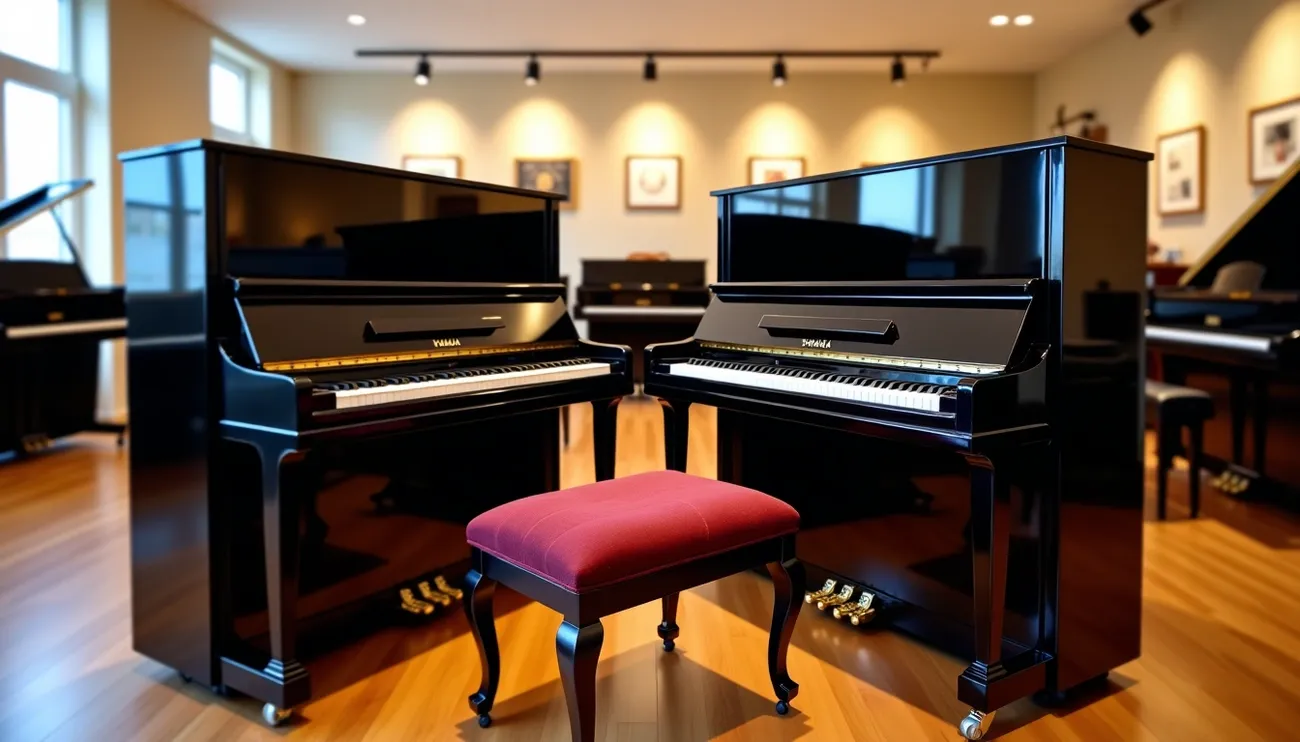
The choice between a Yamaha U1 and YUS3 isn’t simply about stretching your budget. Families in Dubai and the UAE deserve to understand what those extra dirhams actually buy before making this important decision for their children’s musical education.
Our Tokyo workshop has restored hundreds of Japanese domestic pianos before shipping them to our Ras Al Khor showroom, and here’s what we’ve learned: the Yamaha U1 earned its reputation as the world’s most trusted upright through decades of reliable performance. The YUS3 series, however, represents something different entirely – a genuine step toward concert-level warmth and touch sensitivity.
When you see used Yamaha U1 piano prices sitting 30-40% below YUS3 models, that gap tells a story. Longer bass strings, larger soundboards, and premium German components create real differences you’ll hear and feel immediately. The question isn’t which costs less – it’s which piano matches your family’s needs and survives the UAE’s challenging climate while delivering the musical experience you want.
This guide breaks down the physical specifications, tonal characteristics, and long-term value of each model. You’ll understand exactly why these price differences exist and which piano makes the most sense for your Dubai home.
Physical Specifications: The Four Inches That Change Everything
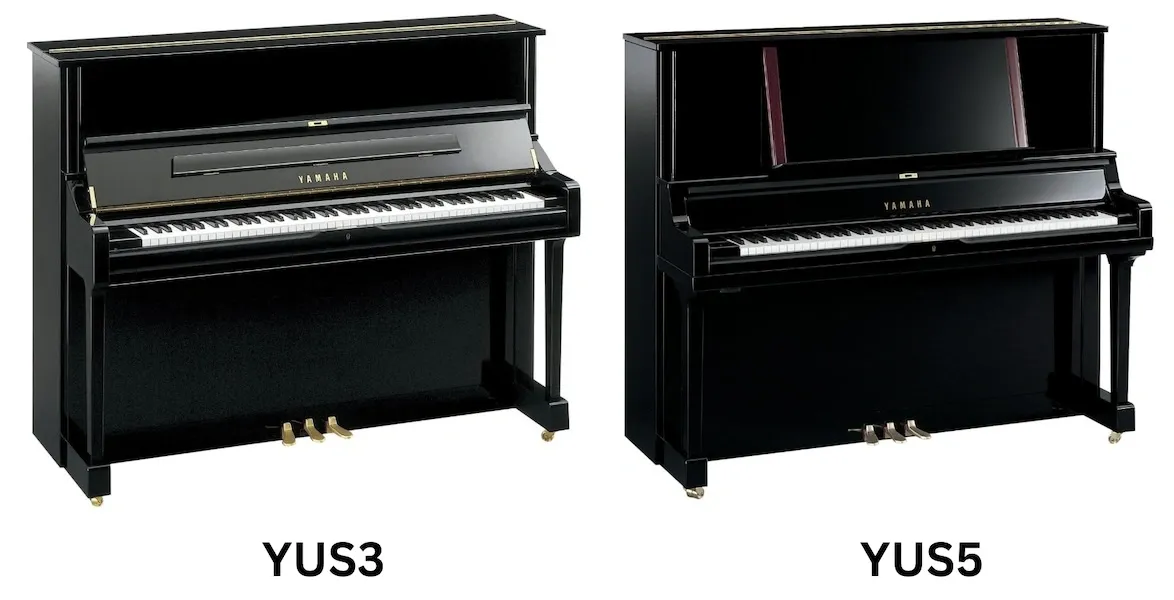
Image Source: Mark Goodwin Pianos
Understanding Cabinet Size: Why Height and Depth Matter
Picture this: the Yamaha U1 piano measures 48 inches tall, 60 inches wide, and 24 inches deep, weighing 502 pounds [14]. The YUS3 stands 52 inches high with the same 60-inch width but stretches to 26 inches in depth at 545 pounds [9].
Those extra four inches of height aren’t just numbers on a spec sheet. Inside that taller cabinet, Yamaha fits longer bass strings and a larger soundboard. When you buy a Yamaha U1 piano, you get compact, focused sound projection perfect for smaller Dubai apartments. The YUS3 fills larger villa spaces with deeper bass because physics requires more cabinet volume to generate those lower frequencies.
What Goes Inside: Wood Quality and Component Differences
Both pianos use solid spruce soundboards with hard maple bridges and pinblocks [14]. Here’s where they differ: Yamaha uses plastic compounds in certain U1 areas like toe blocks, legs, and pilasters on black finishes [3]. The YUS3 maintains solid wood construction throughout, paired with German Wurzen felt hammers and German wiring [5].
Our Tokyo technicians inspect every U1H and YUS model before shipping to our Ras Al Khor showroom. This climate preparation process ensures your piano adapts properly to Dubai’s humidity and temperature swings.
Moving Your Piano: Caster Systems That Protect UAE Floors
The yamaha upright U1 piano rolls on single casters [5], while the YUS3 uses double casters [9]. That 43-pound weight difference needs better support, and double casters deliver it. In Dubai homes with marble and hardwood floors, proper casters prevent scratches and distribute weight evenly when you need to move your piano for cleaning or room rearrangement.
Room Planning: Space Requirements for Optimal Sound
A used Yamaha U1 piano fits comfortably in rooms with at least 480 inches of total wall length [6]. The YUS3 needs slightly more space – ideally 520 inches of combined wall length for its fuller acoustic projection.
Your room’s furnishings matter equally. Hard tile floors and minimal carpeting amplify the U1’s naturally bright tone, while the YUS3’s warmer voice balances those reflective surfaces better. When our clients visit our showroom, we help them understand how their specific room acoustics will interact with each model.
Sound Quality: What Your Family Actually Hears
!Close-up of the internal mechanics and keyboard of a Yamaha upright piano showing strings, hammers, and tuning pins.
Image Source: Coach House Pianos
Why 4 Inches of Height Creates a Different Musical Voice
When you press a key on either piano, a wooden hammer strikes steel strings. But here’s where physics takes over: the YUS3’s extra height allows bass strings to stretch longer and vibrate more freely. Think of it like guitar strings – longer strings produce richer, cleaner tones with fewer harsh overtones.
The YUS3’s larger soundboard acts like a bigger speaker, amplifying these string vibrations across more surface area. Yamaha hand-selects the top ten percent of solid spruce from their Kitami Mill in Hokkaido for YUS soundboards, then reinforces them with full-length solid spruce ribs. This attention to wood selection creates the foundation for everything you hear.
The Bass Story: Brightness vs. Warmth
The used Yamaha U1 piano delivers what families expect – bright, clear bass that cuts through room noise with balanced treble. Your children hear every note distinctly, making it excellent for learning proper technique.
The YUS3 tells a different story through hand-wound copper bass strings. These premium strings, wound by hand rather than machine, produce warmer, richer bass tones. When your advanced student plays Chopin or Rachmaninoff, the YUS3’s thundering bass depth supports melodic lines the way a concert grand would.
German Craftsmanship in the YUS3
YUS3 models feature German Wurzen felt hammers and German wiring. Picture dense lamb’s wool felt striking the strings – this creates warm, rich tones compared to standard felt. The mahogany hammer cores (borrowed from Yamaha’s concert grands) deliver punchier response when you need crisp articulation.
At Yamaha’s Kakegawa factory, technicians hand-wind German strings to meet exacting sound profiles. This level of attention explains why the YUS3 costs more.
Your Room Changes Everything
Hard marble floors common in UAE homes amplify the yamaha u1 upright piano‘s natural brightness. Add minimal soft furnishings, and the sound becomes quite lively. Carpeted rooms absorb excess resonance, creating better balance.
The YUS3’s inherent warmth actually benefits from reflective spaces. Its richer tones complement the acoustic environments we see in Dubai and Sharjah homes.
When families visit our Ras Al Khor showroom, we evaluate your specific room acoustics before recommending between our climate-acclimated U1H, YUS3, or YUS5 inventory. Your home’s acoustics matter as much as the piano itself.
Touch, Action, and Playing Experience
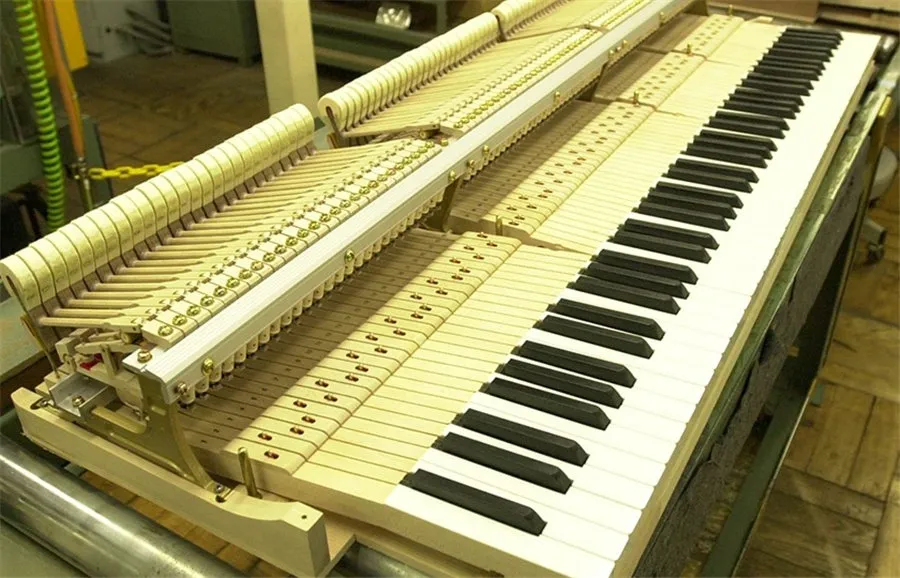
Image Source: Yamaha – Yamaha Corporation
Key Depth and Action Height: What Happens When You Press Down
When you press a key on either piano, a wooden hammer strikes the string inside. Both models use Yamaha’s patented aluminum action rail that resists humidity and temperature changes [14]. The difference lies in how that hammer responds to your touch.
Master technicians at Yamaha’s Kakegawa factory adjust YUS3 actions to match grand piano specifications – they regulate hammer strike distance, key weight, and how far each key travels [9]. The yamaha upright u1 piano uses standard adjustment suitable for most players. YUS3 regulation mimics concert grands, so your child can practice on the upright then perform on a grand without adjusting their technique.
Ivorite Keys vs Standard Surfaces: What Your Fingers Feel
The used Yamaha U1 piano features standard smooth acrylic key surfaces. YUS3 models use high-quality acrylic [5], while YUS5 upgrades to Ivorite synthetic ivory that provides textured grip similar to vintage ivory keys [5]. Ivorite feels more secure during extended practice sessions – your fingers won’t slip when perspiration increases during challenging pieces.
Touch Sensitivity Across Skill Levels
When you buy a Yamaha U1 piano, you get smooth, consistent response suitable for students through intermediate players [15]. Press gently, and you hear a soft tone. Press firmly, and you get clear projection.
YUS3 actions respond to the softest whisper touch through powerful fortissimo [16]. Advanced students and professionals can express subtle musical phrases that the U1 simply cannot capture.
Why Serious Players Choose the YUS3 Touch
The YUS3’s taller cabinet allows longer hammer shanks that deliver more sensitive response [15]. Premium German felt hammers borrowed from Yamaha’s CFX concert grand [16] produce the tonal control serious musicians demand.
At our Ras Al Khor showroom, you can test these touch differences side-by-side on our climate-acclimated YUS3 and YUS5 models. Your hands will immediately feel why advanced players prefer this action.
Yamaha U1 Piano Price vs YUS3: What Your Investment Actually Buys
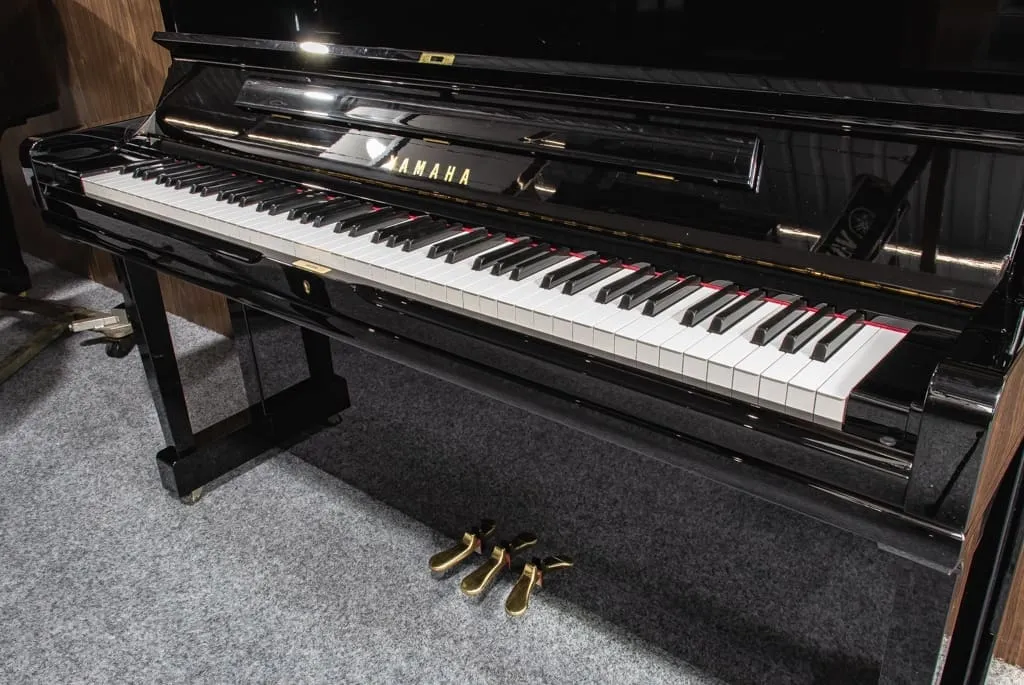
Image Source: Richard Lawson Pianos
New vs Used Yamaha U1 Piano Pricing
A new yamaha upright u1 piano in polished ebony carries an MSRP of AED 44,059.61 [17] [2]. The used market tells a different story entirely. Well-maintained U1 models from the mid-1990s typically sell for AED 9,179.85 to AED 11,015.82 [4], while pristine examples reach AED 13,218.99 [4].
The U1 remains the most popular upright on the used market [18], creating abundant supply that keeps prices stable. This popularity works in your favor – you’re buying a proven instrument with widespread technician familiarity throughout the UAE.
YUS3 Cost Premium: Understanding the 60% Price Jump
The YUS3 commands AED 69,396.00 to AED 81,146.21 new [19] [19]. That premium purchases German Wurzen felt, German wiring, extended bass strings, and concert-level regulation [20]. Think of it this way: you’re buying professional-grade components normally found in grand pianos, housed in an upright cabinet.
The question becomes simple – does your family’s musical journey justify concert-level components?
Long-Term Value: Why Both Models Hold Their Worth
Both pianos hold value exceptionally well when properly maintained [21]. The U1’s widespread availability creates pricing stability, while YUS3 scarcity drives stronger retention. Either choice protects your investment when you eventually sell or upgrade.
Our Dubai Inventory: Pre-Seasoned for UAE Climate
Our climate-acclimated U1H, YUS1, YUS3, and YUS5 models arrive from Tokyo already conditioned for local conditions. Visit our Ras Al Khor showroom to compare touch and tone differences firsthand.
The Decision Framework: When to Choose Each Model
Choose a yamaha u1 piano when your family prioritizes proven reliability and excellent value. Students through intermediate players will find everything they need.
Stretch for YUS3 when tonal warmth and professional-grade touch matter more than initial cost. Advanced players and serious musicians will appreciate the concert-level responsiveness immediately.
Quick Reference: U1 vs YUS3 Side-by-Side Comparison
This table breaks down the key differences between models. Notice how those extra dirhams for the YUS3 translate into specific upgrades – longer strings, German components, and concert-grade regulation that you’ll hear immediately.
Yamaha U1 vs YUS3 Comparison Table
|
Feature/Specification |
Yamaha U1 |
Yamaha YUS3 |
|
Physical Dimensions |
||
|
Height |
48 inches |
52 inches |
|
Width |
60 inches |
60 inches |
|
Depth |
24 inches |
26 inches |
|
Weight |
502 pounds |
545 pounds |
|
Construction & Materials |
||
|
Soundboard |
Solid spruce |
Top 10% solid spruce from Kitami Mill, Hokkaido with full-length solid spruce ribs |
|
Bridge & Pinblock |
Hard maple |
Hard maple |
|
Cabinet Materials |
Plastic compounds in toe blocks, legs, and pilasters (black finishes) |
Higher-grade wood construction throughout |
|
Caster System |
Single casters |
Double casters |
|
Sound Components |
||
|
Hammer Felt |
Standard |
German Wurzen felt |
|
Hammer Core |
Standard maple |
Mahogany (borrowed from CFX concert grand) |
|
Wiring |
Standard |
German wiring (hand-wound) |
|
Bass Strings |
Standard |
Hand-wound copper bass strings |
|
Tonal Characteristics |
||
|
Overall Tone |
Bright, clear bass with balanced treble |
Warmer, richer bass with thundering depth |
|
Bass Response |
Bright and precise articulation |
Warm, rich, and powerful |
|
String Length |
Shorter (48″ cabinet) |
Extended (52″ cabinet allows longer bass strings) |
|
Touch & Action |
||
|
Action Rail |
Aluminum (patented, humidity-resistant) |
Aluminum (patented, humidity-resistant) |
|
Regulation |
Standard regulation protocols |
Master-regulated to match grand piano specifications |
|
Key Surface |
Standard acrylic |
High-quality acrylic |
|
Responsiveness |
Smooth, consistent action |
Softest pianissimo through thundering fortissimo |
|
Hammer Shank Length |
Standard |
Longer (due to taller cabinet) |
|
Pricing (AED) |
||
|
New MSRP |
AED 44,059.61 (polished ebony) |
AED 69,396.00 – AED 81,146.21 |
|
Used Market Range |
AED 9,179.85 – AED 13,218.99 (depending on condition and year) |
Not mentioned |
|
Price Difference |
Baseline |
30-40% higher than U1 |
|
Room Requirements |
||
|
Minimum Wall Length |
480 inches total |
520 inches total (combined wall length) |
|
Ideal Room Type |
Fits comfortably in smaller spaces |
Requires slightly larger spaces for optimal acoustic projection |
|
Target User |
||
|
Best For |
Students and intermediate players prioritizing reliability |
Advanced players and professionals requiring concert-level performance |
|
Skill Level Suitability |
Students through intermediate players |
Professional demands, advanced players |
|
Resale Value |
||
|
Market Position |
Most popular upright on used market (abundant supply) |
Scarcity commands stronger retention |
|
Value Retention |
Holds value exceptionally well when properly maintained |
Holds value exceptionally well when properly maintained |
About Our Dubai Inventory: Both models arrive at our Ras Al Khor showroom as climate-acclimated Japanese domestic instruments (U1H for the U1 series). Each piano undergoes complete restoration in our Tokyo workshop before shipping to Dubai, ensuring they’re already seasoned for UAE humidity and temperature conditions. This pre-conditioning process eliminates the typical adjustment period that new imports require.
Make Your Decision With Confidence
The choice between a U1 and YUS3 depends on your child’s musical journey and your family’s priorities. Students and intermediate players thrive with the U1’s reliable performance and clear tone. Advanced pianists and those seeking concert-level expression will appreciate the YUS3’s warmth and responsive touch. The price difference reflects real value – German components, extended string length, and master regulation techniques that create genuinely different playing experiences.
Our Ras Al Khor showroom lets you compare both models directly. Every piano arrives from our Tokyo workshop already climate-acclimated for UAE conditions, eliminating the risk of humidity damage or structural issues common with untreated instruments.
Come play both pianos yourself. The differences in touch, tone, and projection become obvious within minutes. Whether you choose a climate-seasoned U1H or invest in a YUS3, you’ll know exactly what you’re getting – and why it serves your family’s musical goals for decades to come.
FAQs
Q1. Is the Yamaha U3 better than the U1? The U3 produces a deeper, richer tone with more dynamic range due to its greater height, while the U1 offers a clean, balanced sound ideal for smaller rooms. Both models deliver Yamaha’s signature clarity and responsiveness, making the choice dependent on your space and tonal preferences.
Q2. What are the main differences between Yamaha’s U Series and YUS Series pianos? The YUS Series uses higher-grade materials including German Wurzen felt hammers, German wiring, and premium spruce soundboards, making it suitable for advanced players and professional use. The U Series offers excellent performance for intermediate to advanced players at a lower price point with standard components.
Q3. Is the Yamaha U1 a reliable piano choice? The Yamaha U1 is one of the world’s most widely-recommended upright pianos, known for its exceptional reliability and consistent performance. It’s highly regarded by both students and intermediate players, making it a popular choice for those seeking a dependable instrument.
Q4. How long does a Yamaha U1 piano typically last? With normal use and proper maintenance, a Yamaha U1 typically lasts 30-50 years, and many continue performing well beyond 50 years. With professional rebuilding and care, these pianos can serve multiple generations.
Q5. Should I choose the U1 or YUS3 based on my skill level? Choose the U1 if you’re a student or intermediate player prioritizing reliability and value. The YUS3 is better suited for advanced players and professionals who need concert-level warmth, superior touch responsiveness, and are willing to invest in premium German components and extended string length.
References
[1] – https://usa.yamaha.com/products/musical_instruments/pianos/upright_pianos/u_series/specs.html
[2] – https://uk.yamaha.com/en/musical-instruments/pianos/products/upright-pianos/yus-series/specs.html
[3] – https://forum.pianoworld.com/ubbthreads.php/topics/1245386/1.html
[4] – https://australianpianowarehouse.com.au/product/yamaha-yus3-upright-piano/?srsltid=AfmBOoqhW1FdZDZwsFOyRxWi7MSSi_VeID-SB4pE_INl55jhfBcxPfU1
[5] – https://www.freeholdmusic.com/product/yamaha-u1-48-upright-piano/?srsltid=AfmBOopqtifTY19_i95zlZAa6X2hqKDarfRYSEGwU4_6Czn7E7emikic
[6] – https://hub.yamaha.com/pianos/p-how-to/whats-the-best-piano-for-your-room/
[7] – https://usa.yamaha.com/products/musical_instruments/pianos/upright_pianos/u_series/u-series.html
[8] – https://usa.yamaha.com/products/musical_instruments/pianos/upright_pianos/yus_series/yus-series.html
[9] – https://markgoodwinpianos.co.uk/blog/yamaha-yus3-vs-yus5-review+
[10] – https://faustharrisonpianos.com/yamaha-u1-vs-u3-what-is-the-difference/?srsltid=AfmBOopACNnASgKZB6HufFQuNplfzzxrohl2RfgSQmw5PfFZVhT9ENno
[11] – https://www.pianowerkes.com/yamaha-yus-pianos-are-these-the-worlds-grandest-uprights/?srsltid=AfmBOopBnbwLOXn1jr4wRIW2SZeJyac8RWd9nk0NgncRBz1t6CmHtaG3
[12] – https://princetonpianos.com/product/yamaha-u1-upright-piano-new/?srsltid=AfmBOooh_Cu3jj-4BQflYwu22jH5ZxtlvnllOWwh7ZmaZPgPAk7XSIYW
[13] – https://muex.com/blog/yamaha-u1-vs-yamaha-u3/?srsltid=AfmBOooA2D4Hh7nn3A8hENcBWHI5JcdSDRhPwXwIJhsQ6SJ1bN13ARS4
[14] – https://www.justanswer.com/appraisals/snvfj-u1-yamaha-piano-30-yrs-old-one-owner.html
[15] – https://www.merriammusic.com/pianos/brands/yamaha/?srsltid=AfmBOooUuDEfmrUVzE-WFwZ2AalLAjv_j_uOU7gXPrSOnKG2jAg3eWkH
[16] – https://www.merriammusic.com/pianos/brands/yamaha/?srsltid=AfmBOook83GHKtHma-3xDVpWJ2mYXT1o6IIy9bpNws20O42ePFI_JDCy
[17] – https://www.freeholdmusic.com/yamaha-japanese-upright-comparison-chart/?srsltid=AfmBOopHUZVsvV7P-5ELyq5HtIJioiTenLMsxMkwGzfhb8-l5-AxvlAB
[18] – https://faustharrisonpianos.com/yamaha-u1-vs-u3-what-is-the-difference/?srsltid=AfmBOoqg_jYSqfokX87U9mRoVuFYggwld7ajDOqs96P6688hmbY7BLwx