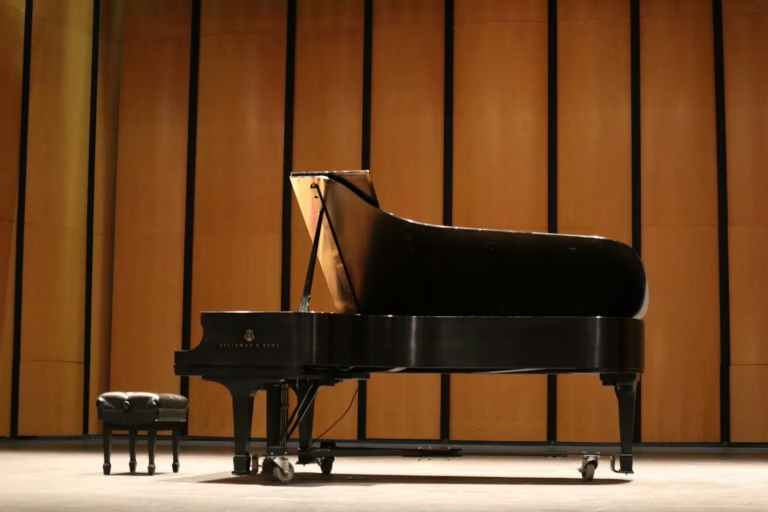
A piano can look beautiful and still feel wrong the moment you sit down to play it.
That is why sound matters so much.
A lot of buyers focus on size, finish, and price first.
Then they finally hear two instruments side by side and realize the real decision is not about appearance at all.
It is about how the piano actually sounds in the room.
This is where many first-time buyers get overwhelmed.
They know one instrument sounds better to them, but they are not always sure why.
The good news is that you do not need to be a professional musician to compare sound well.
You just need to know what to listen for.
Once you understand that, choosing a piano becomes much easier and much more honest.
Watch the video!
Start by Listening to the Whole Instrument
The first mistake many buyers make is playing only a few random notes.
That does not tell you enough.
A piano should be heard across the full keyboard.
Play low notes.
Play middle notes.
Play higher notes.
Then listen to whether the sound feels balanced from one area to the next.
A good instrument should feel connected.
It should not sound warm in one part and weak in another for no clear reason.
When you compare a piano properly, you are not only listening for beauty.
You are listening for consistency.
That matters a lot in the long run.
Do Not Judge Too Fast
Sometimes a piano sounds impressive in the first few seconds because it feels bright or powerful.
That first reaction can be misleading.
A very bright sound may grab attention quickly, but after a few minutes it can start to feel sharp or tiring.
Another instrument may sound calmer at first, yet become much more pleasing the longer you sit with it.
That is why you should not rush the comparison.
Give each piano a little time.
Play softly.
Play more firmly.
Then pause and notice which sound actually feels more natural to you.
A fast first impression is not always the best guide.
Listen for Warmth, Clarity, and Balance
These three things help most buyers compare sound in a simple way.
Warmth is the feeling that the tone is rich and pleasant instead of thin or harsh.
Clarity is how cleanly the notes speak without sounding muddy.
Balance is whether the instrument feels even across different parts of the keyboard.
When a piano gets these three things right, it usually feels more satisfying to return to.
You do not need technical language to sense this.
You will hear it.
One instrument will often feel more comfortable and complete, even if you cannot explain it perfectly.
That instinct matters.
Play the Same Notes on Different Instruments
This is one of the easiest and smartest things you can do.
If you want to compare sound properly, do not play one song on one piano and something completely different on another.
Use the same notes, the same short melody, or the same few chords.
That makes the differences much clearer.
You stop reacting to the music and start reacting to the instrument.
This is especially useful when comparing options across the full collection, because it helps you focus on the sound itself rather than getting distracted by size or appearance.
A fair comparison always gives the instruments the same test.
Soft Playing Reveals a Lot
Many buyers only test with medium or strong volume.
That misses an important part of the picture.
A piano should still sound pleasing when played softly.
In fact, soft playing often reveals more about character than loud playing does.
A good instrument can still feel expressive without needing force.
The tone should stay present.
It should not disappear or become dull the moment you ease your touch.
This matters because home playing is not always dramatic.
A lot of real practice happens quietly.
That is why soft tone deserves proper attention when you compare.

Stronger Playing Matters Too
Of course, you should also hear how the instrument responds when you play with more energy.
A piano should not feel like it falls apart under stronger playing.
The sound should open up, not turn rough.
This is where some instruments begin to reveal their limits.
They may sound pleasant at one volume, but less controlled when the playing becomes stronger.
A better piano usually keeps its identity.
It grows in presence, but it still feels musical.
That difference becomes easier to hear the more directly you compare.
So do not stay in one dynamic range.
Test both ends.
Room Sound Can Change Your Impression
This part matters more than many buyers realize.
A piano does not exist in isolation.
It exists in a room.
That room shapes what you hear.
A bright showroom, a quiet corner, or a more open space can all affect the way an instrument feels to your ears.
That does not mean you should ignore what you hear.
It simply means you should be aware that environment plays a role.
A grand piano in a large space may feel more open.
An upright piano in a smaller room may feel more focused and natural.
The key is to imagine how that sound will feel in your own home, not only in the place where you first heard it.
Compare Digital and Acoustic Honestly
Some buyers walk in already convinced that acoustic is always better.
Others assume digital is always more practical and that is the end of the conversation.
The truth is more personal than that.
A digital piano can sound very satisfying for home use, especially when the player wants consistency and flexibility.
An acoustic instrument can bring a different kind of depth and physical presence that many people still love.
That is why it helps to compare both directions with an open mind.
If you want to explore that side seriously, the digital piano collection gives a useful starting point for hearing how home-friendly digital options differ from acoustic ones.
The best choice is the one whose sound you actually enjoy living with.

Do Not Let Price Decide the Sound for You
This happens all the time.
A buyer hears one piano and likes it.
Then they notice another one is more expensive and suddenly start wondering if they are supposed to prefer that instead.
Price can influence quality, but it should not replace your ears.
A more expensive instrument may offer more depth, stronger presence, or a different kind of finish.
But if another piano sounds more natural and more pleasing to you, that matters.
The right sound is not always the one with the bigger number attached to it.
That is why comparison should stay honest.
Listen first.
Then think about value.
Not the other way around.
Familiar Tunes Help More Than Fancy Playing
A lot of buyers feel self-conscious because they are not advanced players.
That is completely fine.
You do not need to perform something difficult to compare sound.
A simple scale, a few repeated chords, or a short melody you already know is enough.
In fact, that is often better.
When the playing is familiar, you can focus more clearly on the sound of the piano.
You notice the tone sooner.
You notice whether it feels warm or sharp, open or boxed in, smooth or uneven.
That is what matters.
Not showing off.
Just listening well.
Listen From the Bench and From a Distance
Most buyers only hear the instrument from the player’s seat.
That is useful, but it is not the whole picture.
If possible, let someone else play the piano while you step back and listen from a short distance.
This can reveal something completely different.
The sound that feels one way at the bench may feel fuller or thinner from across the room.
That matters for family homes.
A piano is often heard by more than just the player.
It becomes part of the room itself.
That is why this second listening position can be so helpful.
It gives you a more complete sense of what you are really buying.
Compare Similar Types Before Jumping Categories
A fair comparison is easier when you stay organized.
If you want to judge sound well, compare upright against upright first.
Compare digital against digital.
Then compare across categories.
If you jump too wildly from one style to another, the differences can feel bigger but less useful.
For example, if you are thinking about a larger acoustic instrument, it makes sense to compare models within the grand piano collection before deciding what kind of sound really draws you in.
That way, you are not only reacting to size.
You are hearing the real differences more clearly.
A Yamaha Piano Often Has a Familiar Character
Many buyers naturally end up comparing a yamaha piano somewhere along the way.
That makes sense.
It is a familiar name, and many people already have an idea in their heads of how it might sound.
Still, do not assume the brand name finishes the job for you.
A piano should still be heard on its own terms.
Brand gives confidence.
Your ears make the final choice.
That is the better way to approach it.
Listen first, then decide whether the name and the sound match what you actually want.
The Best Sound Is the One You Want to Hear Again
This may be the simplest rule of all.
The right piano is usually the one that makes you want to keep playing.
Not because it is flashy.
Not because someone told you it is the “best.”
But because the sound feels right to you.
It feels enjoyable.
It feels like something you would be happy hearing in your home every week.
That is what matters most.
An instrument should not only impress you once.
It should make you want to come back again.
That is the sound you should trust.
If Possible, Compare in Person
This is one decision that becomes much easier when you stop reading and start listening.
Trying a piano in person removes so much uncertainty.
You hear the differences immediately.
You feel the response.
You understand much faster what suits your taste.
That is why it helps to book a showroom visit if you are narrowing down options seriously.
A short visit can tell you more than hours of guessing online.
And that is usually how the right instrument becomes obvious.
Final Thoughts
Learning how to compare piano sound is not about becoming an expert overnight.
It is about slowing down enough to listen well.
Hear the whole keyboard.
Test soft and strong playing.
Compare the same notes.
Pay attention to warmth, clarity, and balance.
And most importantly, notice which sound feels right to you.
That is usually the best guide.
If you want help comparing current options more personally, you can reach out through the contact page and get guidance before making the final choice.
You can also follow Lotfi Piano on YouTube and Instagram for more inspiration and featured instruments.
FAQs
How do I compare piano sound if I am a beginner?
Play simple notes or a short familiar melody on each instrument and listen for warmth, clarity, and balance.
Should I compare digital and acoustic sound together?
Yes, but it helps to compare similar types first so you understand the differences more clearly.
Does a more expensive piano always sound better?
Not always.
Price can reflect quality, but the right sound is still the one that feels best to your ears.
Should I let someone else play while I listen?
Yes.
That can give you a much better sense of how the instrument sounds in the room.
What should I trust most when comparing sound?
Trust the instrument that makes you want to keep listening and keep playing.
Also Read: Why do most people quit piano