The 12 Best Used Piano Brands for Quality and Value in 2026
You want the truth about buying a ‘used’ piano in Dubai? Here it is: brand matters, but manufacturing era matters more.
For 15 years, our Tokyo office has sourced authentic Japanese instruments before shipping to our Ras Al Khor showroom. We inspect every piano personally because the UAE’s extreme climate destroys inferior instruments. Those bargain uprights and poorly restored grands simply won’t survive Dubai’s heat and humidity fluctuations.
This guide examines 12 manufacturers whose instruments actually endure UAE conditions. You’ll discover which ‘pre-owned’ uprights deliver concert-quality touch for 20,000 AED instead of 80,000 AED for comparable new models. We’ll explain why a 1980s Yamaha U3 from our Japanese homes sourcing often outperforms brand-new entry-level pianos, and how proper climate acclimation makes the difference between a wise investment and an expensive mistake.
Most importantly, you’ll learn to identify the manufacturing periods when these companies built structurally superior instruments using authentic materials and expert craftsmanship.
Yamaha: The Gold Standard for Used Pianos
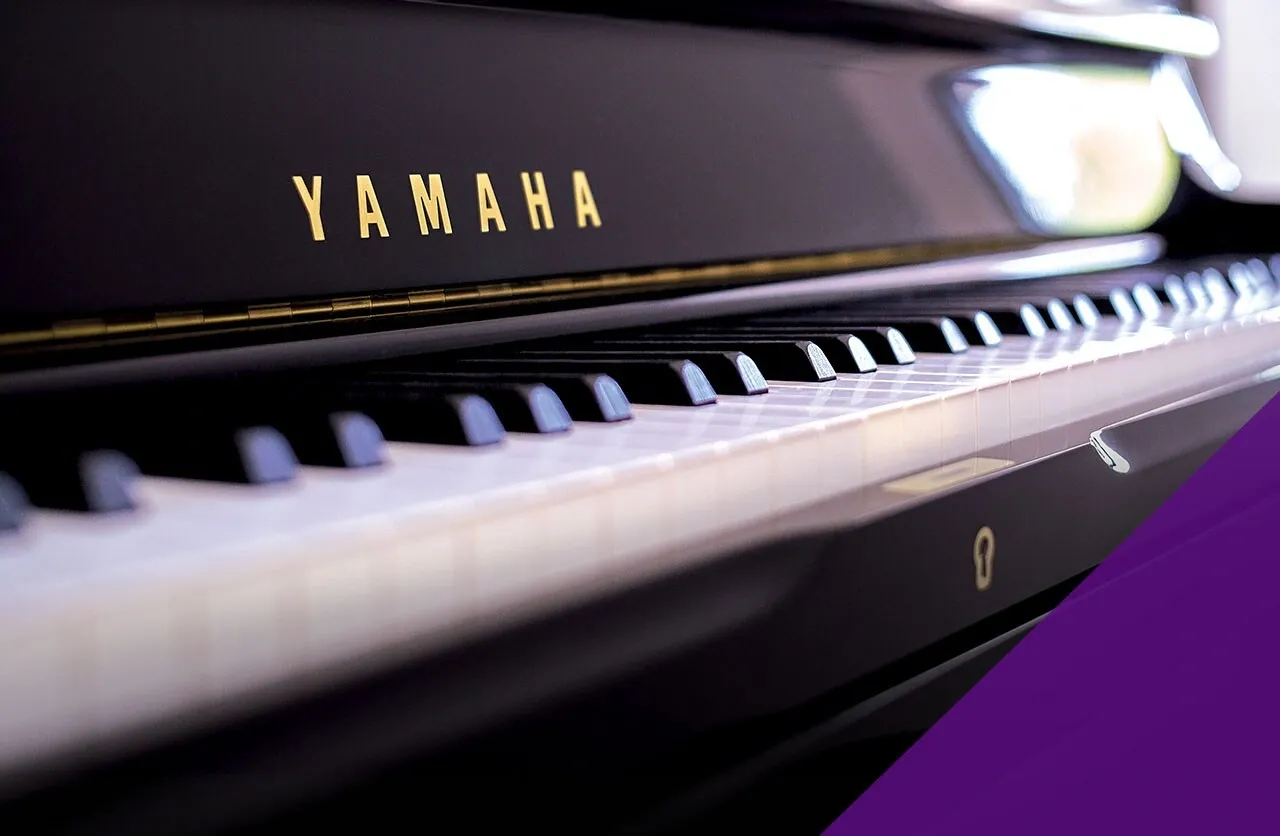
Image Source: Yamaha Corporation
The Hamamatsu Legacy: Why Vintage Yamaha Outperforms New Models
Thirty to fifty years ago, Yamaha built every single part inside their Hamamatsu factory using Japanese experts. They harvested spruce at their Kitami Mill in Hokkaido, cast iron plates at their Iwata foundry, and selected only the top 15 percent of wood for soundboard material [20][20]. This uncompromising quality makes older pianos structurally superior to today’s mass-produced alternatives.
Walk into our Ras Al Khor showroom and press a key on our 1980s U3A. When your finger strikes down, a real wooden hammer hits a steel string, and the sound vibrates through a massive 2,369 square inch solid spruce soundboard [19]. Compare that to a modern Indonesian-made B1. The difference hits you immediately – richer bass, warmer resonance, authentic piano voice.
Why Institutions Trust Yamaha Above All Others
Conservatories need multiple pianos with identical touch and tuning stability [2][2]. Yamaha’s vertical integration delivers that consistency because they control every manufacturing step, from wood selection to final regulation [20]. At our Tokyo office, we witness this reliability daily: properly maintained Japanese-made uprights from the 1970s and 1980s often outperform brand-new entry-level models [20].
The U-Series: Professional Quality for UAE Families
The U1 stands 48 inches with a 2,137 square inch soundboard, delivering clear, precise tone perfect for Dubai apartments and teaching studios [20][19]. The U3 towers at 52 inches with 2,369 square inches of soundboard, producing robust bass and grand-like resonance for serious pianists [20]. For UAE conditions specifically, we stock climate-acclimated models: the U3A and U30A for professionals, the U1H for intermediate students, and the YUS1, YUS3, and YUS5 featuring premium German components including German hammer felt and steel piano wire [19].
C & G Series Grands: Conservatory Standards
The C series represents Yamaha’s institutional choice. Our C1X, C2X, and C3X models feature duplex scaling and hand-wound bass strings that create complex harmonic overtones [21]. The G series, built at Yamaha’s flagship Hamamatsu factory, delivers stronger, brighter characteristics that fill concert halls [19]. Even compact spaces benefit: the GB1K produces genuine grand piano sound through robust back post construction and pioneering V-Pro plate technology [21].
Disklavier Technology: Live Music Without Musicians
Dubai hotels and luxury lobbies require sophisticated ambiance. The Disklavier ENSPIRE system captures and reproduces performances with 1,024 levels of key velocity and 256 increments of pedaling precision [19]. Our C3X SHTA Disklavier streams from over 6,000 compositions across 30 channels, functioning as both authentic acoustic piano and autonomous performer [22].
Investment Value: Why Yamaha Holds Its Worth
Well-maintained U3 models range from AED 18,360 to AED 29,376, while U1 models cost AED 18,176 to AED 25,520 [22]. Consider this: a 1980 U3 purchased in 2006 appreciated 75 percent by recent market valuations [22]. Japanese-made Yamaha pianos retain value because institutional demand stays constant worldwide [22].
For 15,000 to 20,000 AED, families in Dubai can own a fully refurbished, pristine Japanese acoustic piano that rivals the touch, weight, and sound of an 80,000 AED brand-new model.
Kawai: Premium Japanese Craftsmanship
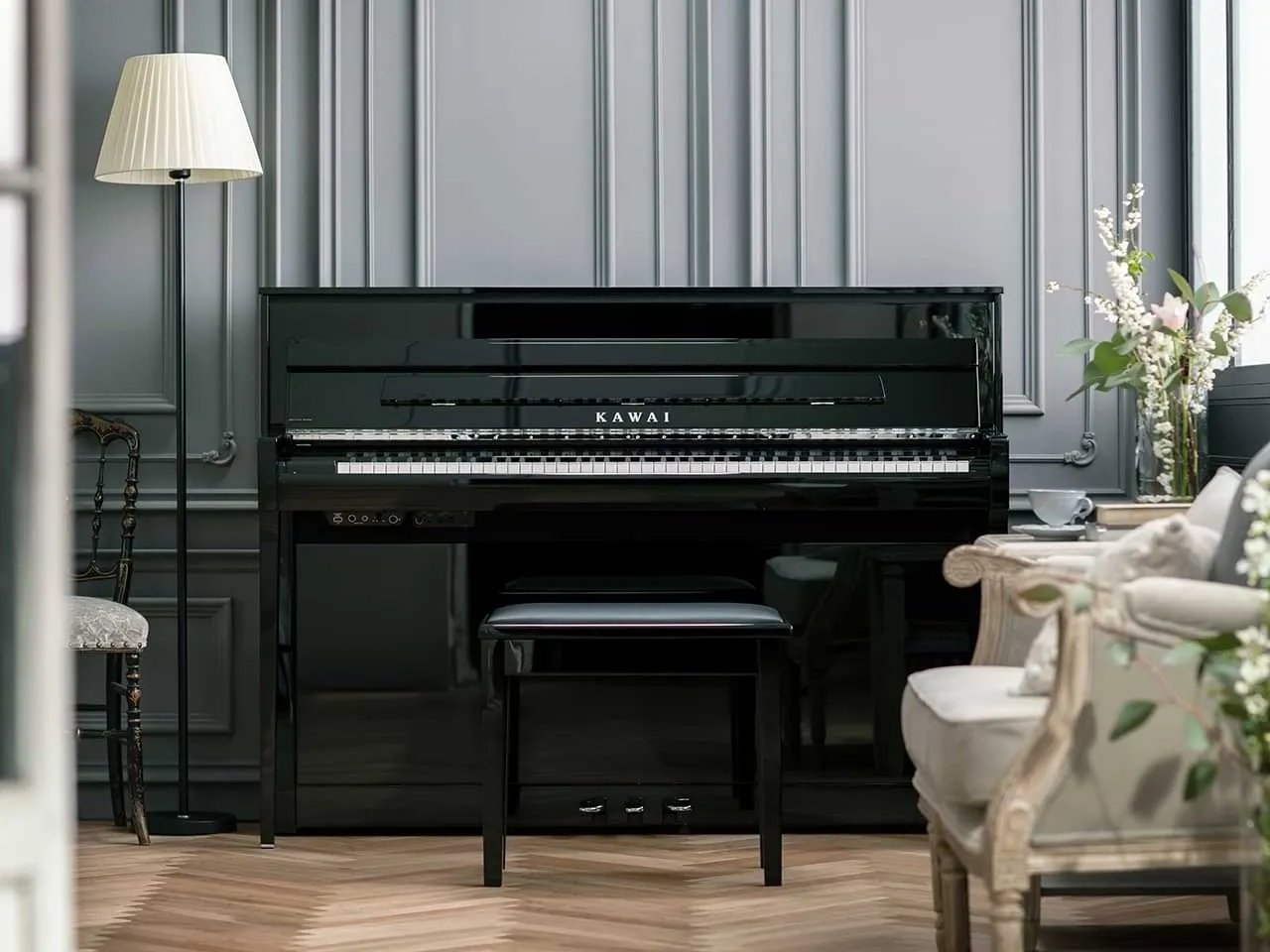
Image Source: Kawai Musical Instruments Manufacturing Co., Ltd.
Kawai’s Carbon Fiber Revolution
Most piano buyers don’t realize Kawai faced fierce industry criticism when they replaced traditional wooden action parts with ABS-Carbon composite components [20]. Today, that “controversial” decision proves genius. Their Millennium III action performs 10 times stronger than wood [20] and responds 25 percent faster [19].
Here’s why this matters for your Dubai home: wooden piano actions expand and contract with humidity changes, requiring constant adjustment by technicians. At our Tokyo office, we climate-acclimate every Kawai before shipping, but the carbon fiber stays stable regardless. When you press a key, those extended keysticks provide control that feels closer to a grand piano [20], while the redesigned jack surface lets you play whisper-soft passages with remarkable precision [19].
The Kawai Sound: Warm Bell-Like Character
Walk into our Ras Al Khor showroom and compare a Kawai directly against a Yamaha. The difference hits you immediately. Where Yamaha delivers bright, percussive attack, Kawai produces warm, bell-like resonance [19]. Musicians describe it as smooth and lyrical, with sweet treble notes that sing and rich bass that never sounds muddy [19].
This tonal warmth works beautifully in UAE apartments where tile floors and concrete walls can make brighter pianos sound harsh and metallic [19]. Our Kawai NS15, standing 125cm tall with its solid spruce soundboard, fills rooms with that characteristic Japanese warmth while maintaining professional tonal range [19].
Home-Perfect Upright Models
The K-300 remains globally popular for good reason: 122cm height delivers professional features without overwhelming smaller spaces [22]. Built in Indonesia with the K15 and K200, it offers exceptional value for families [22]. Serious pianists should consider the Japanese-made K-400 and K-500, which provide greater depth and dynamic range [22].
Our NS15 stock models feature premium key materials that feel natural during long practice sessions [19]. The touch stays smooth enough for beginners yet powerful enough for advanced repertoire [19].
Grand Piano Series: GL vs GX
Kawai offers two grand lines. The GL series runs from 5’0″ to 6’2″, while the GX stretches 5’5″ to 7’6″ [20]. Both use Millennium III actions and extended keysticks, but GX rims employ alternating maple and mahogany layers for superior projection and sustain [20]. The GX bridge uses vertically laminated construction with cap, contrasting the GL’s solid capless design [20]. Every model except the compact 5’0″ GL-10 comes from Japan [20].
Investment Value for UAE Families
New Kawai uprights range from AED 20,545 to AED 79,277, with grands spanning AED 57,246 to AED 663,501 [20]. Shigeru Kawai grands start at AED 210,769 [20]. Well-maintained used K-series models deliver professional capability at fractions of European pricing [20].
For families wanting warm, musical instruments that handle UAE conditions beautifully, Kawai represents exceptional secondhand value.
Steinway & Sons: The American Legend
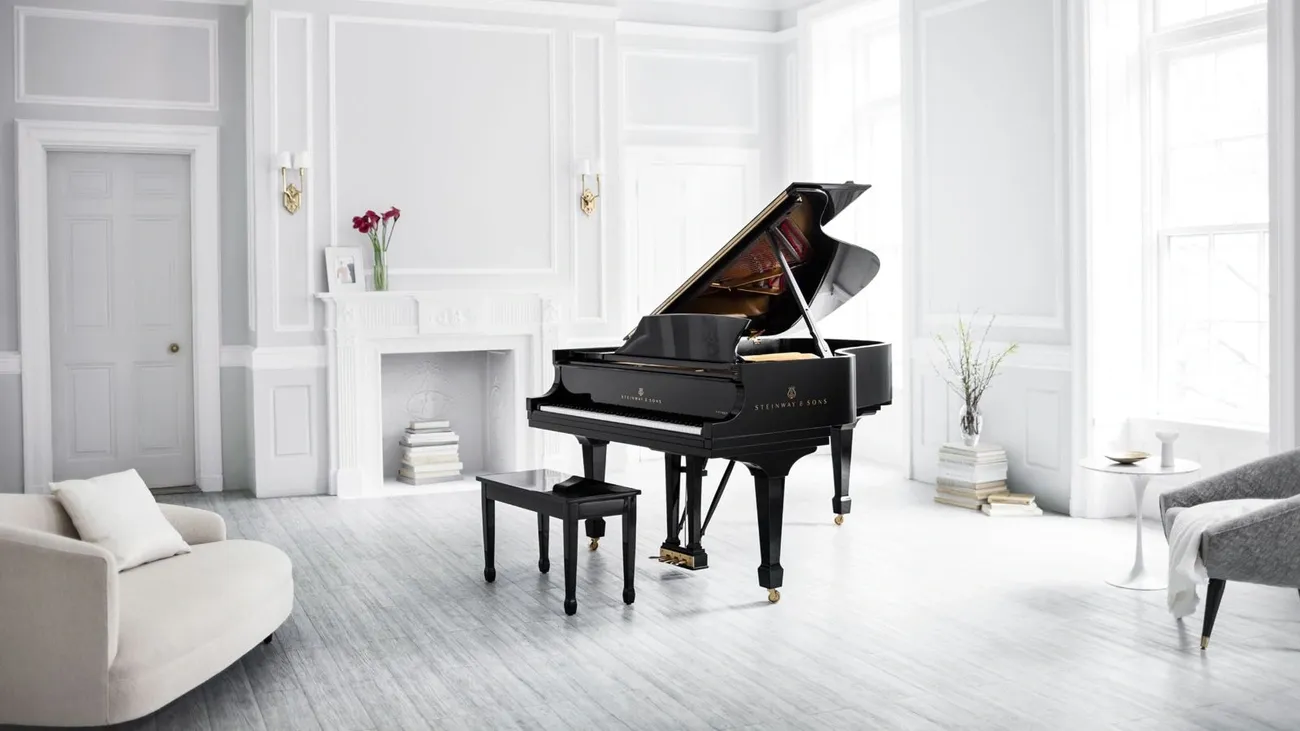
Image Source: www.steinway.com
What Makes Steinway Pianos Exceptional
Steinway builds each piano to a standard, not a price point. One year of handwork using 12,000 individual parts creates instruments that 97% of concert pianists choose worldwide [16] [16]. Master craftsmen pass down skills through generations, sourcing close-grained, quarter-sawn Sitka spruce from remote Alaskan islands for soundboards with grain density superior to Eastern spruce used decades ago [3].
At our Tokyo office, we examine every Steinway’s soundboard integrity, pinblock condition, and action wear before shipping to Dubai. UAE families need instruments that survived proper climate control, since soundboards lose their crown under constant string tension and environmental stress [16]. When you press a key on a properly maintained Steinway, you hear the difference immediately: rich sustain, complex overtones, and dynamic range that fills concert halls.
Steinway Model Variations and Identification
The Model S (5’1″) delivers authentic Steinway voice for smaller UAE apartments [17]. Model M (5’7″) balances manageable size with robust projection for homes and teaching studios [17]. The Model L (5’10.75″), introduced in 1923, produces richer depth than the M [17]. Model A (6’2″), the Parlor Grand, offers concert-quality sound with wide dynamic range [17]. The Model B (6’11”) remains Steinway’s most versatile offering [17]. Model C (7’5″) serves serious performers [17], while the Model D (8’11”) dominates concert stages globally [17].
Investment Value and Resale Potential
Steinway pianos appreciate 3-5% annually, allowing owners to sell well-maintained instruments above original purchase cost [18] [19]. Most pianos lose 50% of value immediately, but Steinways maintain legendary financial appreciation spanning 160 years [3]. The record auction price reached AED 4.41 million for an 1887 Model D-274 [3].
Common Issues in ‘Used’ Steinways
Here’s what you need to know before investing: Pre-1900 Steinways suffer from verdigris, a paraffin-based corrosion requiring complete action rebuilding [19]. Between 1968-1982, Steinway used Teflon bushings that click and need specialized technician knowledge [19]. Pianos over 30 years old require significant work [18]. Avoid pre-1992 models without adequate maintenance and pre-1972 instruments without restoration documentation [18]. Non-Steinway parts during rebuilding destroy both performance and investment value [16].
Who Should Consider a ‘Pre-Owned’ Steinway
Serious pianists seeking ultimate performance should budget accordingly. At our Ras Al Khor showroom, we inspect every used Steinway with qualified technicians, verifying restoration documentation and parts authenticity. For families in Dubai seeking prestige instruments, we recommend climate-acclimated models with documented maintenance history.
Petrof: Europe’s Hidden Gem
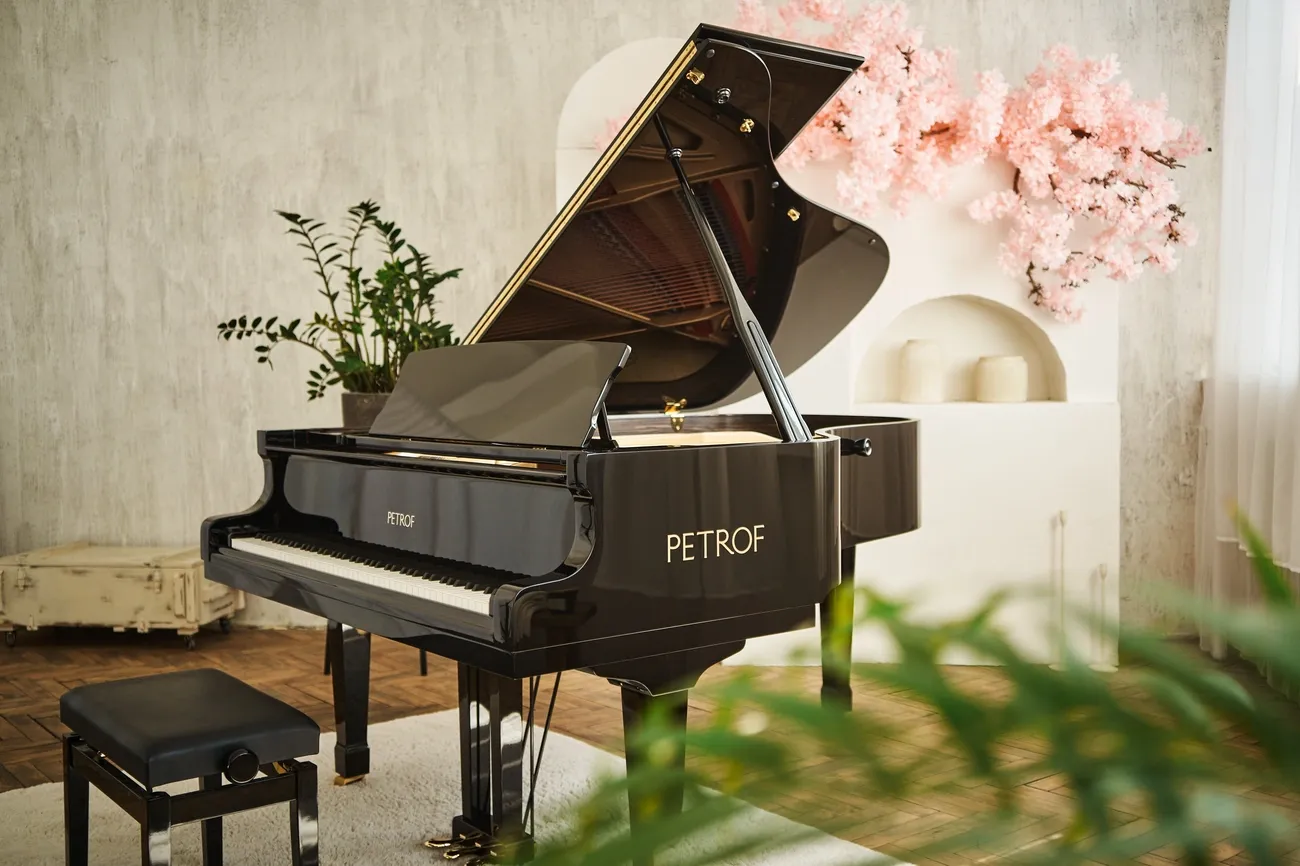
Image Source: www.petrof.com
Czech Craftsmanship and Heritage
Here’s what most piano buyers don’t know: while they chase Japanese and German name recognition, one of Europe’s finest manufacturers gets ignored completely. Founded in 1864 by Antonín Petrof in Hradec Králové, this Czech family business survived two world wars and Soviet nationalization before returning to fifth-generation family control in 1991 [19].
Today, 80% of production remains handwork [20] [19]. Each piano requires 9 months to complete [20]. This meticulous process limits Petrof to approximately 6,000 pianos annually [20], maintaining quality standards that earned the European Excellence Seal certifying 100% European-sourced materials [19] [20].
Petrof’s Distinctive Warm European Tone
Where Yamaha delivers bright precision and Kawai offers smooth bell-like character, Petrof creates what musicians call velvety, romantic, and singing [19] [21]. This warmth comes from solid Bohemian spruce soundboards paired with premium German components. Most modern Petrof grands and larger uprights feature Renner actions – the same manufacturer supplying Steinway and Bechstein [19]. Hammers source from Renner and Abel, using high-quality wool felt that produces their characteristic soft attack [19].
At our Ras Al Khor showroom, families notice this warm European voice immediately. The tonal signature works beautifully in UAE homes where tile floors and concrete walls can make brighter pianos sound harsh.
Best Petrof Models for Home and Studio
The P125 F1 serves as Petrof’s most versatile upright, handling practice, teaching, and recitals equally well [22]. The P122 N2, smallest in their Higher Series, accommodates beginners through advanced players [22]. Serious pianists choose the P131 and P135 for professional-grade performance [22] [20]. Our climate-acclimated Petrof 126 stock model delivers exceptional home-studio capability sourced directly through our Tokyo office.
Why Petrof Offers Exceptional Value
Petrof represents incredible secondhand value [19]. For the price of a mid-range Asian piano, you acquire hand-finished European instruments with tonal depth that typically costs significantly more from German manufacturers [19]. Because Petrof consistently uses premium Renner and Abel components, skilled technicians can restore these instruments to original factory specifications [19].
Maintenance and Parts Availability
Petrof maintains comprehensive spare parts inventory and supplies components directly to certified technicians for rebuilding [22]. This parts accessibility, combined with world-standard German action components, makes Petrof among the safest ‘used’ piano investments in the European category.
Boston (by Steinway): Premium Quality at Accessible Prices
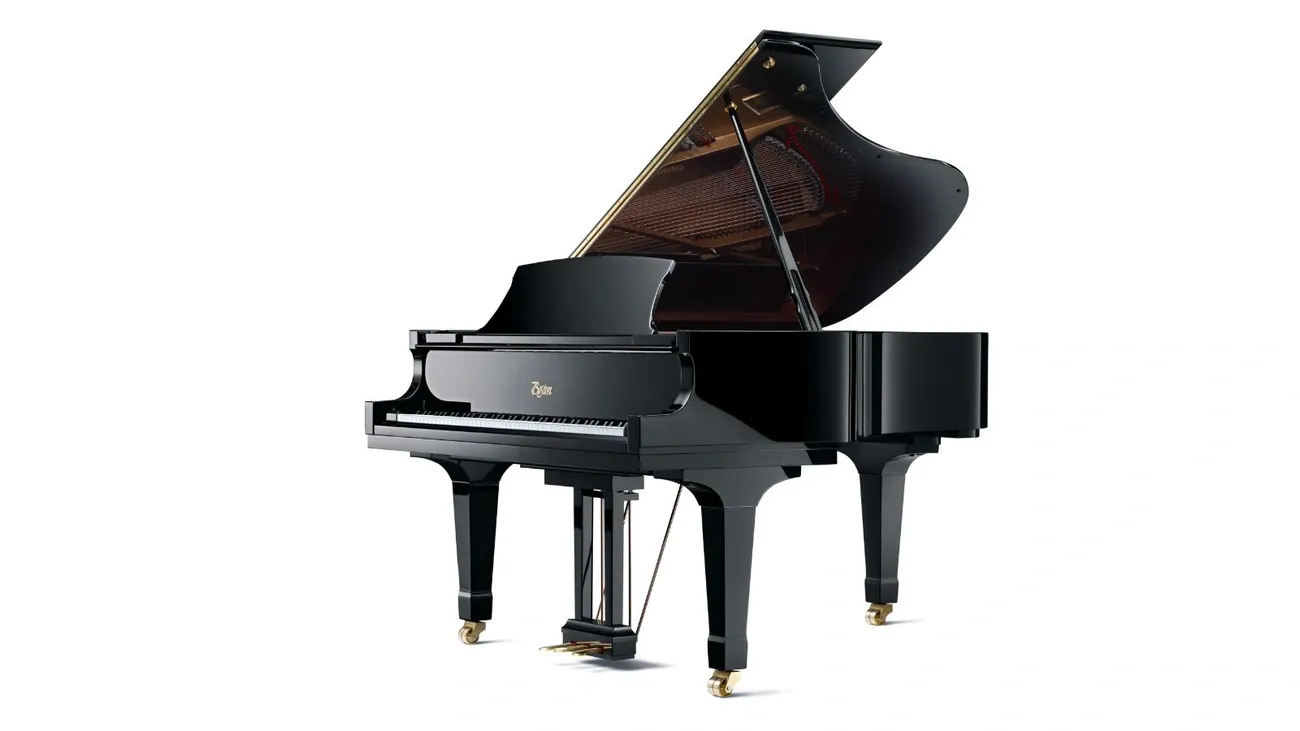
Image Source: Boston | Essex Pianos
The Steinway Engineering Story
Steinway launched Boston in 1992, recognizing that families in Dubai and Abu Dhabi wanted Steinway design without concert hall pricing [16]. Senior mechanical engineer Susan Kenagy and Bob Dove, Steinway’s Director of Manufacturing and Design, spent months engineering the line entirely in New York [3], then partnered with Kawai’s Hamamatsu factory for production [16] [17]. This collaboration allowed Steinway to apply 165 years of piano-building knowledge to an accessible instrument [18], incorporating patented wide-tail design, tapered Sitka spruce soundboards, all-wood actions, and low-tension scaling [19] [3].
What Boston Delivers for UAE Families
Boston grands feature maple inner rims, Octagrip pinblocks for precise tuning, and duplex scaling [19] [18]. The 2009 Performance Edition added structural upgrades, while the 2016 Performance Edition II introduced lower-tension scaling for clearer bass and better treble sustain [19] [20]. Here’s what matters for our Dubai clients: Boston uses traditional maple and hornbeam action parts, rejecting Kawai’s carbon-fiber components [19]. New Bostons cost roughly half the price of entry-level Steinways, positioning them directly against premium Yamahas [20] [21].
At our Tokyo office, we evaluate each Boston against comparable models. The difference is immediate in touch response and tonal complexity.
Best Boston Models for Different Spaces
Boston offers five grands: GP-156 (5’1″), GP-163 (5’4″), GP-178 (5’10”), GP-193 (6’4″), and GP-215 (7’1″) [22][241]. Uprights include UP-118 (46″), UP-126 (49″), and UP-132 (52″) [22]. The GP-178’s wide-tail design provides soundboard area equivalent to typical 6’2″ instruments [3]. Used Boston grands range from several thousand to tens of thousands of dollars, comparable to Yamaha pricing [22].
The Steinway Guarantee Advantage
Steinway guarantees full purchase price trade-in toward a new Steinway grand within ten years [19] [23][233]. This policy creates guaranteed residual value that mass-produced pianos simply can’t match. Prestigious institutions including Yale, Oberlin, Cleveland Institute, and Curtis use Boston exclusively [96].
Perfect for Advancing Students in the UAE
Serious amateurs wanting Steinway design without concert-grade investment benefit most. At our Ras Al Khor showroom, we recommend Boston for advancing students and professionals needing reliable instruments with potential Steinway upgrade paths. The climate-acclimated models we source perform beautifully in Dubai’s demanding environment.
Mason & Hamlin: American Handcrafted Excellence
!Image
Image Source: Mason & Hamlin
Mason & Hamlin’s Unique Crown Retention System
Here’s a problem that destroys most pianos over time: When you press keys, 20 tons of string tension pushes down on the soundboard. This creates outward forces up to 8 times greater at the rim [1]. When that rim expands even 1/64 inch, the soundboard loses its crown and your piano sounds flat forever [1].
Richard Gertz solved this in 1900 with the Crown Retention System [1]. Mason & Hamlin locks the rim into permanent shape using steel truss rod turnbuckles [1]. Their inner rims measure 50% thicker than industry standards, crafted from hard rock maple for maximum resistance to spreading forces [1]. White spruce soundboards resist compression better than sitka spruce, maintaining their strength-per-weight advantage [1].
At our Tokyo office, we inspect older Mason & Hamlins specifically for soundboard crown retention. This technology genuinely preserves tonal integrity decades longer than conventional designs.
Sound Quality and Musical Character
Mason & Hamlin delivers American power with German clarity [4]. The bass sounds disproportionate to size: their 5’8″ Model A produces bass resembling a 6′ instrument, while their 7′ Model BB rivals 9′ competitors [4]. Treble delivers bell-like sustain unusual for American design [4]. These instruments generate complex mid-ranges without sacrificing clarity [4].
Built inch-for-inch as the heaviest pianos on earth [4], projection fills large spaces effortlessly.
Rarity and Collectibility Factor
Mason & Hamlin produces only 300 grands and 50 uprights annually [5]. This limited production maintains genuine rarity among premium manufacturers, supporting collectibility and exclusivity.
Price Range for Used Mason & Hamlin Pianos
Used grands range approximately AED 33,047 to AED 220,470 [24] [25]. This positions them between premium Yamahas and entry Steinways.
Best Models and What to Look For
Model A (5’8″) offers powerful bass for compact spaces [5]. Model AA (6’2″) delivers rich projection exceeding its size [5]. Model BB (7′) serves serious pianists and institutions [26].
Inspect for original Crown Retention System integrity and parts authenticity before purchasing. At our Ras Al Khor showroom, we verify these crucial elements for every Mason & Hamlin we source from our Tokyo office.
Bösendorfer: Austrian Luxury and Distinct Tone
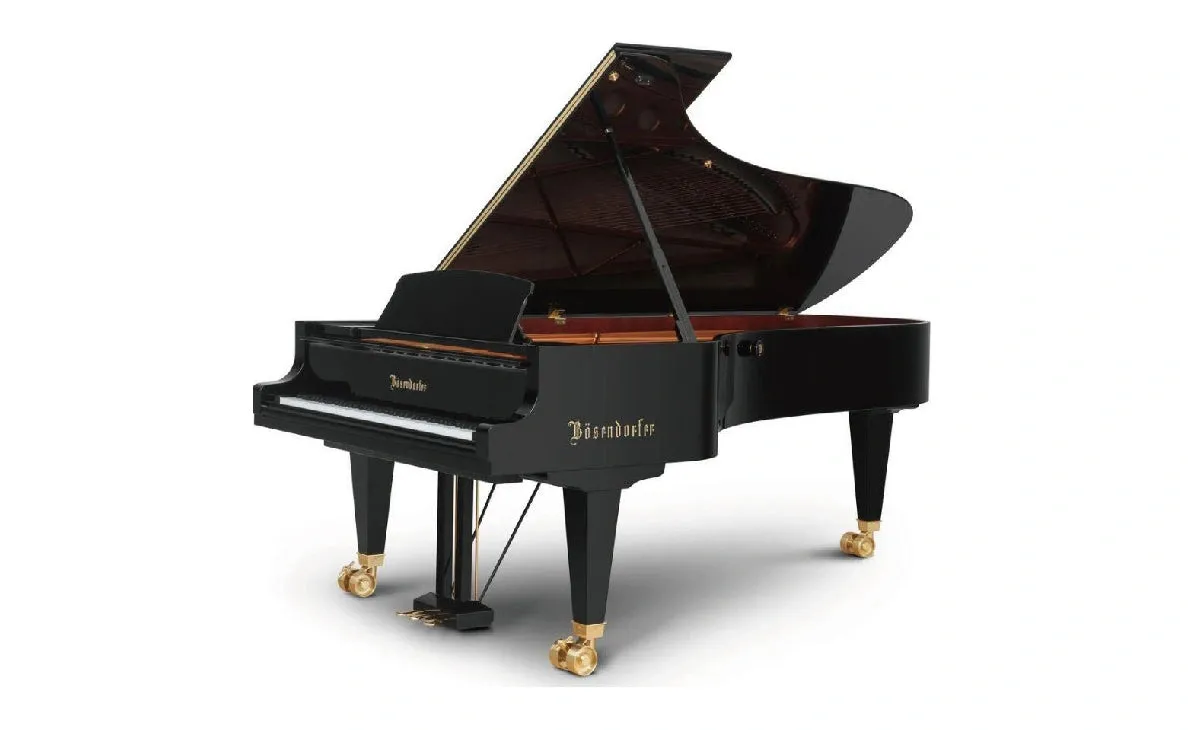
Image Source: Tom Lee Music
The Bösendorfer Sound Signature
Here’s what makes Bösendorfer different: they build pianos like violins. Solid spruce for over 80% of the piano body creates a complete resonating case [27], not just a soundboard mounted in a hard maple rim. When you press a key, the entire instrument vibrates and sings [6], producing that orchestral warmth musicians describe as rich and velvety [27].
At our Tokyo office, we inspect every Bösendorfer soundboard for spruce integrity. The same softness that creates their singing tone makes them vulnerable to UAE’s humidity extremes. That’s why our climate acclimation process matters. Actions use German Renner components regulated for buttery, fluid touch [6] – completely different from Steinway’s firmer resistance [6].
Extended Bass Range Models
The Imperial 290 features 97 keys spanning a full eight octaves to C0 [28]. Ferruccio Busoni commissioned this in 1909 for Bach organ transcriptions [29]. The Model 225 includes 92 keys extending to F0 [30]. Those extra black keys rarely get played directly, but they create additional harmonic resonance throughout the instrument [28], producing an almost orchestral sound spectrum [30] that enriches every note you actually touch [28].
Investment Considerations
Bösendorfer produces approximately 300 instruments annually [27] – genuinely rare among premium manufacturers. Used Model 225 grands range AED 146,962 to AED 183,702 [31]. Imperial 290 models exceed AED 917,985 new [11], with custom art-case editions sold for over AED 1,835,970 [11]. This scarcity supports value retention.
Maintenance Requirements and Costs
Technicians require up to 12 years training for concert service [32]. Maintain stable 45-55% humidity and tune twice yearly minimum [33]. Here’s the good news: every Bösendorfer from 1900 onwards can be restored with original parts [32], unlike mass-produced instruments where parts disappear.
Who Should Consider a Bösendorfer
Pianists preferring warm European voice over bright projection benefit most. Visit our Ras Al Khor showroom to experience how violin-style construction creates fundamentally different tonal character among the best used piano brands.
Bechstein: German Engineering at Its Finest
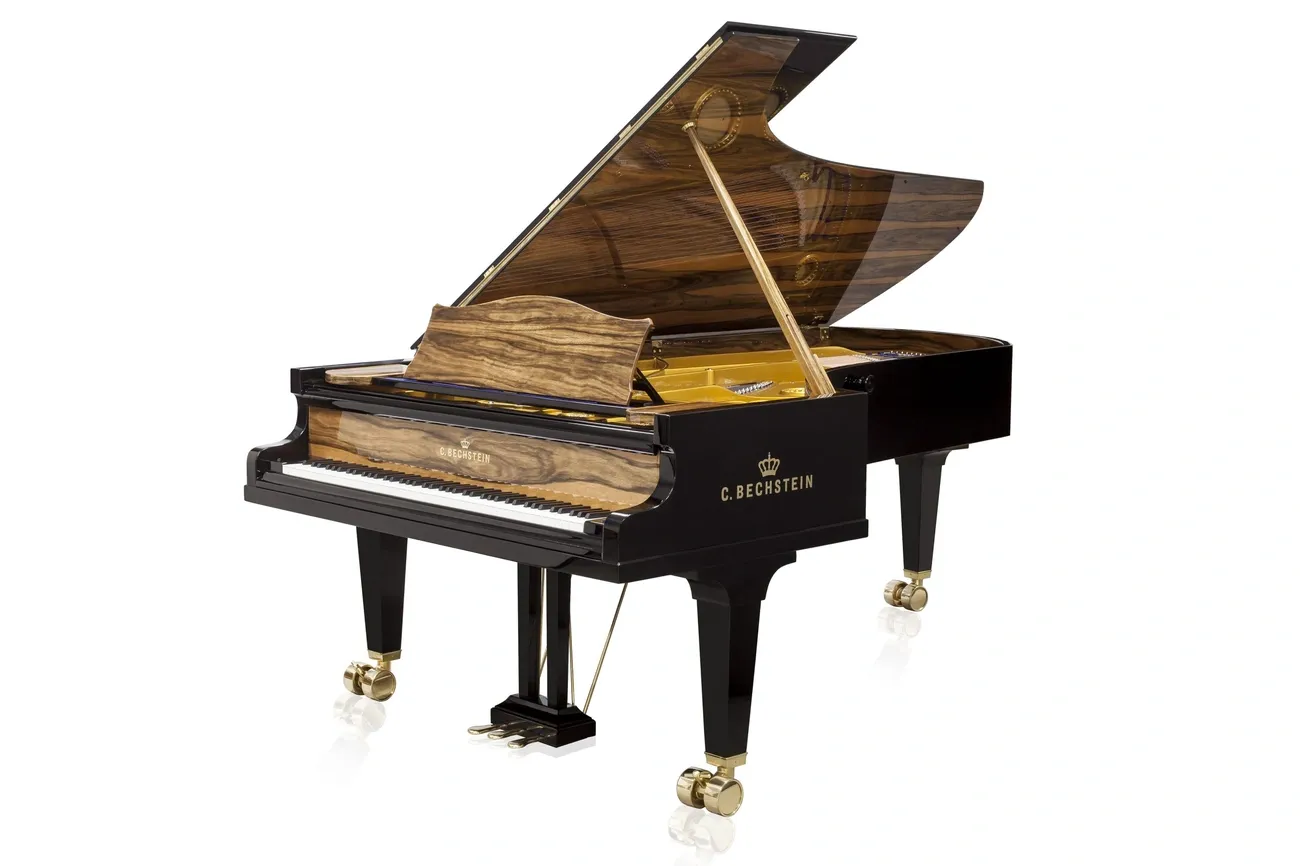
Image Source: My Perfect Piano
The Modern Engineering Shift
Bechstein replaced agraffes with capo bars across all grands during the past decade, implementing higher-tension scaling for better projection [34]. This engineering change matters: the Concert series D 282 (9’3″) now dominates concert halls with powerful bass and sparkling treble [35], while the C 234 (7’8″) delivers warm, resonant tone for medium venues [13]. The Academy series bridges professional and amateur markets through the A 192 (6’4″) with responsive touch at accessible pricing [35]. Classic series pianos like the 118 upright blend traditional craftsmanship with modern technology for home use [35].
The Bechstein Voice and Touch Philosophy
Musicians describe Bechstein as silvery, elegant, and colorful with complex overtones that hover in the air [12]. The sound spectrum spans wide dynamic range from delicate pianissimo to powerful fortissimo [36]. Touch feels remarkably light and feathery, surprisingly smooth yet somewhat shallow compared to other premium brands [12]. This fluid action requires less effort to generate power, demanding touch adjustment from players accustomed to firmer resistance [12].
The Honest Assessment: Common Structural Issues
Old Bechstein plates crack frequently, especially models over 100 years old [37] [38]. Soundboard cracks impair sound reflection and amplification when severe [7]. Pre-1990 models experience tuning instability, with notes drifting 5% within days after tuning [39]. At our Tokyo office, we inspect plate integrity using specialized equipment since cracks aren’t always visible [38]. Rebuilt Bechsteins with new soundboards often lack original character and require years to settle properly [38].
Value Reality: Investment vs. Restoration Costs
An 1895 upright in good condition values around AED 14,688-15,428 [40], whereas used models receive valuations as low as AED 7,344 in UK markets [41]. Full restoration exceeds AED 36,720 [7]. Post-1990 instruments with capo bar design offer superior projection for concert venues, while the A 192 Academy grand delivers professional quality at moderate pricing.
Visit our Ras Al Khor showroom to experience Bechstein’s refined European voice. The Concert 8 (131cm) serves professionals, Elegance 124 and Classic 124 (both 124cm) suit serious musicians, and Academy A 118 works for educational settings [13].
Blüthner: Romantic German Tone
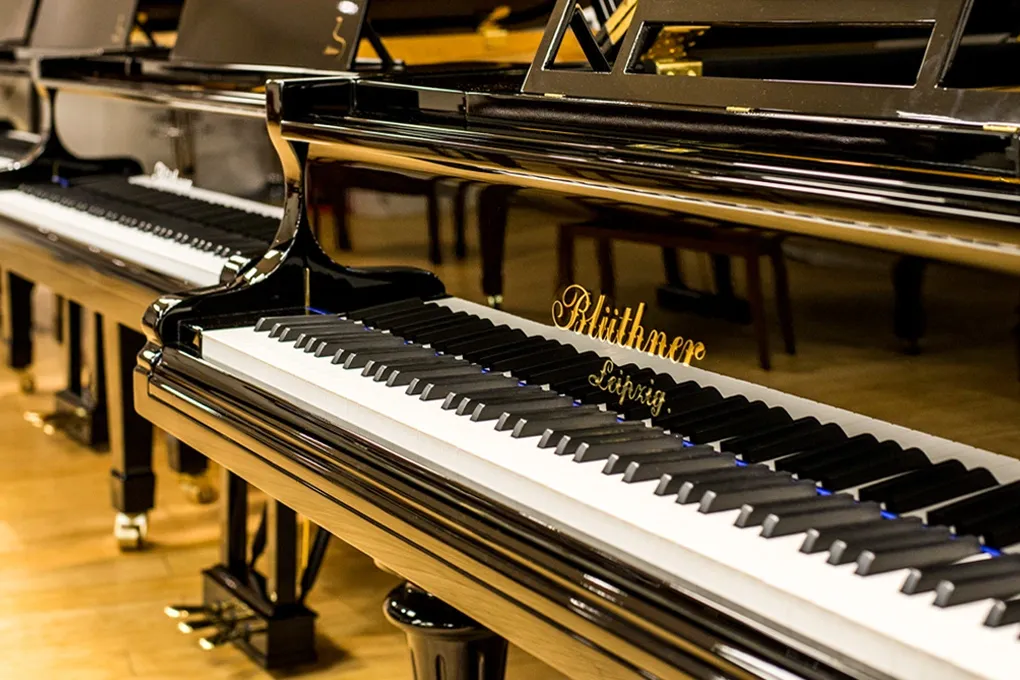
Image Source: Blüthner
Blüthner’s Aliquot Stringing System
Here’s something most piano buyers never hear about: the Aliquot system. Julius Blüthner patented the Aliquot stringing system in 1873 [42], adding a fourth string in the treble section positioned slightly above the three struck strings [43]. This fourth string never gets hammered directly. Instead, it vibrates sympathetically when you press a key, enriching harmonic overtones and creating what musicians call the “Golden Tone” [44].
The system operates from note 47 upwards [45], amplifying resonance throughout the upper register [46]. Blüthner remains less mainstream in U.S. markets but commands deep respect across Europe [11]. At our Tokyo office, we evaluate how this singing quality differs fundamentally from Steinway’s power or Yamaha’s brightness.
Warm Singing Tone Characteristics
Musicians describe Blüthner pianos as warm, romantic, and lyrical [46]. The cylindrical soundboard, patented in 1894, further enhances tonal richness and projection [42]. Where other manufacturers chase power or precision, Blüthner pursued poetry.
Model Identification and Dating
Pre-war models like the Style VI feature the Aliquot system with elegant proportions [45]. The Style XII, produced during transitional periods, blends traditional warmth with contemporary clarity [45]. Our technicians specifically inspect these sympathetic strings during evaluation, since the system requires original components to function properly.
Investment Value and Market Demand
Carefully restored 1890s Blüthner grands fetch AED 128,517 to AED 183,597 whereas a decade ago those models sold under AED 91,798 [11]. Post-war examples with original parts also perform well in resale [11]. The appreciation reflects growing recognition of this unique German engineering.
Maintenance and Restoration Considerations
Factory restoration services address every unique element including cylindrical soundboards and Aliquot systems [47]. Because values fluctuate more in U.S. markets [11], careful selection matters significantly. The sympathetic strings must remain original for authentic Golden Tone production.
Knabe (William Knabe): Historic American Craftsmanship
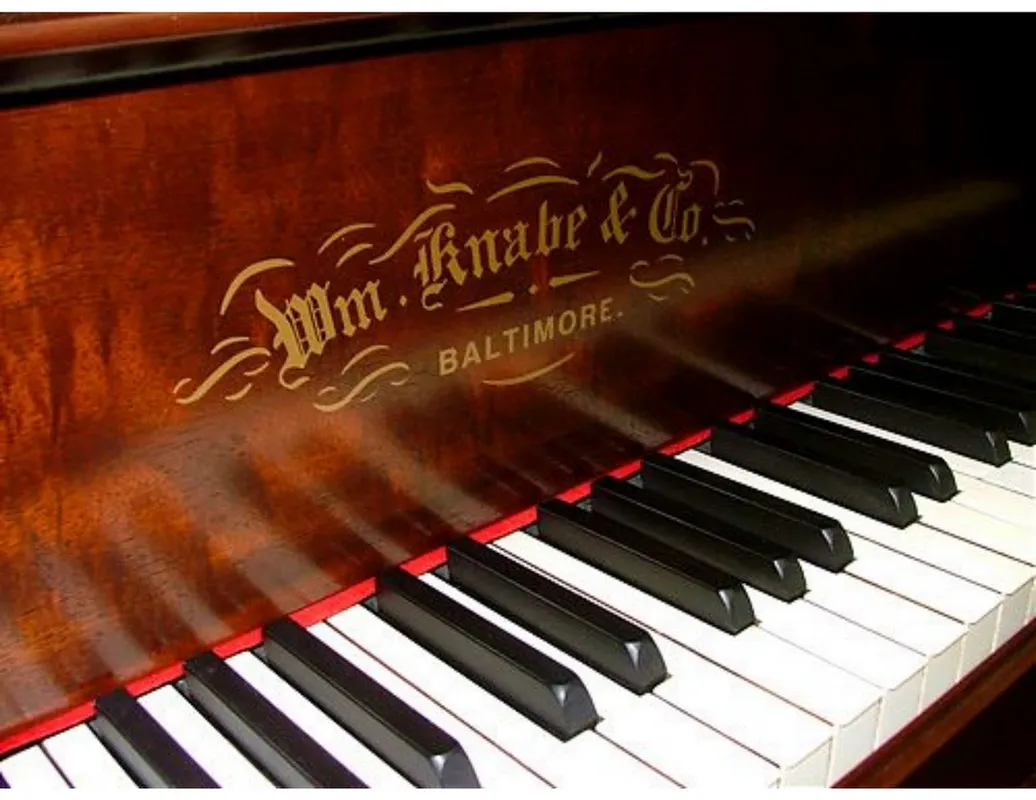
Image Source: www.knabepianos.com
The Baltimore Legacy (Pre-1930)
William Knabe built pianos the way they don’t anymore. Founded in the 1840s in Baltimore [8], this company earned its reputation through genuine craftsmanship before corporate buyouts destroyed the brand character. Francis Scott Key commissioned a custom square grand in 1838 featuring hand-carved rosewood and mother-of-pearl keys – that instrument still exists at the Peabody Hotel [8]. When Tchaikovsky needed a piano for Carnegie Hall’s 1891 opening, he chose Knabe [8]. By 1926, the New York Metropolitan Opera trusted only Knabe instruments [8] [48], played by Rosa Ponselle and other celebrated artists.
The Corporate Decline (Post-1930)
Here’s where manufacturing era becomes crucial. Knabe joined the American Piano Company in 1908, then Aeolian-American in 1932 [49]. Young Chang acquired the name in the 1990s [48], followed by Samick in 2001 [49]. Today’s “Knabe” pianos? Samick manufactures rims in Korea, ships to Tennessee for assembly [49]. The Baltimore craftsmanship ended decades ago.
Why Pre-1930 Knabes Matter
Musicians describe authentic Knabe tone as resembling the human singing voice [8] [50] – sonorous, organic quality few pianos match [9]. Those early instruments used German Renner actions constructed from maple and European hornbeam [9], delivering balanced touch neither too heavy nor light. This voice-like quality comes from the solid wood construction and hand-wound strings that modern mass production abandoned.
Current Market Reality
Pre-1930 instruments command premium prices because collectors recognize authentic American craftsmanship. Later models offer accessibility but lack the golden-era character entirely. You’re buying a name, not the piano that made the name famous.
Technical Inspection Points for ‘Used’ Knabes
At our Tokyo office, we examine finish quality across every wood surface [9] since authentic Knabes used solid hardwoods throughout. We test for that characteristic voice-like resonance – if it sounds thin or harsh, the soundboard likely suffered damage. Action smoothness across the full keyboard range reveals whether original Renner components survive or if inferior parts were substituted during rebuilding.
Visit our Ras Al Khor showroom to hear the difference between genuine pre-1930 American craftsmanship and modern instruments bearing the same name.
Baldwin: America’s Versatile Workhorse
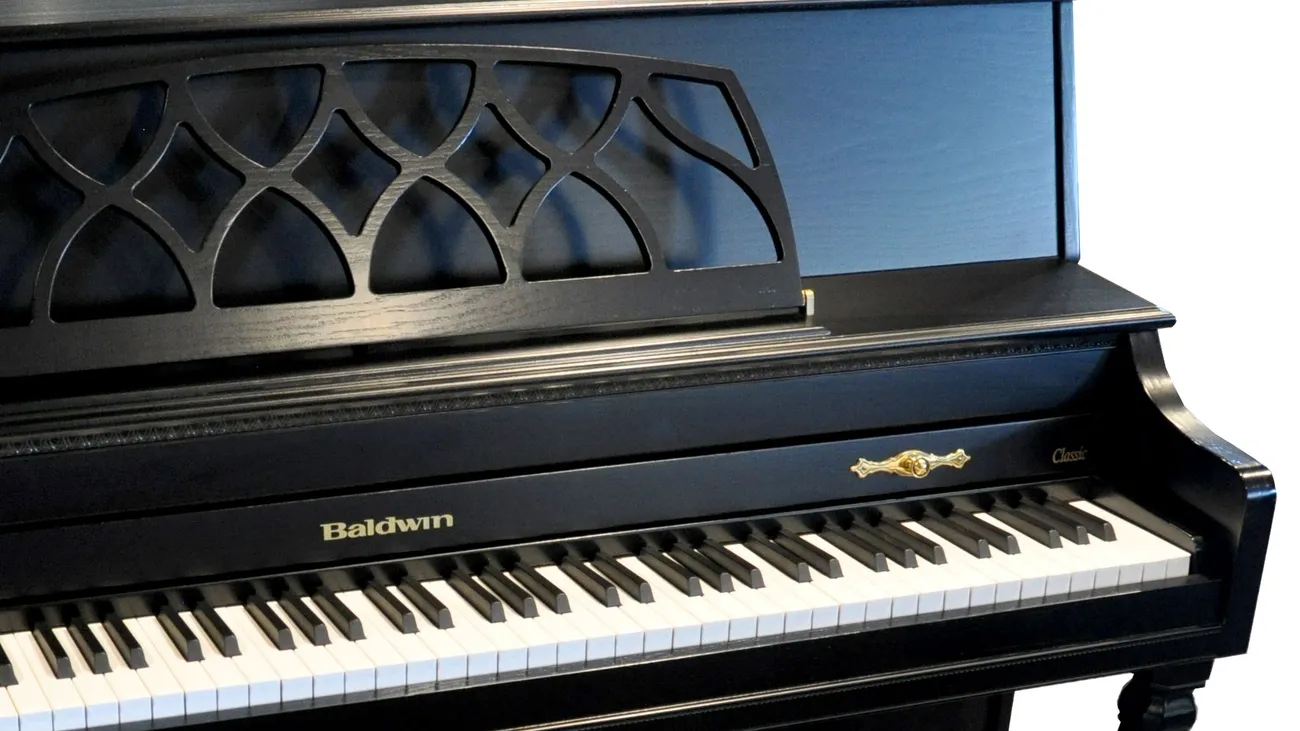
Image Source: Riverton Piano Company
The Baldwin Timeline: When Quality Mattered
Baldwin started as a Cincinnati dealership in 1862, began manufacturing in 1890, and became America’s largest piano maker by the 1950s [51]. The golden era spanned 1900-1965 when concert artists including José Iturbi, Dave Brubeck, and Aaron Copland chose Baldwin exclusively [52]. Then Gibson Guitar Corporation acquired the bankrupt company in 2001 [53], moving all production to China by 2008 [54].
Here’s what that means for your purchase: pre-2008 American-made instruments feature solid maple construction and authentic scale design. Post-2008 models are essentially different pianos carrying the same name.
Artist and Concert Grand Series
The SD-10 concert grand dominated stages alongside Steinway during the 1970s-80s [14]. The 7′ SF-10, designed in 1972 with Bechstein influence during Baldwin’s ownership of the German maker [14], delivered enormous bass projection that jazz players still seek today. The Model L at 6’3″ produces rich sound revered by jazz players [55], whereas the Model M at 5’2″ features wider tail design creating disproportionate bass for its compact size [14].
America’s Most Popular Piano Names
Acrosonic represents the biggest-selling brand name in piano history [14]. Nearly 500,000 Hamilton studio pianos sold since 1939 [51], with the Model 243 becoming the single best-selling piano model ever [56]. These numbers matter because parts availability remains excellent and technicians understand these instruments thoroughly.
The Value Story
American-made Baldwins offer exceptional secondhand value in today’s market. The B252 at 52″ costs one-third of comparable Steinway K52 pricing [56]. For families in Dubai seeking solid American construction without premium European pricing, pre-1990 Artist series grands and 52″ uprights deliver professional capability at accessible cost.
What to Look for in Used Baldwin Models
Focus exclusively on pre-2008 American production. The Artist series grands and Hamilton uprights from this era offer reliable performance for serious pianists. Visit our Ras Al Khor showroom to experience how Baldwin’s wider tail design creates powerful bass response that works beautifully in UAE homes.
Chickering: America’s Oldest Piano Maker
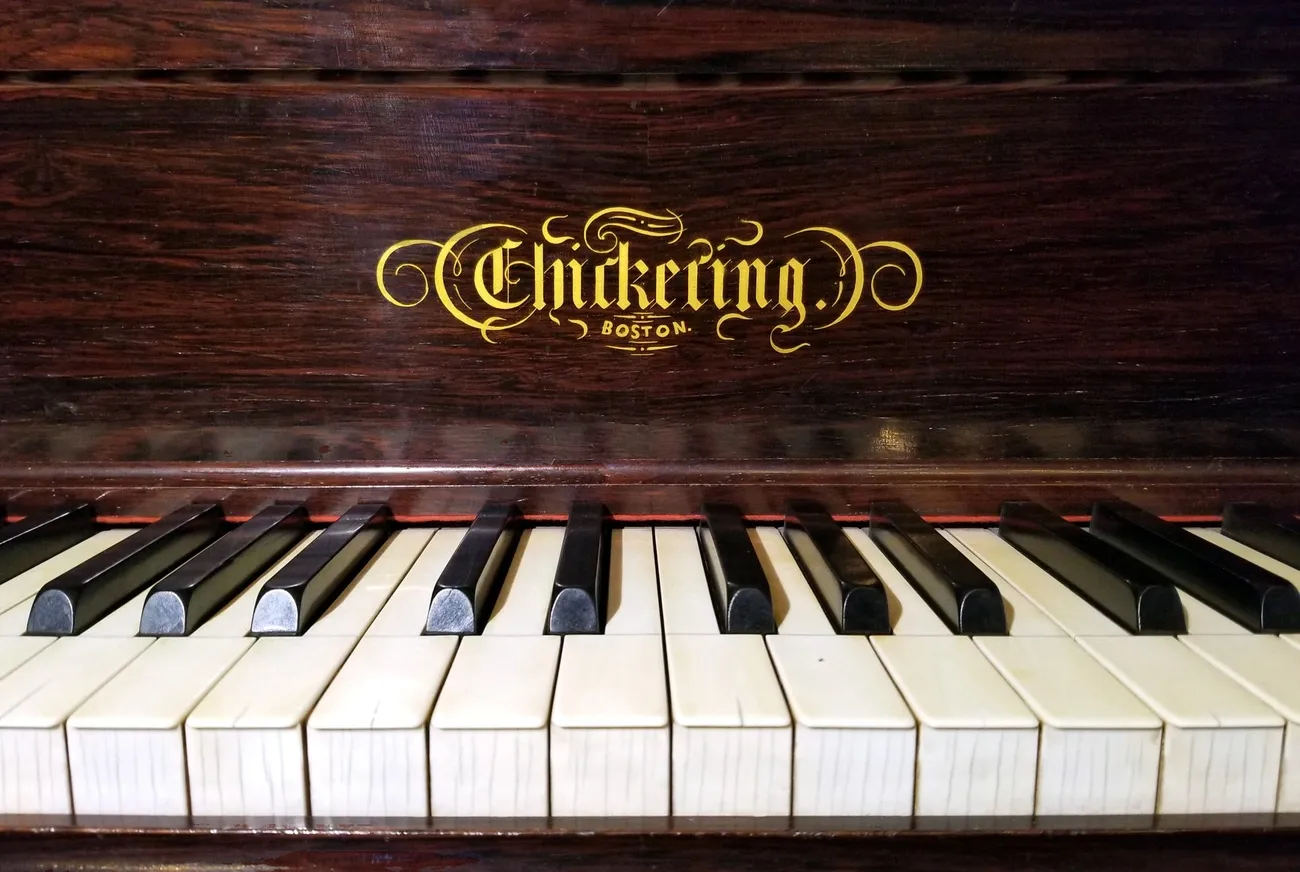
Image Source: Morris County Historical Society
America’s Piano Pioneer
Jonas Chickering and James Stewart founded America’s first piano manufacturer in 1823 [57]. Chickering didn’t just build pianos—he invented the foundation of modern piano construction. The one-piece cast iron frame he patented in 1840 for square pianos, then applied to grands in 1843 [15], remains universal today. Cross-stringing, where bass strings position diagonally over treble for richer resonance [15], was another Chickering innovation still used across the industry.
Franz Liszt chose Chickering exclusively during American tours [58]. His favorite Model 33B from 1867 survived even Liszt’s powerful playing style [15], demonstrating the structural integrity of authentic Chickering craftsmanship.
The Golden Era vs. The Decline
Pre-1930 Chickering instruments represent genuine American craftsmanship excellence [59]. These pianos feature deeper, darker, richer sound quality than most competitors [15]. Chickering built grands notably wider than identical-length rivals, creating larger soundboards for more powerful tone [15]. The Quarter Grands, introduced in 1901, delivered surprisingly big sound from compact 5’6″ size [59].
However, corporate changes destroyed this legacy. Chickering merged into American Piano Company in 1908, then Aeolian-American in 1932 [57]. Manufacturing ceased entirely in 1985 when the East Rochester factory closed [60]. Wurlitzer and later Baldwin slapped the Chickering name on inferior instruments [57]. Those 1960s-1985 Aeolian-era pianos lack original quality—mass-produced rather than handcrafted [61].
The Restoration Reality
Here’s what families in Dubai need to know: full Chickering restoration ranges AED 36,720 to AED 183,600 [63] [61], often exceeding eventual market value. At our Tokyo office, we calculate restoration investment against realistic resale potential before sourcing any pre-1930 instrument.
Recently restored Chickering Parlor Grands sell AED 91,799 to AED 128,518 [10]. Unrestored models in excellent condition range AED 18,360 to AED 36,719 [10].
What We Inspect in Chickering Pianos
Our Japanese technicians examine finish quality across every wood surface, test sound character for that distinctive voice-like resonance, and evaluate action smoothness throughout the keyboard range. Pre-1930 models with original Brown or Erard actions [62] receive priority, whereas post-1960 instruments rarely justify shipping costs to Dubai.
Visit our Ras Al Khor showroom to experience authentic pre-1930 American innovation against other historic manufacturers.
Your Quick Reference Guide for Dubai Families
Here’s how these 12 manufacturers compare when you’re shopping for a ‘certified pre-owned’ piano in the UAE. This table cuts through marketing language to show you what actually matters: manufacturing origin, tonal character, and realistic pricing.
The 12 Best Used Piano Brands: Dubai Buyer’s Guide
|
Brand |
Origin |
Sound Character |
What Makes Them Special |
Top Models to Consider |
UAE Market Pricing |
Best For Dubai Families |
|
Yamaha |
Japan (Hamamatsu, Iwata) |
Bright, precise, clear |
V-Pro vacuum shield mold casting; vertical integration; top 15% wood selection from Kitami Mill |
Uprights: U1, U3, U3A, U30A, U1H, YUS1, YUS3, YUS5 |
U3: AED 18,360-29,376 |
Conservatories, institutions, teaching studios, hotels (Disklavier), advanced pianists |
|
Kawai |
Japan (Hamamatsu) |
Warm, bell-like, lyrical, sweet treble |
ABS-Carbon Millennium III action (10x stronger, 25% faster); extended keysticks; composite action stability |
Uprights: K-300, K15, K200, K-400, K-500, NS15 |
New uprights: AED 20,545-79,277 |
Home use, smaller UAE apartments, beginners to advanced players, serious pianists |
|
Steinway & Sons |
USA (New York, Hamburg) |
Powerful, concert-quality, wide dynamic range |
Hand-built (12,000+ parts, 1 year build time); quarter-sawn Sitka spruce soundboards; 97% of concert pianists’ choice |
Model S (5’1″), M (5’7″), L (5’10.75″), O (5’10”), A (6’2″), B (6’11”), C (7’5″), D (8’11”) |
Appreciates 3-5% annually |
Concert pianists, serious performers, investment buyers |
|
Petrof |
Czech Republic (Hradec Králové) |
Velvety, romantic, singing, warm European voice |
80% handwork; 9-month build time; Renner actions; Abel hammers; European Excellence Seal (100% European materials) |
Uprights: P125 F1, P122 N2, P131, P135, Petrof 126 |
Exceptional secondhand value |
Practice, teaching, recitals, home studios, buyers seeking European quality at Asian pricing |
|
Boston (by Steinway) |
Designed USA, Made Japan (Kawai Hamamatsu) |
Steinway-influenced, balanced |
Wide-tail design; tapered Sitka spruce soundboards; all-wood actions; Octagrip pinblocks; duplex scaling; 10-year Steinway trade-in guarantee |
Grands: GP-156 (5’1″), GP-163 (5’4″), GP-178 (5’10”), GP-193 (6’4″), GP-215 (7’1″) |
Several thousand to tens of thousands AED |
Serious amateurs, advancing students, professionals wanting Steinway design without concert-grade investment |
|
Mason & Hamlin |
USA |
Powerful bass, bell-like treble, complex mid-range |
Crown Retention System (1900 patent); 50% thicker inner rims; white spruce soundboards; heaviest pianos inch-for-inch |
Model A (5’8″), AA (6’2″), BB (7′) |
AED 33,047-220,470 |
Serious pianists, institutions, collectors (300 grands/50 uprights annually) |
|
Bösendorfer |
Austria |
Rich, warm, singing, orchestral, velvety |
80%+ solid spruce construction (violin-like resonating case); Renner actions; extended bass models (92-97 keys) |
Imperial 290 (97 keys, 8 octaves), Model 225 (92 keys) |
Model 225: AED 146,962-183,702 |
Pianists preferring warm European voice, collectors, luxury buyers (300 instruments/year) |
|
Bechstein |
Germany |
Silvery, elegant, colorful, complex overtones, wide dynamic range |
Capo bars (post-1990); higher-tension scaling; light, feathery touch |
Concert: D 282 (9’3″), C 234 (7’8″) |
1895 upright: AED 14,688-15,428 |
Concert venues (post-1990 models), serious musicians, home use (Classic series) |
|
Blüthner |
Germany |
Warm, romantic, lyrical, luminous treble (“Golden Tone”) |
Aliquot stringing system (4th sympathetic string, patented 1873); cylindrical soundboard (patented 1894) |
Style VI (pre-war), Style XII (transitional) |
Restored 1890s grands: AED 128,517-183,597 |
European market, pianists seeking romantic tone, collectors |
|
Knabe (William Knabe) |
USA (Baltimore) – Now Korea/Tennessee |
Rich, voice-like, sonorous, organic |
German Renner actions (maple/European hornbeam); balanced touch |
Pre-1930 models (golden era) |
Premium for pre-1930 models |
Collectors (pre-1930), buyers seeking singing voice-like quality |
|
Baldwin |
USA (pre-2008) – Now China |
Rich, enormous bass projection |
Solid maple construction; Bechstein-influenced design (1972 SF-10) |
Concert: SD-10 |
B252: 1/3 of Steinway K52 price |
Jazz players, institutions, budget-conscious buyers seeking American-made quality (pre-2008) |
|
Chickering |
USA (Boston) – Ceased 1985 |
Deep, dark, rich; powerful |
One-piece cast iron frame (1840/1843 patent); cross-stringing innovation; wider grands with larger soundboards |
Quarter Grands (5’6″), Model 33B, Parlor Grands |
Restored: AED 91,799-128,518 |
Collectors, historical instrument enthusiasts (pre-1930 models preferred) |
Remember: These figures reflect general market conditions. Every ‘refurbished’ piano we source undergoes climate acclimation at our Tokyo office before shipping to Dubai. Our Ras Al Khor showroom stocks only instruments that survived our inspection process specifically for UAE conditions.
Conclusion
These twelve manufacturers prove that brand recognition means nothing without understanding manufacturing periods. Our Tokyo technicians reject 60% of instruments we inspect because structural compromises make them unsuitable for UAE conditions. Even prestigious names like Steinway fail when soundboards lose their crown or pin blocks deteriorate.
The core lesson remains: a properly restored 1980s Japanese Yamaha U3 delivers superior touch and tone compared to many new 40,000 AED uprights. A climate-acclimated Kawai NS15 produces warmth that bright, harsh-sounding alternatives cannot match in Dubai’s tile and concrete acoustics.
To eliminate any fear of buying a ‘refurbished’ piano, we provide comprehensive protection:
-
Every piano strictly inspected and approved by our Japanese technicians in Tokyo before shipping to Dubai
-
3-year warranty covering all structural and mechanical issues
-
Free UAE delivery and free first tuning at your home
-
If our technicians discover any unfixable structural problems like faulty pin blocks, we replace the piano entirely
Visit our Ras Al Khor showroom to experience these climate-acclimated instruments personally. Feel why a restored vintage Japanese piano offers better touch, richer tone, and genuine value than cheaper alternatives. Schedule your free consultation to discover which ‘pre-owned’ piano delivers the authentic sound your family deserves.
FAQs
Q1. Which piano brands are best when buying used? Quality brands like Yamaha, Steinway & Sons, Kawai, Bösendorfer, and Mason & Hamlin are excellent choices for used pianos. These manufacturers use premium components that maintain their integrity over time, ensuring the instrument retains its tonal quality and playability for decades when properly maintained.
Q2. Is purchasing a secondhand piano a worthwhile investment? Yes, a well-maintained secondhand piano can deliver exceptional quality and tone at significantly lower cost than new instruments. Premium brands such as Yamaha, Kawai, and Steinway are known to hold their value for decades, and some models even appreciate over time when properly cared for and climate-controlled.
Q3. Do professional pianists have a preference between Kawai and other digital piano brands? Classical pianists typically favor Kawai acoustic pianos for their natural touch and warm, lyrical tone. The brand’s unique action design and bell-like sound characteristics make them particularly suitable for traditional repertoire and home practice environments.
Q4. Which piano manufacturers are considered the most prestigious historically? The four most prominent piano makers historically are Steinway & Sons, C. Bechstein, Bösendorfer, and Blüthner. All established in the mid-1800s, these manufacturers continue to represent the pinnacle of piano craftsmanship, with many elite concert pianists choosing instruments from these legendary brands.
Q5. What should I look for when evaluating a used piano’s quality? Focus on the manufacturing era, soundboard condition, action integrity, and climate history of the instrument. Higher quality brands use superior components that resist degradation, but even premium pianos require proper maintenance and climate control to preserve their performance characteristics over time.
References
[1] – https://blog.rivertonpiano.com/2022/01/15/where-are-yamaha-pianos-made/
[2] – https://www.freeholdmusic.com/yamaha-japanese-upright-comparison-chart/?srsltid=AfmBOoouqYRqCdVZ1FoGLJyOnywstJH8SUKxzKQYtdiD8v6XyaBBgs54
[3] – https://www.quora.com/Why-did-Yamaha-a-Japanese-company-become-the-world’s-largest-producer-of-high-quality-grand-pianos-which-are-not-suited-to-the-homes-or-traditional-musical-tastes-of-Japanese-customers
[4] – https://www.wamusic.com.au/blogs/news/why-a-refurbished-japanese-yamaha-piano-might-be-the-best-investment-youll-ever-make?srsltid=AfmBOoqUHdb4weJ93cL6T0Nr5BAXmpgFywNtJpAG4M3lD6jKNYSQhiM4
[5] – https://usa.yamaha.com/products/musical_instruments/pianos/upright_pianos/u_series/index.html
[6] – https://pianogallery.ae/blogs/post/comparison-of-yamaha-u-series?srsltid=AfmBOoqx4ydbqQudBB8dyLPNzXHc8mQlbkuvPRPWOJxyC2oSCQbuemyb
[7] – https://usa.yamaha.com/products/musical_instruments/pianos/grand_pianos/gb1k/gb1k-gc-series.html
[8] – https://pianogallery.ae/products/yamaha-baby-grand-g2e-white-reconditioned?srsltid=AfmBOoqfeoZKR5Ekn02_Hk7xM3YE7GZ0iSCVL_ogggA0_gd1Oy-3zxGz
[9] – https://mea.yamaha.com/en/musical-instruments/pianos/products/disklavier/
[10] – https://en.wikipedia.org/wiki/Disklavier
[11] – https://joshuarosspiano.com/do-yamaha-pianos-hold-their-value/
[12] – https://markgoodwinpianos.co.uk/faq/investment
[13] – https://www.merriammusic.com/pianos/brands/kawai/?srsltid=AfmBOorpbiVaVKnFZN-CyNLV0izKAZlchOU9cRm2uyeXiwS0_bWhPyJK
[14] – https://kawaius.com/technology/piano-action/?srsltid=AfmBOookz6AWaPuRDDNclozAd1vqZx8-uAffUrFHeIUiQS4koig7428A
[15] – https://lotfipiano.ae/products/kawai-ns15
[16] – https://www.kawaipiano.com.my/blogs/news/what-makes-kawai-grand-pianos-unique-materials-sound-quality-technology-explained?srsltid=AfmBOoor4XCnCeINu7v1YC4tWHngF07rpfjQb2-NmQx8CTUNXNWFKyDQ
[17] – https://www.coachhousepianos.co.uk/blog/articles/best-of-2023-most-popular-upright-pianos/?srsltid=AfmBOopPB_1IeaUaWeTRR9a59IqENrtZZJ4w2ON66lHiunIEETtFOlmv
[18] – https://steinway.co.uk/what-makes-a-steinway-different-a-brief-history-of-steinways-best-in-class-reputation/
[19] – https://www.steinway.com/news/features/steinway-myth-and-fact
[20] – https://www.steinwaynaples.com/finding-a-piano/goodpiano/used-or-new/used-steinway-piano-guide/
[21] – https://www.lindebladpiano.com/blog/exploring-steinway-piano-models?srsltid=AfmBOorlJKH7jTg7DJhSVx2WPOAhi5iw5QWTzml72jt5L-1N_j9irjdc
[22] – https://msteinert.com/blog/buying-a-new-steinway-piano-vs.-opting-for-a-used-one
[23] – https://www.maene.be/en_BE/your-steinway-as-investment
[24] – https://www.steinwaythailand.com/news/journals3/investment-value
[25] – https://livingpianos.com/unique-problems-with-steinway-pianos/?srsltid=AfmBOornADfxaUnDoVr5hpLNzh1OmkVYdtnLkAPJbP4CH5QetQRgrURq
[26] – https://msteinert.com/blog/are-there-used-steinway-piano-years-to-avoid
[27] – https://millersmusic.co.uk/blogs/advice-center/petrof-pianos-a-history-of-one-of-europes-great-piano-makeers?srsltid=AfmBOoqrTRwRvKH9n1Mj4DtXZmeW9Hppto1MdfAPqixJ9FkVnDGEa-Bl
[28] – https://www.tomleemusic.com.hk/en/pages/petrof?srsltid=AfmBOoqPO5TP77k1rtJei562tGZXS8qSwj9NMR9WywwVtKaOhQSnXQe_
[29] – https://www.petrof.com/petrof-grand-pianos
[30] – https://www.merriammusic.com/pianos/brands/petrof/?srsltid=AfmBOorc0pDeTWvPFV2CDByfq53E_pXlApbonYJzJU2nKqILgor2khnQ
[31] – https://www.pianobuyer.com/post/petrof-grands
[32] – https://www.petrof.com/upright-pianos
[33] – https://www.petrof.com/spare-parts
[34] – https://msteinert.com/blog/boston-vs-steinway-a-comparison-of-two-sister-brands
[35] – https://www.steinwaynaples.com/truth-about-boston-essex-pianos/
[36] – https://steinwaygrand.com/pages/sell-my-boston-piano?srsltid=AfmBOoqOlmwz9UGk1n20kTZpQ_CYNby7HWnQXLSVTisv5j-iOORMQXDX
[37] – https://msteinert.com/blog/boston-vs-yamaha-which-is-the-best-piano-for-me
[38] – https://www.pianobuyer.com/boston
[39] – https://www.bostonpianos.com/pianos/boston
[40] – https://msteinert.com/blog/boston-pianos-review-how-good-are-boston-pianos
[41] – https://nymag.com/strategist/article/purchasing-a-piano-a-first-time-buyers-guide.html
[42] – https://www.klaviano.com/piano-blog/essex-vs-boston-a-shopping-guide-for-piano-lovers.html?srsltid=AfmBOoqXce_ypMPaav6wj7Ipo5WUs1kqo58CJkvTle3uLCTZHNTb4pW5
[43] – https://www.key-notes.com/blog/steinway-vs-boston-pianos
[44] – https://masonhamlin.com/crown-retention/
[45] – https://www.merriammusic.com/pianos/acoustic-pianos/mason-hamlin/?srsltid=AfmBOop9Fb7VTor223nYkmmdtDcOBL7QF6yD1aKOv0r8_sGM48mEiU3T
[46] – https://hulmesweeneypianoservice.com/a-guide-on-the-best-piano-brands-mason-and-hamlin/
[47] – https://www.klaviano.com/piano-blog/mason-hamlin-brand-review-quality-that-has-lasted-generations.html?srsltid=AfmBOopFiKq3Fjiia_vi_GPv_jHNufmpdL7jboVJPVgN8OfGj35nEOdk
[48] – https://www.klaviano.com/piano-blog/mason-hamlin-brand-review-quality-that-has-lasted-generations.html?srsltid=AfmBOopAKTkmU3A1qvOimrXdvwJ8fvXBpRU9keHfI6RFq0YVre5mQJAy
[49] – https://www.pianosnow.com/post/why-restored-mason-hamlin-pianos-are-among-the-best
[50] – https://www.boesendorfer.com/en/about/viennese-craftsmanship
[51] – https://faustharrisonpianos.com/bosendorfer-piano-prices/?srsltid=AfmBOopBTFLRjTNAUfuW1CRwkXx571nDlomDxT16NU6Tzv8c8hZZzVZT
[52] – https://en.wikipedia.org/wiki/Imperial_Bösendorfer
[53] – https://www.boesendorfer.com/en/pianos/pianos
[54] – https://www.cunninghampiano.com/blogs/blog/bosendorfer-model-225?srsltid=AfmBOoq9ZbQTaIURa-otz32kDtTWmp6T5aAB-k4z0wc3kmqwQw6QBmm-
[55] – https://www.klaviano.com/piano-blog/premium-brand-review-bosendorfer-a-true-legend.html?srsltid=AfmBOopdwG0FvBga_yMjYVw1VZEZEG5VvKshiKKbVQkyj5SEPnZJMo3G
[56] – https://www.davidchangmusic.com/what-grand-pianos-are-good-investment
[57] – https://www.boesendorfer.com/en/vienna/service
[58] – https://saprenovation.com/en/bosendorfer-how-is-the-legendary-sound-that-captivates/
[59] – https://www.pianobuyer.com/c-bechstein
[60] – https://www.courtneypianos.co.uk/bechstein-piano-models/
[61] – https://pianoauctions.co.uk/sell-my-piano/bechstein/
[62] – https://forum.pianoworld.com/ubbthreads.php/topics/217812/re-to-those-familiar-with-bechstein.html
[63] – https://www.bechstein.com/en/service/piano-guide/sound-and-touch/
[64] – https://www.pianostreet.com/smf/index.php?topic=8973.0
[65] – https://forum.pianoworld.com/ubbthreads.php/topics/2969499/new-vs-old-bechstein.html
[66] – https://www.justanswer.com/musical-instrument-appraisal/5o2p3-inadvertently-bought-old-bechstein-grand-piano.html
[67] – https://forum.pianoscope.app/d/7-old-bechstein-keeps-slipping-out-of-tune
[68] – https://www.justanswer.co.uk/appraisals/ih084-1895-bechstein-upright-piano.html
[69] – https://www.pianostreet.com/smf/index.php?topic=26513.0
[70] – https://pianoauctions.co.uk/sell-my-piano/bluthner/
[71] – https://bluethnerworld.com/pianos/bluthner/bluthner-model-1
[72] – https://bluthner.co.uk/pianos/grand-pianos/bluthner-model-1
[73] – https://pianorestorations.co.uk/bluthner-buyers-guide
[74] – https://www.greenwichpianotuner.co.uk/how-old-is-my-piano/bluthner
[75] – https://bluethnerworld.com/piano-restoration
[76] – https://www.knabepianos.com/pages/knabe-history
[77] – https://antiquepianoshop.com/online-museum/knabe/
[78] – https://www.total-piano-care.com/wm-knabe-pianos.html
[79] – https://www.knabepianos.com/pages/craftmanship
[80] – https://cooperpiano.com/what-to-look-for-in-a-knabe-piano/
[81] – https://www.baldwinpiano.com/history.html
[82] – https://www.baldwinpiano.com/
[83] – https://en.wikipedia.org/wiki/Baldwin_Piano_Company
[84] – https://www.total-piano-care.com/baldwin-pianos.html
[85] – https://livingpianos.com/baldwin-pianos-one-of-the-great-american-piano-companies/?srsltid=AfmBOooB-YXrUQdbfHYaoMbr6vzzCAajQyKLXo2c4Z_lhBBflOaEDCs2
[86] – https://cameronpiano.com/product/baldwin-model-l-artist-series-grand-piano-black/?srsltid=AfmBOorh0E5hIczXBUd-6-jIQXbf-hMugmUhPLPqxfOnxF5PIVJZ8sHb
[87] – https://hollywoodpiano.com/baldwin-upright-pianos-good/?srsltid=AfmBOoqxbhBpPR_JlqZZmWyI-mGhkgnq1VdaBvOqBlP0PtDbfyOK257G
[88] – https://en.wikipedia.org/wiki/Chickering_%26_Sons
[89] – https://www.worldpianonews.com/historical/200-years-of-chickering-pianos/
[90] – https://antiquepianoshop.com/online-museum/chickering-sons/
[91] – https://forum.pianoworld.com/ubbthreads.php/topics/2401396/Best_years_and_models_of_Chick.html
[92] – https://www.total-piano-care.com/chickering-and-sons.html
[93] – https://www.reddit.com/r/piano/comments/1cr0r5t/1960s_chickering_with_sentimental_value_but_dull/
[94] – https://www.digitalpianoreviewguide.com/chickering-piano-value/
[95] – https://chickeringpianos.com/restoration-appraisal/
[96] – https://chickeringpianos.com/specifications/