One of the most common questions buyers ask is simple.
How long will a good instrument actually last?
That matters because families are not only shopping for today.
They want something that will still feel right after years of lessons, evening practice, and daily life at home.
The good news is that a well-chosen piano can stay enjoyable for a very long time.
In many homes, it can serve one player for years and then keep going for the next one.
That is why lifespan is not just about age.
It is also about build quality, condition, the room it lives in, and whether it was the right match from the start.
A rushed purchase can feel disappointing quite early.
A thoughtful one can keep giving value for decades.
Watch the video here!
A Quality Instrument Is Built for the Long Run
A good home instrument is not meant to feel temporary.
It should support lessons, growth, and changing confidence without feeling worn out too quickly.
That is one reason buyers take their time.
They are not just filling a corner in the room.
They are choosing something that may become part of the family’s routine for years.
When people think that way, they stop asking only what looks nice today.
They start asking what will still feel musical and satisfying years from now.
That is a much smarter question.
The Type You Choose Matters
Not every instrument ages in the same way.
An upright collection usually appeals to families because it brings a traditional acoustic feel into the home without asking for too much space.
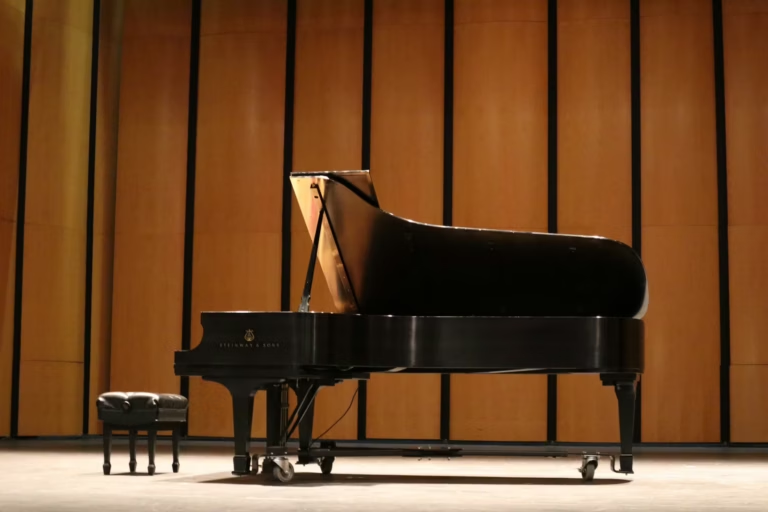
A grand collection often suits buyers who want a deeper sense of presence and a more serious long-term commitment.
The category matters because it shapes how the instrument will be used.
It also shapes where it will sit, how often it gets played, and whether it feels natural in the room.
When the fit is right, the instrument usually lasts better in the ways that matter most.
It stays relevant.
It stays enjoyable.
And it keeps getting used.
Build Quality Changes Everything
This is one of the biggest reasons some instruments age well while others lose their appeal much sooner.
A strong model usually feels more even from the beginning.
The response is steadier.
The sound feels more balanced.
The overall experience feels more settled.
That quality becomes more important with time.
A weaker model may still seem attractive at first.
But with regular use, the small weaknesses often become much easier to notice.
That is why the first impression should never be the only thing guiding the purchase.
You are choosing how the instrument will feel later, not only how it feels on day one.
Condition Often Matters More Than Age
A lot of people focus heavily on the year.
That is understandable, but it can also be misleading.
A newer model in poor condition may be far less satisfying than an older one that has been looked after well.
This is especially true when comparing used pianos.
A pre-owned option can stay rewarding for many years when the underlying quality is strong and the condition still feels healthy.
That is why age should only be one part of the picture.
Touch, tone, balance, cabinet condition, and overall feel matter just as much.
If you are comparing older models, the age calculator can help add context while you narrow things down.

The Room Has a Big Influence
An instrument does not live in theory.
It lives in a real room with sunlight, air conditioning, daily movement, and the usual rhythm of home life.
That environment matters more than many first-time buyers realize.
A calm, stable placement usually helps the instrument feel better over time.
A poor setup can work against it.
This is one reason size matters.
A model that fits naturally into the room is easier to place well and easier to enjoy regularly.
One that overwhelms the space may look exciting at first, but it is not always the best long-term choice.
When the room and the instrument suit each other, daily ownership tends to feel much better.
Regular Use Is Not a Bad Thing
People sometimes assume frequent playing automatically shortens lifespan.
That is not always true.
Regular use can actually be a healthy sign when the instrument is good and the home setup is sensible.
It usually means the model is part of a real musical routine.
That matters because a loved instrument gets noticed.
People hear changes more quickly.
They pay attention to how it feels.
They care when something seems off.
That kind of relationship often leads to better long-term ownership than a purchase that mostly sits untouched for appearance alone.
An instrument that becomes part of daily life often has a better future than one that was bought only for show.
Think Beyond the Beginner Stage
A lot of families shop with the first year in mind.
That is normal.
Still, it helps to think one step beyond that.
Will the instrument still feel satisfying once the player improves?
Will it still support practice when lessons become more serious?
Will it still feel like a smart purchase once the first burst of excitement has faded?
These questions matter because true lifespan is not only physical.
It is also practical.
If the instrument becomes limiting too soon, buyers often feel pushed toward replacing it even when it still functions.
That is why a thoughtful purchase usually lasts longer in the life of the family.
It keeps making sense as the player grows.
Acoustic Models Often Stay Rewarding for Years
For many buyers, one of the biggest strengths of an acoustic piano is exactly this feeling of longevity.
A well-chosen acoustic instrument can stay deeply satisfying for many years.
It develops a place in the room.
It becomes familiar.
It becomes part of the home’s sound and rhythm.
That is one reason upright and grand models continue to hold their appeal.
They do not feel temporary.
They feel rooted.
Of course, not every home needs the same setup.
But when the room is right and the player wants that traditional experience, an acoustic choice often feels like something that can stay meaningful for a very long time.
Pre-Owned Does Not Mean Near the End
This is a point many first-time buyers misunderstand.
Pre-owned does not automatically mean close to worn out.
In many cases, a carefully selected older instrument can still offer years of satisfying use.
That is why buyers should not dismiss older options too quickly.
The better question is whether the condition feels strong, the tone feels inviting, and the overall experience still suits the person who will use it.
If the answer is yes, then the fact that it is pre-owned may not be a problem at all.
In some homes, it may actually be the smarter purchase.
Many well-selected used pianos still have a lot to give.
The Wrong Choice Can Feel Old Very Fast
Sometimes a purchase feels short-lived not because it is truly worn out, but because it was never the right match.
That happens more often than people think.
A family chooses something too basic for a serious learner.
A buyer focuses mainly on looks and ignores feel.
A room takes in an instrument that does not really suit the layout or routine.
Then disappointment arrives early.
That kind of mismatch can make even a newer purchase feel old before its time.
This is why fit matters so much.
The right choice lasts longer because it keeps matching the player’s needs instead of creating frustration.
What Buyers Should Check If Longevity Matters
If you want something that will stay satisfying for years, buy with patience.
Pay attention to touch.
Pay attention to tone.
Think about who will use it most.
Think about where it will sit and how the room behaves during the day.
Think about whether you want something for a short first step or something that can genuinely grow with the player.
This is where direct guidance helps.
A conversation with the Lotfi Piano team can make the choice much clearer, especially if you are comparing different types and wondering which one will still feel right in a few years.
A smart decision at the beginning usually creates the best long-term result.
Lifespan Is Also About Enjoyment
People often talk about durability in a technical way.
But there is another side to it.
An instrument lasts best when it continues to bring pleasure.
If it still feels inviting, expressive, and rewarding, then it is doing its job well.
That matters.
Something can remain technically usable and still stop being enjoyable if it no longer suits the player.
On the other hand, a well-chosen model can keep inspiring regular use year after year.
That is the kind of longevity most buyers really want.
Not just survival.
Real satisfaction.

Seeing Options in Person Helps
Some decisions become much clearer once you stop imagining and start trying.
This is one of them.
When you compare several options side by side, you begin to understand which ones feel solid, which ones feel inviting, and which ones already seem like they would age well in everyday life.
That is why it helps to browse the full collection first and then narrow things down more seriously.
An instrument that feels right under the hands often reveals itself much faster in person than it does on a screen.
That clarity can save you from a purchase that looked fine on paper but never quite felt right in the home.
So, How Long Does a Good Piano Last?
The honest answer is simple.
A good piano can last for decades.
Sometimes much longer.
But the better answer is that a well-chosen instrument lasts as long as it continues to feel right, sound satisfying, and fit the life of the person using it.
That is why quality, condition, type, environment, and fit all matter so much.
There is no single number that replaces good judgment.
A careful buyer often ends up enjoying the result for a very long time.
A rushed buyer usually starts thinking about replacement much sooner.
Final Thoughts
If you are asking how long a good piano lasts, you are already thinking in the right direction.
You are looking beyond the first impression.
You are thinking about comfort, value, and the role the instrument will play in your home over time.
That is exactly how a smart purchase begins.
The best choice is not only the one that sounds good today.
It is the one that can still feel like a good decision years from now.
If you want help narrowing down the right fit for your home, you can contact the Lotfi Piano team and talk through the options more personally.
You can also follow Lotfi Piano on YouTube and Instagram for more inspiration and featured instruments.
FAQs
How many years can a good instrument last?
A strong model can last for decades when the quality is high and the condition remains healthy.
Does an older instrument mean a worse one?
Not always.
Condition matters more than age alone, especially when it has been cared for properly.
Are used pianos worth considering?
Yes, they can offer excellent value when the touch, tone, and overall condition still feel strong.
Do acoustic models stay satisfying for longer?
They can remain rewarding for a very long time, but the better choice still depends on the player, the home, and how the instrument will be used.
What helps an instrument age well at home?
Good placement, careful buying, steady use, and choosing a model that truly fits the player all make a big difference.
Also read: Why Families Prefer Upright Pianos for Home Practice