Choosing a piano sounds simple at first.
Then you start comparing sizes, shapes, sound, price, and how each one would actually fit into your home.
That is usually the moment people pause and ask the real question.
Should we go for a grand piano, or would an upright make more sense?
It is a good question.
Both can be beautiful.
Both can be musical.
Both can become a lasting part of the home.
But they do not give the same experience, and they definitely do not ask the same things from the buyer.
One brings more presence, more visual impact, and a different kind of playing feel.
The other usually brings more practicality, more flexibility, and an easier fit for daily family life.
That is why this comparison matters.
The better choice is not the one that sounds more impressive in conversation.
It is the one that suits the room, the player, and the way the instrument will actually be used after it arrives.
If you are still exploring both directions, it helps to compare the grand collection and the upright piano collection side by side before deciding.
Watch the video here!
The First Difference Is Space
The biggest difference most families notice right away is space.
An upright sits neatly against a wall.
It feels easier to place.
It usually works better in normal family rooms, study areas, and homes where space already has to do a lot of work.
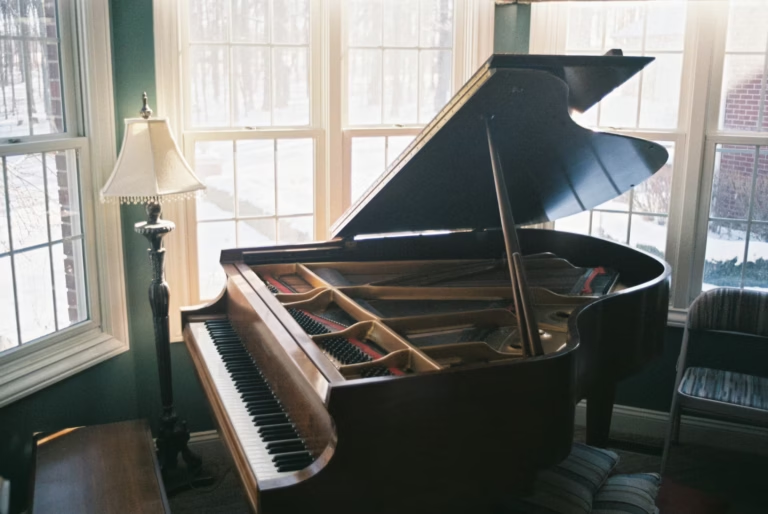
A grand piano asks for more from the room.
It wants breathing space around it.
It wants a layout that allows the instrument to feel intentional instead of squeezed in.
That does not mean it only belongs in huge luxury homes.
It simply means the room has to suit it.
A large instrument can look stunning in the right setting.
In the wrong setting, it can make the room feel crowded or awkward.
This is why so many buyers begin with the room before they think about anything else.
They picture the instrument where it will actually live.
They think about movement, furniture, and how the home feels day to day.
That practical step saves a lot of regret later.
The Feel Is Different Too
People often talk about size first.
The playing feel matters just as much.
A grand piano has a different mechanical response from an upright because of the way the action is laid out.
For some players, that difference is very noticeable.
The touch can feel more fluid.
The control can feel more refined.
There is often a sense of openness in the playing experience that many serious pianists really love.
That is one reason advanced players are often drawn in this direction.
An upright still gives you a real acoustic experience.
It can feel rich, responsive, and satisfying in its own way.
For many students and families, it offers everything they need for steady progress at home.
So this is not a simple case of one being good and the other being bad.
It is about which kind of response matters more to the person who will actually be playing.
A beginner may not need the added complexity or scale of a larger instrument.
A more experienced player might appreciate it immediately.
Sound Changes With the Shape of the Instrument
This is where things start to become more emotional.
People do not only hear pianos.
They feel them.
A grand piano often gives a broader sense of sound in the room.
The tone can feel more open and more spacious, especially when the room itself supports that kind of projection.
That does not mean an upright sounds small or dull.
A good upright can sound warm, focused, and deeply musical.
In many homes, that more contained sound is actually the better fit.
It feels natural in the room.
It feels balanced.
It does not overpower the space.
This is why sound should never be judged in isolation.
The same piano can feel completely different depending on where it is placed.
That is also why buyers should be careful about assuming bigger automatically means better.
Sometimes it simply means bigger.
The real question is whether the sound suits the home and the player.

Why Families Often Lean Toward Uprights
For family homes, upright models usually make life easier.
That is the honest truth.
They fit more naturally into everyday spaces.
They support regular practice.
They create the feeling of a real acoustic instrument without asking the room to revolve around them.
For parents, that balance matters.
They want something serious enough to support lessons.
They also want something that feels comfortable inside a normal home.
That is why upright models remain such a strong choice for children, beginners, and households where the piano needs to work with daily life rather than dominate it.
A home instrument should feel inviting.
It should feel like something people can return to easily.
In many cases, that is exactly what an upright does best.
When a Grand Piano Makes Sense
A grand piano starts to make more sense when the room is right, the player is more serious, or the family is looking for a stronger artistic presence in the home.
Sometimes people already know this is what they want.
They are not buying only for lessons.
They are buying because music matters deeply to them, and they want an instrument that feels special every time they sit down.
That can be a very real and very valid reason.
A larger instrument also changes the visual atmosphere of a room.
It becomes a centerpiece.
It creates a certain mood before a note is even played.
For some homes, that is part of the appeal.
For others, it may feel like too much.
The important thing is to be honest.
If the idea feels exciting but the reality feels impractical, that usually tells you something useful.
If the room, the budget, and the musical goals all line up, then the choice may feel much more natural.
The Budget Conversation Is Different
Price matters in every piano purchase.
But the budget conversation becomes more serious when you begin comparing upright models with larger acoustic ones.
A grand piano usually sits in a higher buying tier for obvious reasons.
It is larger.
It is more demanding in terms of craftsmanship, transport, room presence, and overall ownership.
That is why buyers often compare grand piano price separately rather than treating it like just another step above an upright.
The better way to think about budget is not simply to ask which one costs less.
Ask which one makes more sense for the stage you are in.
A child taking first lessons may not need the cost or scale of a larger model.
A dedicated player who already knows what they want may see that investment very differently.
This is also where long-term thinking helps.
If the instrument is meant to grow with the player and become part of the home for many years, value matters more than the first number you see.
If you want to compare different categories and price ranges more comfortably, it helps to browse the full piano collection and look at the bigger picture.
A Baby Grand Is Often the Middle Ground
Some buyers love the idea of a larger acoustic instrument but know they do not want the full scale of a large room-dominating model.
That is where the baby grand piano often enters the conversation.
It gives much of the beauty and visual appeal people associate with this style, but in a size that can feel more realistic for certain homes.
For many buyers, that middle ground is very appealing.
They get the elegance they want without jumping to the biggest option available.
Still, even this choice needs the right room.
A smaller grand can be a better fit than a large one, but it still deserves thoughtful placement and a home that suits it.
That is why people should not only look at dimensions on paper.
They should think about how the room will actually feel once the instrument is there.
Maintenance and Everyday Living Matter
A piano is not just a purchase day decision.
It is an everyday living decision.
That is something buyers only fully understand once they start imagining the instrument as part of the home.
How will the room feel after delivery?
Will the layout still work comfortably?
Will the instrument invite regular use?
Will it fit the family routine?
A grand piano can be deeply rewarding, but it also asks for a little more emotional and physical commitment from the space.
An upright often feels simpler to live with.
That simplicity should not be underestimated.
For many households, it is exactly what makes the difference between an instrument that gets admired and one that gets played.
The right choice should support real musical life, not just a beautiful first impression.
The Player Should Guide the Decision
This is one of the most important points.
The decision should be shaped by the person who will use the instrument most.
If the piano is for a child who is just beginning, then comfort, consistency, and home fit matter a lot.
If it is for an advancing student, then touch and long-term suitability become more important.
If it is for an adult player who has always dreamed of owning a grand piano, then the emotional side of the choice may matter more than people think.
Not every purchase has to be made from pure practicality.
But even emotional purchases need honesty.
That is why the best buyers usually step back and ask one simple question.
Who is this really for?
Once that becomes clear, the rest of the decision tends to make more sense.
Why Seeing Them in Person Helps So Much
This is one comparison that becomes much easier when you stop imagining and start trying.
You can read about sound, size, and touch all day.
But once you sit down and compare instruments in person, things often become clearer very quickly.
Sometimes the larger model you thought you wanted feels less comfortable than expected.
Sometimes the upright surprises you in the best way.
Sometimes the opposite happens.
That is why it can be worth arranging a showroom visit before making a final choice.
Hearing the instruments in person and seeing how they feel under the hands turns the decision into something much more real.
It also helps buyers stop thinking in abstract terms.
So Which One Is Better?
There is no universal winner.
That is the truth.
A grand piano is not automatically better just because it is larger and more dramatic.
An upright is not automatically better just because it is practical.
The better choice is the one that fits your home, your budget, and the player’s real needs.
For many families, the upright will make more sense.
For some serious players or homes with the right room and the right goals, the larger option may feel exactly right.
This is why thoughtful buying matters more than chasing an image.
A piano should feel right after the excitement of delivery fades.
That is the standard that matters.
Final Thoughts
When people compare a grand piano with an upright, they are really comparing two different ways of living with music at home.
One offers more scale, more visual impact, and a different kind of playing experience.
The other offers balance, practicality, and a very natural fit for daily family life.
Neither path is wrong.
It simply depends on what kind of home you have and what kind of musical life you are trying to build.
If you are still unsure, taking the time to contact Lotfi Piano and talk through the options can make the next step feel much easier.
And if you want to keep up with more inspiration and featured instruments, you can also follow Lotfi Piano on YouTube and Instagram.
FAQs
Is a grand piano always better than an upright?
No.
It can offer a different feel and a bigger presence, but it is only the better choice when the room, budget, and player’s needs all support it.
Is an upright more practical for family homes?
In many cases, yes.
That is why so many families choose upright models for lessons, regular practice, and easier home placement.
Is a baby grand a good compromise?
Yes, a baby grand piano can be a smart middle ground for buyers who want elegance and a larger acoustic feel without going to the biggest size.
Does grand piano price make it a better long-term investment?
Not automatically.
A higher grand piano price may reflect scale and craftsmanship, but the better investment is still the instrument that truly fits your home and gets used well.
How should I choose between the two?
Start with the room, then think about the player, the budget, and how the instrument will fit into daily life.
Also Read: What Affects Piano Price in Dubai?