Buying a piano for the first time is exciting.
It can also feel a little stressful once you start comparing prices, brands, sizes, and condition.
That is especially true with used pianos.
At first glance, many instruments seem like a bargain.
They may look polished, carry a respected brand name, and cost less than a new model.
That is why so many families in Dubai begin here.
A pre-owned instrument can often give you better musical value without pushing you into the highest budget range.
Still, not every piano is worth bringing home.
Some look great from the outside but feel disappointing the moment you sit down to play.
That is why buying carefully matters.
If you know what to check, used pianos can be one of the smartest purchases you make for your home.
Watch the video here!
Why Buyers Are Drawn to Pre-Owned Instruments
For most people, the first reason is simple.
They want better value.
A good pre-owned instrument can give you a stronger playing experience than an entry-level alternative that only looks attractive because it is new.
That matters for families, serious students, and adult learners alike.
When the instrument feels better, practice usually feels better too.
That is one of the biggest reasons used pianos continue to appeal to so many buyers.
You are not only paying for age or appearance.
You are paying for touch, tone, and overall musical value.
If you want to get a feel for what is available, you can explore the full piano collection and compare different types before narrowing things down.
Start With the Keys, Not the Cabinet
Most first-time buyers look at the outside first.
That is natural.
But the first thing you should really focus on is the keyboard.
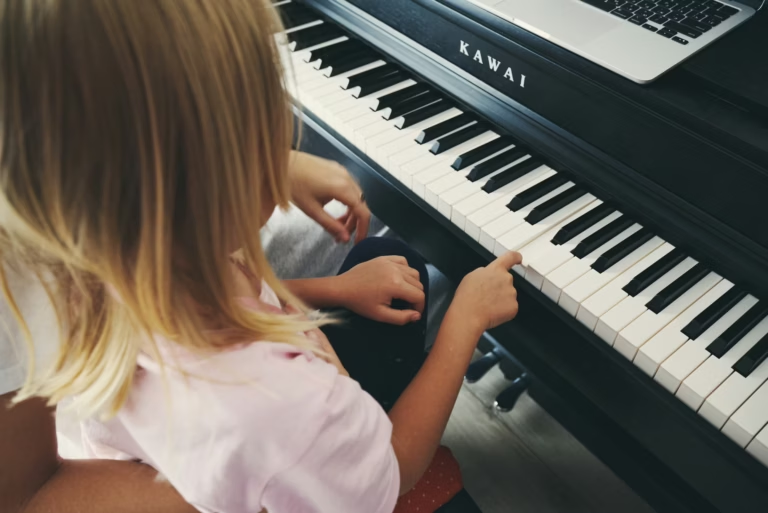
Sit down and play slowly.
Press each note with a normal touch, then a softer one, then a slightly firmer one.
The response should feel even.
If some keys feel heavy, loose, noisy, or slow to return, pay attention.
Small inconsistencies can tell you a lot.
With used pianos, the fingers often reveal what the outer finish tries to hide.
A polished cabinet may catch your eye, but the keys will tell you whether the instrument actually feels satisfying to play.

Listen for Balance Across the Whole Piano
Once the keys feel reasonably comfortable, start listening more carefully.
Play through the lower notes, then move into the middle, then the upper range.
You do not need every note to sound identical.
But you do want the instrument to feel balanced overall.
If one section sounds weak, dull, harsh, or noticeably different from the rest, it is worth asking why.
A piano should feel inviting when you move across it.
It should not feel like three different instruments joined together.
This is one reason buyers should never focus only on piano price.
A lower number means very little if the musical experience feels flat.
Test the Pedals Properly
A lot of people barely test the pedals.
That is a mistake.
Use each pedal a few times.
Notice whether it responds smoothly and returns properly.
Listen for anything that feels loose or sounds awkward under the foot.
Pedals are part of the full playing experience.
They also give clues about how carefully the instrument has been maintained.
This does not mean every tiny issue is a deal-breaker.
It simply means you should pay attention before making a decision.
Look at the Cabinet, but Keep It in Perspective
Appearance still matters.
A piano becomes part of the home, so it is natural to care about how it looks.
A clean finish, a nice color, and a cabinet that suits your room all matter.
But when comparing used pianos, appearance should never be the only thing guiding the decision.
A glossy cabinet can make an instrument seem better than it really is.
At the same time, light cosmetic wear does not always mean the piano is a poor choice.
It is usually better to buy an honest instrument with strong touch and tone than a shinier one that feels disappointing once you start playing regularly.
Find Out the Age of the Instrument
Age is important, but it is not the whole story.
Older does not automatically mean worse.
Newer does not automatically mean better either.
What matters more is how the piano has been cared for over time.
A well-maintained older instrument can still be a wonderful buy.
A younger one in poor condition can still end up being the weaker option.
That is why checking the serial number and background is useful.
If you want more clarity, the Piano Age Calculator can help you understand the age of a model before you move forward.
For anyone comparing used pianos, that extra bit of context can be very helpful.
Ask Where the Piano Came From
Source matters more than many first-time buyers realize.
An instrument with a clear history usually feels safer than one surrounded by uncertainty.
If a seller can explain where the piano came from, how it was selected, and what condition it is in, that is a good sign.
If everything feels vague, rushed, or unclear, it is usually wise to slow down.
This is where specialist sellers make a real difference.
You are not just buying an object.
You are also relying on the quality of selection behind it.
That is one reason buyers often feel more comfortable purchasing from businesses that focus specifically on pianos rather than random listings.
Think About the Type of Piano That Suits Your Home
Many buyers get so focused on finding a good deal that they forget to ask a more basic question.
What kind of piano actually fits the home?
For many families, an upright piano makes the most sense.
It offers a traditional acoustic feel while fitting more comfortably into a living room, study, or family area.
For other buyers, a digital piano may be the better match if quiet practice and simpler maintenance matter more.
This is important because even the best instrument can feel wrong if it does not fit the room or the routine.
The right purchase is not only about quality.
It is also about fit.

Make Sure It Matches the Player
This is where many people go wrong.
They buy the instrument they admire, not the one that actually suits the player.
A young beginner may need something welcoming and comfortable.
A serious student may need a stronger traditional feel.
An adult learner may care just as much about convenience as tone.
That is why used pianos should always be judged in context.
Who will use it most?
How often will they practice?
Is this a short-term step, or a longer-term investment?
Once those answers are clear, the decision becomes much easier.
Check Whether the Price Feels Fair
Every buyer notices price early.
That is normal.
But the goal is not just to find the cheapest number.
The goal is to find something that feels worth paying for.
A low piano price can be tempting, especially when the brand name looks strong and the cabinet looks attractive.
Still, a low number stops feeling appealing very quickly if the touch is uneven or the tone feels tired.
This is where good pre-owned choices can really stand out in the right way.
A well-chosen one does not just save money.
It gives genuine value.
That is a very different thing.
Do Not Rush the Decision
A piano is not the kind of purchase you should make because you feel pressured.
Take your time.
Sit down and play again.
Ask questions.
Compare one instrument with another if you can.
Step away from the sales pitch for a moment and pay attention to how the piano actually feels in front of you.
If it does not feel right, there is no reason to force the decision.
Patience usually leads to a better choice, especially when you are looking at pre-owned instruments.
Why Specialist Guidance Matters So Much
A specialist can save you from a lot of uncertainty.
That is especially true if this is your first acoustic instrument or if you are buying for a child.
Small details can be easy to miss when you do not yet know what to look for.
A knowledgeable team can help you compare condition, understand value, and narrow down the options that genuinely suit your home.
That is why many buyers prefer to contact the Lotfi Piano team before choosing.
Sometimes one honest conversation is enough to make the next step feel much clearer.
Why Pre-Owned Can Be the Better Long-Term Choice
A lot of buyers assume pre-owned means compromise.
That is not always true.
In many homes, used pianos actually offer the best balance between quality and budget.
They can give a beginner a better musical experience than a cheaper new alternative.
They can also help families buy a more satisfying instrument without stretching too far financially.
That matters because the way a piano feels influences how often it gets played.
If the sound is warm, the touch feels comfortable, and the instrument feels enjoyable to return to, practice becomes much easier to sustain.
Over time, that matters far more than whether the piano was brand new on the day it arrived.
A Simple Checklist Before You Buy
Keep the process simple.
Check the keys.
Listen for balance across the keyboard.
Test the pedals.
Ask about age and source.
Think honestly about the room and the player.
That already puts you in a much better position than someone who is buying only by appearance or price.
When buyers approach used pianos this way, they usually feel more confident and more satisfied with the final choice.
Final Thoughts
Buying a pre-owned piano does not need to feel risky.
It only feels risky when you do not know what to check.
Once you pay attention to touch, tone, pedals, age, source, and overall value, the process becomes much more manageable.
That is when used pianos start to look like what they often are: a very practical and rewarding option for homes in Dubai.
If you want to explore more options, you can browse the full range at Lotfi Piano and compare what fits your home and budget best.
You can also follow Lotfi Piano on YouTube and Instagram for more updates, featured instruments, and inspiration.
FAQs
Are pre-owned pianos a good choice for beginners?
Yes, used pianos can be an excellent option for beginners when they are in good condition and selected carefully.
What should I check first before buying a pre-owned piano?
Start with the feel of the keys, the balance of the tone, and the condition of the pedals.
Is cosmetic wear a major problem?
Not always. Light cosmetic wear is often less important than touch, tone, and overall condition.
Are upright pianos better for home use?
For many homes, yes. An upright piano usually offers a traditional acoustic experience while fitting more comfortably into everyday spaces.
How do I know if the price is fair?
A fair price depends on condition, feel, sound, age, and overall value, not just the number on the tag.
Also read: What Affects Piano Price in Dubai?