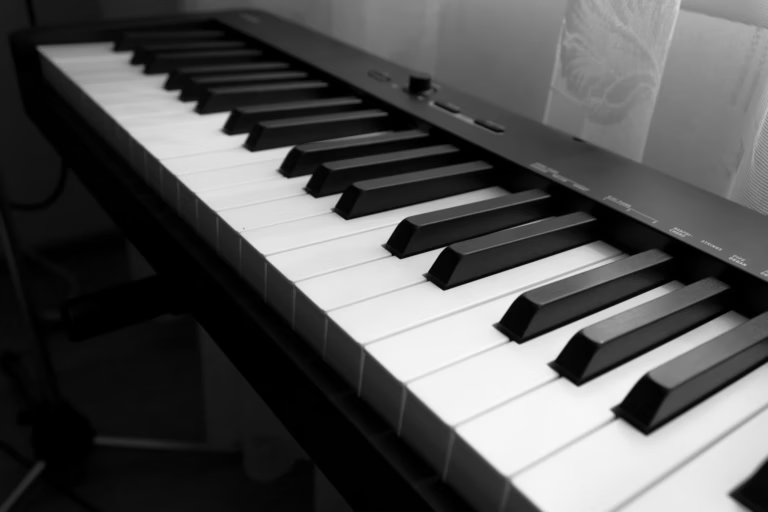
When families start shopping, the first thing they compare is piano price.
What often surprises them is how quickly piano price can change from one instrument to the next, even when two pianos look similar at first glance.
That is because pricing is never based on one detail alone.
In Dubai, the final cost usually reflects a mix of brand, condition, size, age, sound, finish, and how much work the instrument has had before it reaches the buyer.
This matters because a lot of people assume the cheapest option is the smartest one.
In reality, the better question is whether the instrument gives you the right value for your home, your goals, and the person who will be playing it.
A family buying for a child will look at things differently from a teacher, a serious learner, or someone choosing a statement instrument for a larger living space.
That is why pricing can feel confusing at the beginning.
Still, once you understand what shapes cost, the whole market starts to make a lot more sense.
Watch the video here!
Why Prices Feel So Different From One Piano to Another
It is easy to think price differences are random.
They are not.
Two pianos can sit side by side and look equally attractive, but one may have a stronger action, better touch, a cleaner tone, or a better overall condition.
One may have been carefully restored.
Another may simply be older and less consistent, even if the cabinet still looks good from a distance.
This is why first-time buyers should never judge value by appearance alone.
The real story is always a little deeper than that.
The Type of Instrument Shapes Piano Price
The first big factor is the type of instrument itself.
A digital piano is usually priced very differently from an acoustic upright or a grand.
That does not automatically make one better than the other.
It simply reflects different levels of craftsmanship, materials, sound production, maintenance needs, and long-term ownership experience.
For example, a family looking through the digital piano collection will usually be comparing a very different kind of product from someone browsing acoustic instruments.
A digital model can be easier to place at home, easier to manage, and more flexible for everyday practice.
An acoustic instrument often brings a more traditional response and a stronger physical presence in the room.
That difference naturally shows up in cost.
If a buyer is comparing categories without understanding that, the range can feel confusing very quickly.
Acoustic vs Digital Is Not Just About Sound
Many people assume acoustic pianos are always priced higher just because they sound more traditional.
There is more to it than that.
An acoustic instrument involves strings, hammers, action parts, cabinet structure, soundboard response, and a level of mechanical complexity that is very different from a digital model.
A digital piano may still be an excellent choice, especially for apartment living or family homes where quiet practice matters.
But the reason it sits in a different pricing bracket is not only sound.
It is also about construction, upkeep, and the type of ownership experience the buyer is stepping into.
That is why it helps to compare products based on lifestyle as much as cost.
Brand Reputation Always Plays a Part
Brand still matters in a big way.
A trusted name can increase buyer confidence immediately.
It can also affect resale value, long-term satisfaction, and the sense of security a family feels when making a purchase.
This is one reason a strong name can raise piano price, especially when buyers already know and trust the brand.
That does not mean a less famous instrument cannot be a good choice.
It simply means reputation has real value in the market.
For many buyers, brand is not just about status.
It is about consistency.
It is about knowing the instrument has a history, a standard, and a name people recognize.
That is also why people often compare yamaha piano price separately from general market pricing.
They are not only paying for a logo.
They are also paying for trust, familiarity, and a level of confidence in what they are bringing into the home.

Size Changes More Than Most Buyers Realize
Size has a direct effect on cost.
A compact digital model, an upright, a baby grand, and a full grand do not sit in the same pricing world.
That part is fairly easy to understand.
What buyers often miss is that size changes more than the cabinet.
It changes sound projection, touch, room presence, transport complexity, and how the instrument fits into the home.
A larger piano usually needs more from both the buyer and the space.
That is why someone exploring the grand piano collection is usually thinking very differently from someone choosing a first home instrument for a child.
A larger model may offer more visual impact and musical depth, but it also comes with a very different buying decision.
That is one reason grand piano price sits in its own category for many buyers.
Age and Condition Can Move Piano Price Either Way
This is one of the most important parts of the conversation.
Age alone does not tell you enough.
A piano can be older and still be a wonderful instrument if it has been well cared for.
Another piano can be younger on paper and still disappoint if the condition is poor.
That is why age should never be treated like the whole story.
With used pianos, piano price depends heavily on condition.
The action, keys, pedals, cabinet, tone, internal wear, and general playing response all matter.
A buyer who only looks at the year or serial number may miss what is actually most important.
This is where experience matters.
A carefully chosen used instrument can offer real value.
A poorly chosen one can feel cheap at first and expensive later.
Restoration Work Also Affects Piano Price
Restoration is one of the biggest hidden factors.
Some pianos reach the market after careful cleaning, adjustment, refinishing, and mechanical work.
Others may be sold in a more basic state.
Naturally, that difference affects cost.
This is why restoration work can lift piano price even when two models begin with a similar base value.
The extra cost reflects labor, materials, time, and the care taken to make the instrument more presentable and more satisfying to own.
For buyers, that can be worth it.
A piano that has been prepared properly often feels more stable and more enjoyable from the beginning.
It also reduces the chance of early disappointment after the instrument arrives at home.
Finish and Appearance Matter Too
People do buy with their eyes.
That is simply part of the truth.
A polished cabinet, a cleaner finish, and a more elegant appearance can change how a piano is perceived and priced.
This does not mean looks should come before sound or touch.
But appearance still matters because the instrument becomes part of the home.
For many families, that visual side is important.
They are not just buying for lessons.
They are bringing something into a living room, a family area, or a dedicated music space.
That is why a more attractive instrument often carries a stronger market value.
Supply and Local Availability Make a Difference
Not every piano is equally available at every moment.
Some models are easier to source.
Others are harder to find in good condition.
Some arrive in limited numbers.
Others are more common.
That affects demand.
It also affects how buyers compare options.
In practical terms, local availability can change piano price, especially when a certain model, finish, or brand is not easy to replace quickly.
This matters even more when buyers are looking for a specific style or size.
If supply is tighter, the market usually reflects that.
That does not always mean the higher-priced instrument is better.
It simply means the market can shift based on what is actually available.
Imported Instruments and Shipping Costs Matter
Dubai is a market where imported instruments play a big role.
That means shipping, handling, preparation, and storage all become part of the bigger pricing picture.
Even when the buyer is only looking at the final showroom price, there is often a lot behind that number.
Transporting a piano is not like moving standard furniture.
It takes care, logistics, manpower, and planning.
That alone affects cost before the instrument even reaches the final customer.
Once buyers understand that, pricing tends to feel less mysterious.
It becomes easier to see why two similar-looking pianos may land at different price points.
Setup, Delivery, and Added Value Count Too
A piano purchase is not always just the instrument itself.
Sometimes the overall value includes delivery, positioning, consultation, or after-sale support.
That matters because buyers are not simply comparing a product.
They are also comparing the experience around it.
A slightly higher cost may still be the better deal if the service is smoother and the buyer feels more supported.
This is why many families prefer to buy from specialists rather than chase the lowest possible number.
The cheapest route does not always feel cheapest once the full experience is taken into account.
Why Used Pianos Can Still Be a Smart Buy
There is a common misunderstanding that used means risky.
That is not always true.
A well-selected used piano can be one of the smartest purchases in the market.
The key difference is quality of selection.
If the instrument has been sourced carefully, checked properly, and presented honestly, it can offer excellent value for a home buyer.
That is why many families spend time comparing the full collection before making a decision.
The goal is not just to find a cheaper number.
It is to find a piano that feels right to play and still makes sense financially.
For many homes, that is exactly where used pianos become so appealing.
They can open the door to stronger brands and better musical value without forcing the buyer straight into the highest spending tier.

Why the Cheapest Option Is Not Always the Best Value
This is probably the biggest lesson buyers learn over time.
The lowest price is not always the best deal.
A piano that feels uninspiring, weak, or awkward to play can quietly kill enthusiasm.
That matters a lot if the buyer is a child, a beginner, or anyone trying to build a regular practice habit.
A slightly better instrument often brings more enjoyment, better consistency, and a longer useful life at home.
That is where value becomes more important than the ticket number.
The smart buyer is not just asking, “How much does it cost?”
The smart buyer is asking, “Will this still feel like a good decision six months from now?”
How Families Should Think About Budget
A good budget should be honest, but it should also be flexible enough to allow for quality.
If the goal is a first instrument for home practice, think about more than the opening price.
Think about who will use it.
Think about how serious the player is.
Think about room size, practice habits, and how long you want the instrument to serve you.
A beginner in a compact apartment may be happiest with a digital piano.
A serious learner in a larger home may find more value in an acoustic upright.
A buyer looking for visual presence and musical depth may naturally step toward a grand.
All of those are valid paths.
The right budget is the one that reflects real life, not just a random number chosen at the start.
What Buyers in Dubai Should Focus On First
If you are trying to shop more confidently, focus on a few simple questions.
What type of instrument fits your space?
How serious is the player?
Is long-term learning the goal, or are you still testing interest?
Do you care more about convenience, tradition, or visual presence?
Once those answers become clear, pricing starts to make much more sense.
It becomes easier to see why one piano costs more than another without feeling lost in the comparison.
That is also the point where piano price stops feeling random.
It starts to feel logical.
Final Thoughts
The truth is simple.
There is no single rule behind piano price in Dubai.
The final number is shaped by category, size, brand, condition, restoration, appearance, availability, and the overall value wrapped around the purchase.
That is why the smartest buyers do not focus on cost alone.
They focus on fit.
They look for the instrument that matches their home, their budget, and the person who will actually sit down and play it.
If you want to compare options more closely, you can explore Lotfi Piano while getting a feel for different categories and styles.
If you want help narrowing it down, you can also contact the team and speak to someone directly before making a decision.
You can also keep up with new arrivals and featured instruments through Lotfi Piano on YouTube and Instagram.
FAQs
Why can two similar pianos have very different prices?
Because pricing is affected by more than appearance. Brand, condition, touch, size, restoration, and overall quality all play a part.
Does a higher price always mean a better piano?
Not always. A higher price can reflect better condition, stronger brand value, or more preparation, but the better choice is still the one that fits your needs.
Are used pianos a good option for families?
Yes, they can be a very good option when they have been selected carefully and are in strong playing condition.
Is a digital piano cheaper than an acoustic one?
In many cases, yes, but the better choice depends on how the instrument will be used and what kind of experience you want at home.
What matters most when comparing piano prices?
The most important thing is value. Look at the full picture, including condition, sound, touch, size, and how well the instrument suits your space and goals.
Also Read: How to Choose the Right Piano for Your Dubai Home